Bonsai Nomad

Category: Japan 2026

  • Epilogue: The Gyouzan — My Travel Companion

    Epilogue: The Gyouzan — My Travel Companion

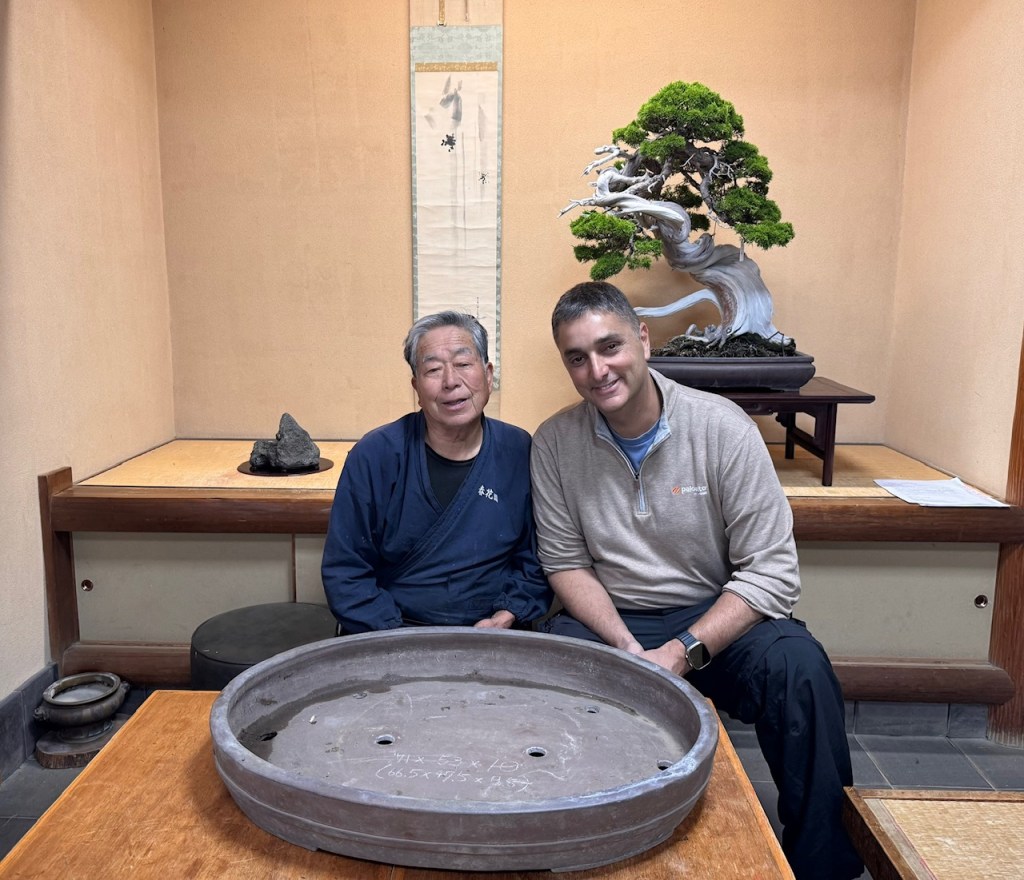
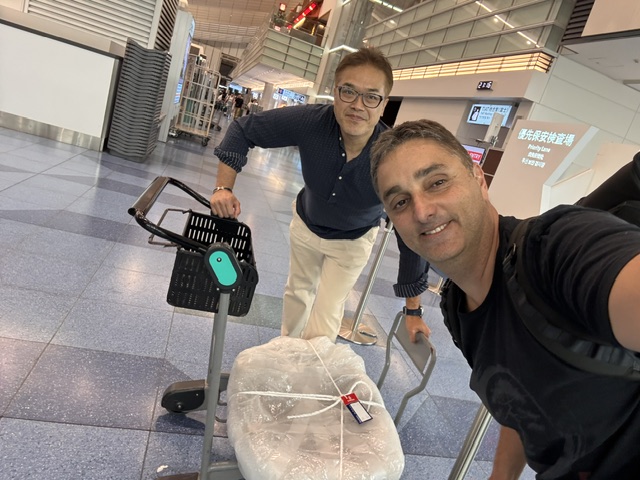
    Every great Japan trip ends with customs forms and existential questions about what you’ve done to your bank account. Mine ended with both of those things, plus a negotiation I never expected to have at Haneda Airport: convincing an Emirates ground agent that a nearly one-meter, 20-kilogram Gyouzan pot was, in fact, carry-on luggage.

    Let me explain.

    The pot had been with me since the very first day.
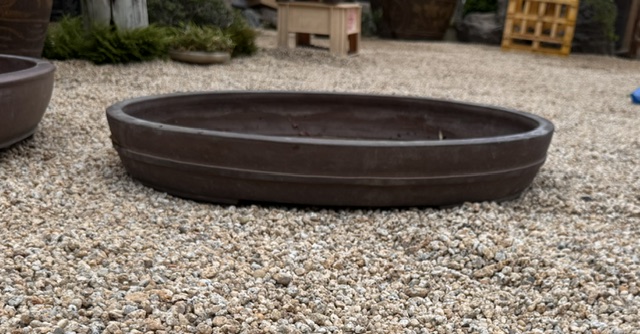
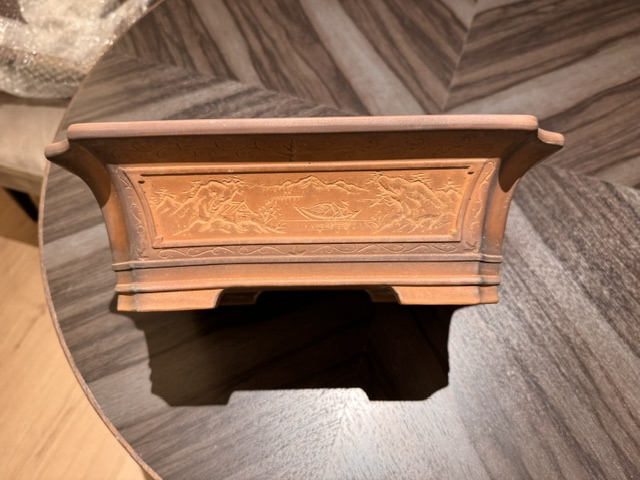
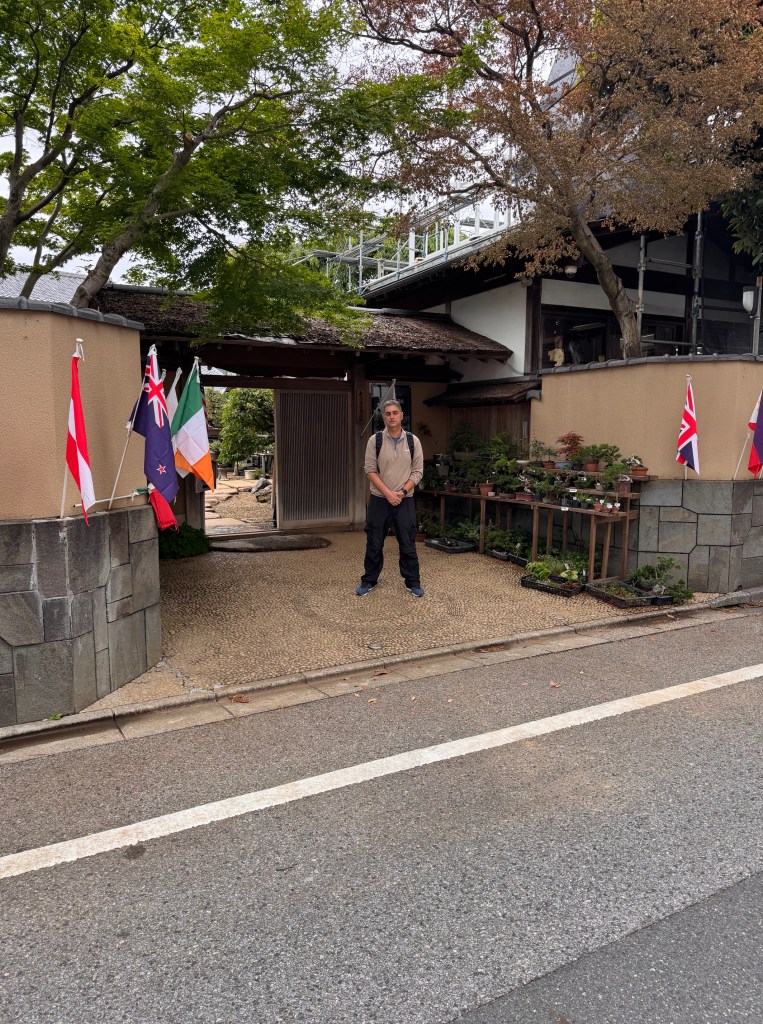
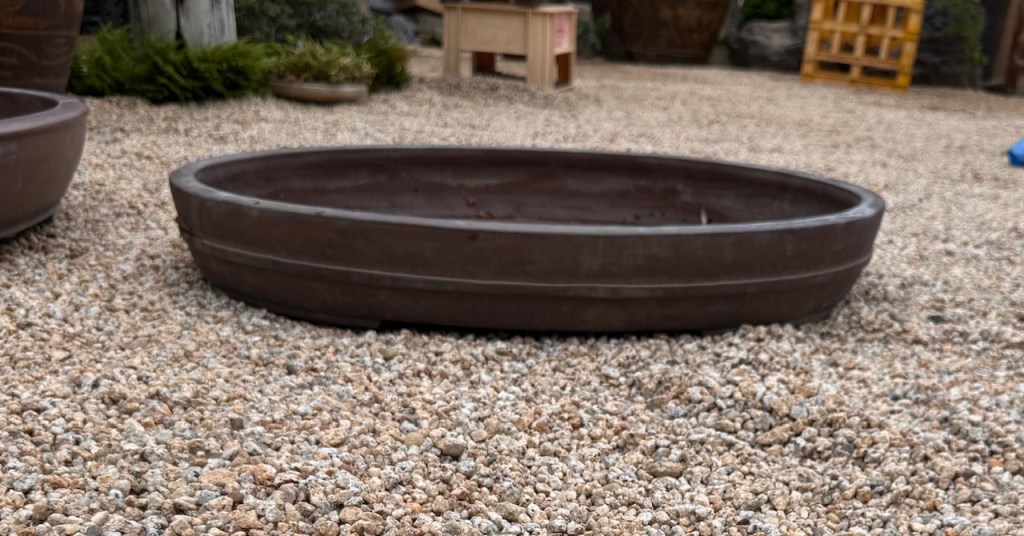
    As I wrote in my Shunkaen post, it found me at Kobayashi-san’s garden before the pilgrimage had even properly begun — a massive, unglazed oval Gyouzan, almost a meter long and closer to 20 kilograms than I was comfortable admitting. The kind of piece that stops you mid-sentence. I bought it, made arrangements to collect it before my flight, and then spent the rest of the trip with the quiet knowledge that this thing was coming home with me, one way or another.

    It had accompanied me — in spirit if not always in hand — through Omiya, through Kimura’s workshop, through the kilns of Tokoname, through the temples of Kyoto and the workshops of Shizuoka. By the time I arrived at Haneda for the Emirates flight to Dubai, the pot and I had a relationship. I was not putting it in the hold.

    The Emirates agent at check-in looked at the pot. Then at me. Then, slowly, back at the pot.

    “What is that?”

    “It’s a work of art,” I said. Which is true. “It’s handmade. By a master. In Japan.” All of this is also true. “And it’s very fragile.” Absolutely true.

    What I did not volunteer was that it weighed as much as a small child and was nearly as long as the check-in desk we were standing at.

    After a consultation with a colleague, a supervisor, and what appeared to be a third opinion sourced purely for emotional support, they waved me through. The pot had cleared its first border.
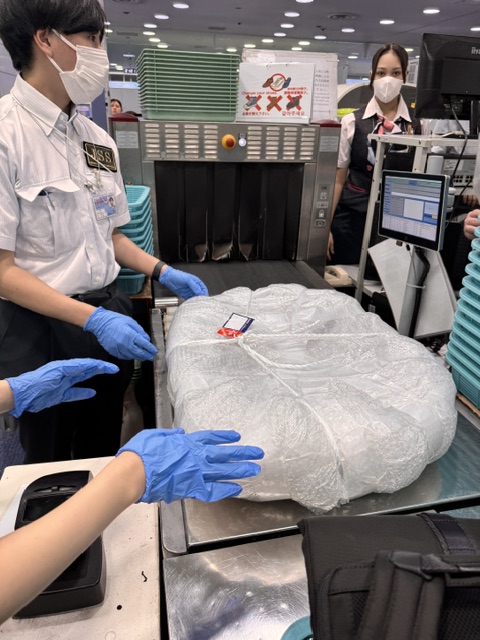
    I want to be precise here: it did not fit easily. What followed was a logistical operation involving careful rotation, two patient flight attendants, and a level of commitment from everyone in row 14 that I will never forget. But it went in. The overhead bin closed. I sat down and exhaled for the first time in about twenty minutes.

    The cabin gets cold at altitude. Everyone knows this.

    The flight attendant who noticed the blanketed overhead bin chose not to comment. I have enormous respect for her. An unglazed Gyouzan is a porous material. It feels the cold.

    We landed in Dubai. The pot and I descended together — me carrying it off the plane with the grim focus of a man who has committed fully to a decision — and boarded the bus to the terminal.

    There is something clarifying about standing on an airport bus at 5:30 am with 20 kilograms of Japanese ceramic in your arms, surrounded by strangers, thinking: I would do this again immediately.

    The layover was long… The pot rightfully demanded its own sofa chair.

    I got a light breakfast. The pot got admired by a passing traveler who asked if it was a serving dish. I said it was a bonsai pot. He looked at its dimensions and said, “what size tree?” I said, “that’s the question, isn’t it.” We understood each other.


    Tel Aviv. Ben Gurion. The final stretch. I’d carried this thing from Kobayashi-san’s garden in Tokyo all the way across two continents, and now I was walking through arrivals with it.

    Home. Almost.

    Erez, the Taxi driver looked at what I was attempting to load into his car.

    “What is it this time?”

    “A pot.”

    “Bonsai Again?”

    “Yep, Bonsai….”

    He Smiled…..

    He helped me get it in. A man of good judgment and, it turned out, a surprisingly spacious back seat.

    And there it is. Door to door, Tokyo to Tel Aviv, Kobayashi-san’s garden to my own. The Gyouzan traveled the length of Japan with me, cleared Emirates check-in on charm and audacity alone, spent a night in the Dubai lounge, and arrived home without a scratch.
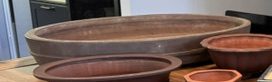
    Now it waits — as all great pots do — for the right tree. Something that earns it. Something worthy of what it took to get here.

    The pilgrimage is over. The real work is just beginning.
  • Saturday with Jeff: When Plan B Beats Plan A

    Saturday with Jeff: When Plan B Beats Plan A

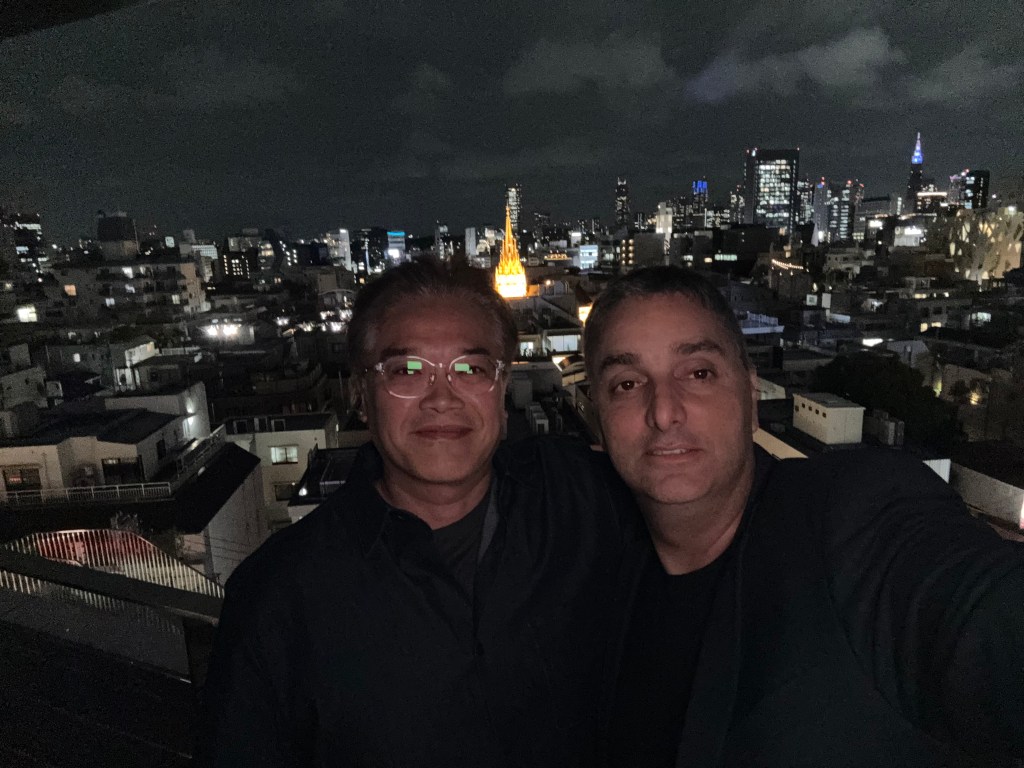
    My first weekend in Japan was reserved for an old friend. Jeff and I worked together at RSA years ago, and he’d hosted me on my very first trip to Japan back in 2015. The moment I told him I was coming, he insisted on clearing his weekend — and had the perfect idea: a drive out to Mt. Fuji.

    We left Tokyo and hit heavy traffic almost immediately — which, in hindsight, was a gift. It gave us hours to properly catch up after so many years apart. Slowly the city melted away into mountains and trees, and the scenery turned beautiful.

    But as we got closer to Fuji, the clouds rolled in thick. No mountain views today. Time for Plan B — and you can probably guess what that meant for me.

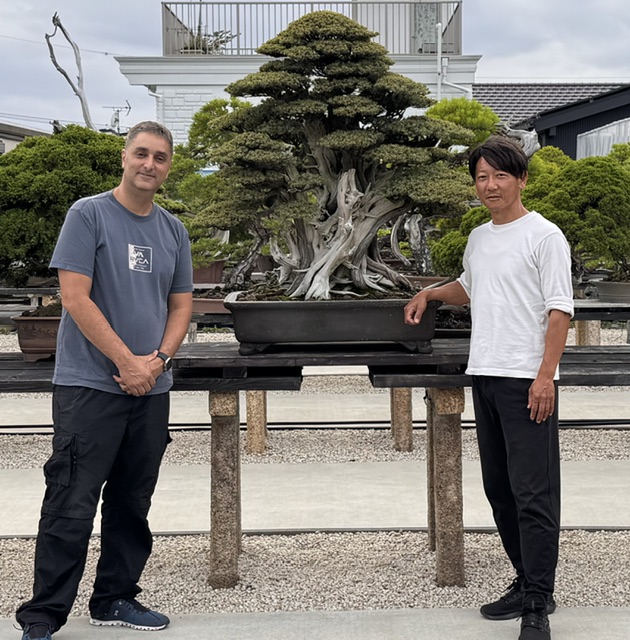
    A quick search turned up Taishoen, a nursery in the area. Jeff, ever the connector, called ahead to make sure it was okay for us to drop by.

    Taishoen Nursery — A Quick Highlight
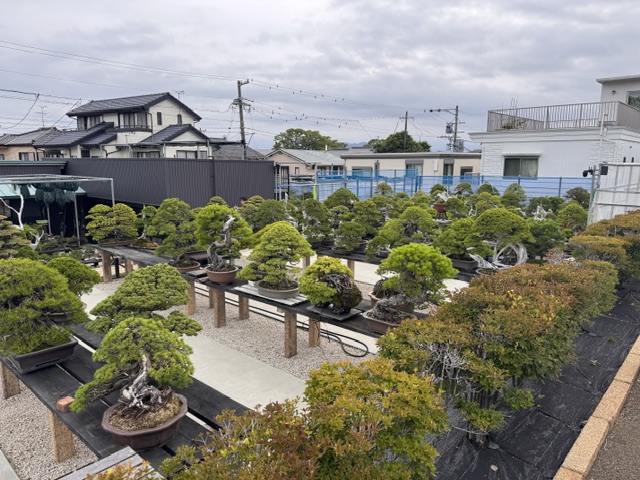
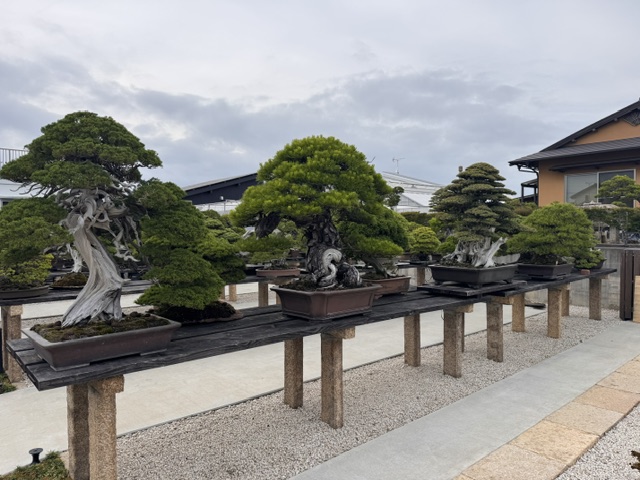
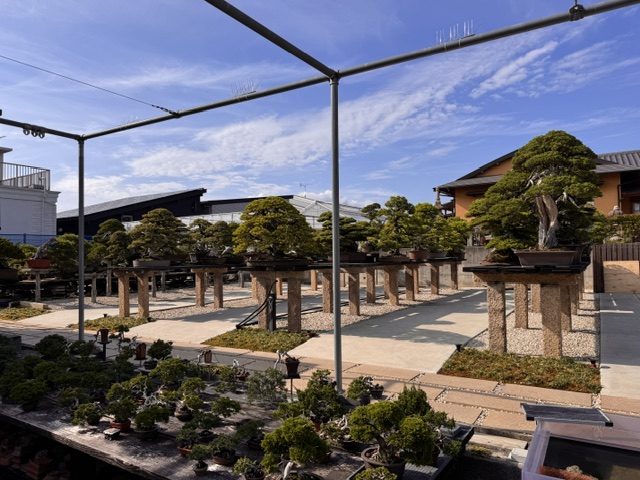
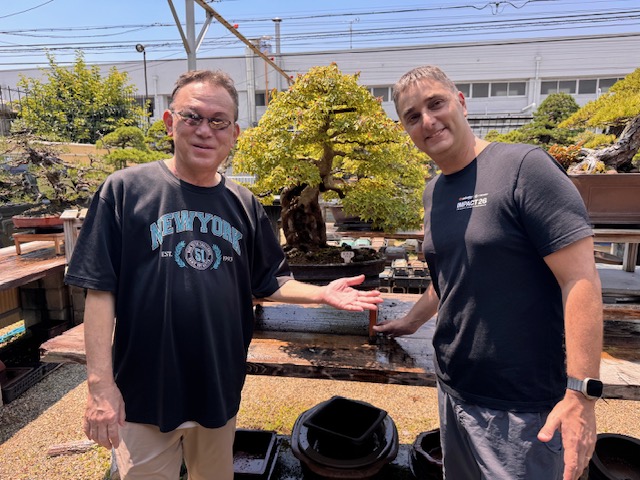
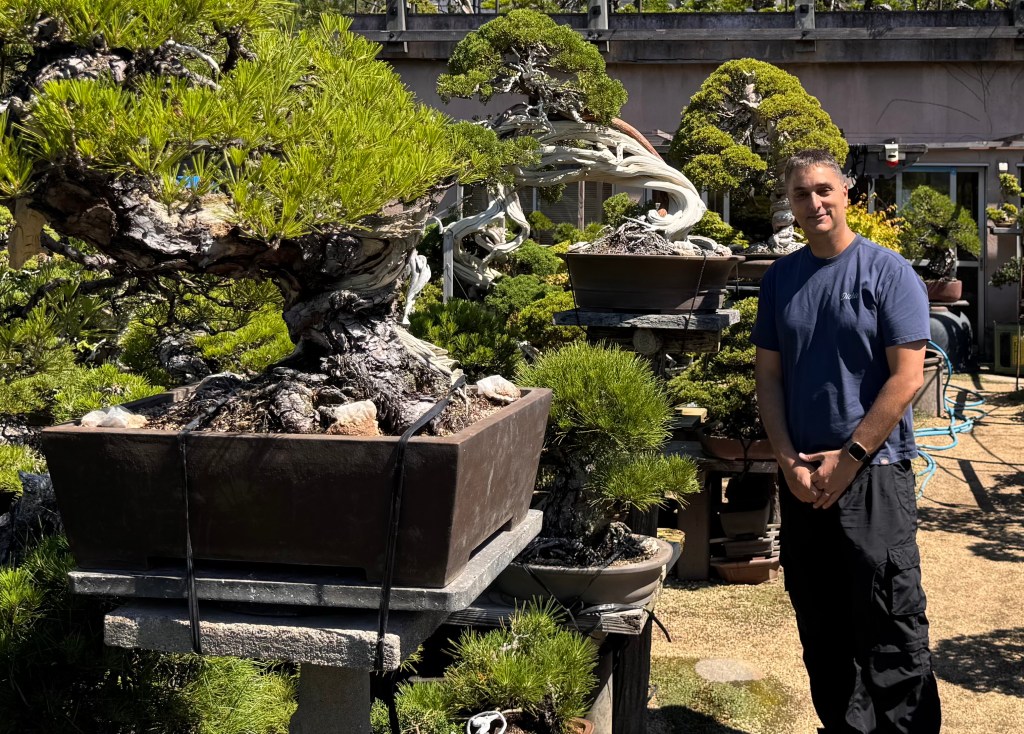
    Taishoen is renowned for its shohin-sized bonsai and sits right at the foot of Mt. Fuji in Shizuoka. These days it’s run by Taiga Urushibata — son of the legendary Nobuichi Urushibata — who apprenticed under Kimura himself. Taiga speaks fluent English and welcomes foreign students for multi-month study programs, which come highly recommended.

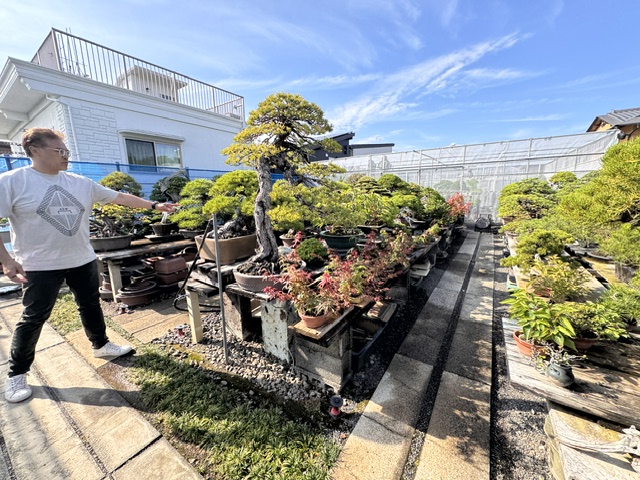
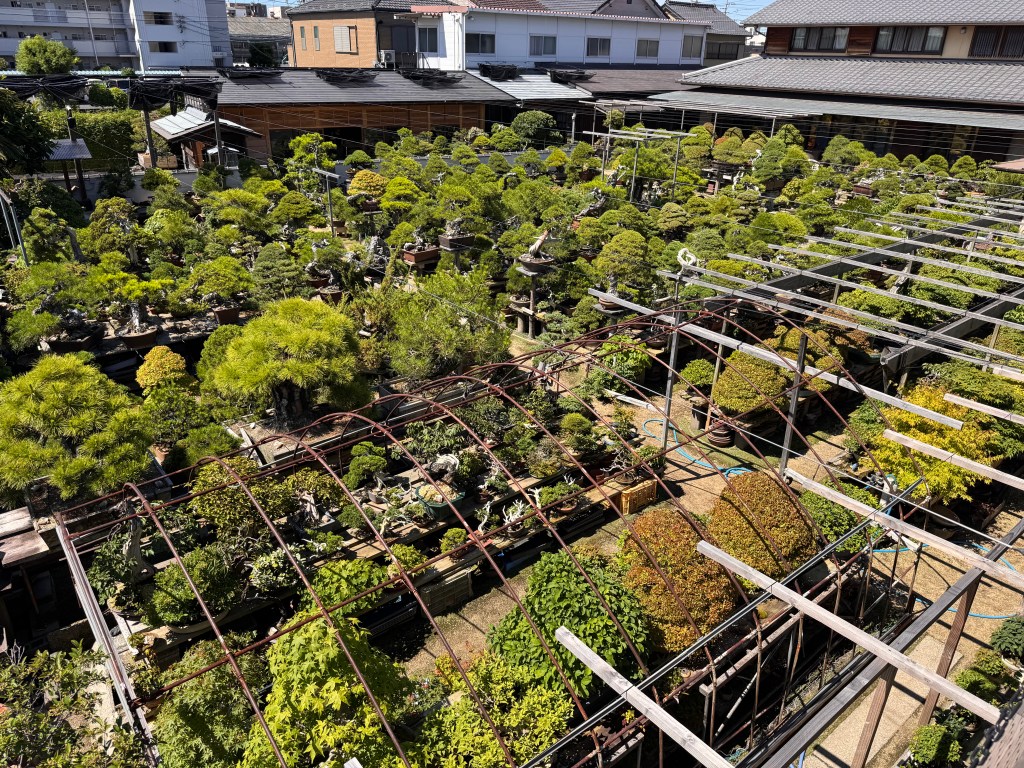
    What we found was nothing like I expected — a surprisingly large, state-of-the-art nursery I’d had no idea existed, tucked away in a part of Japan I hadn’t even planned to visit. Some of the best moments are the ones you don’t plan.

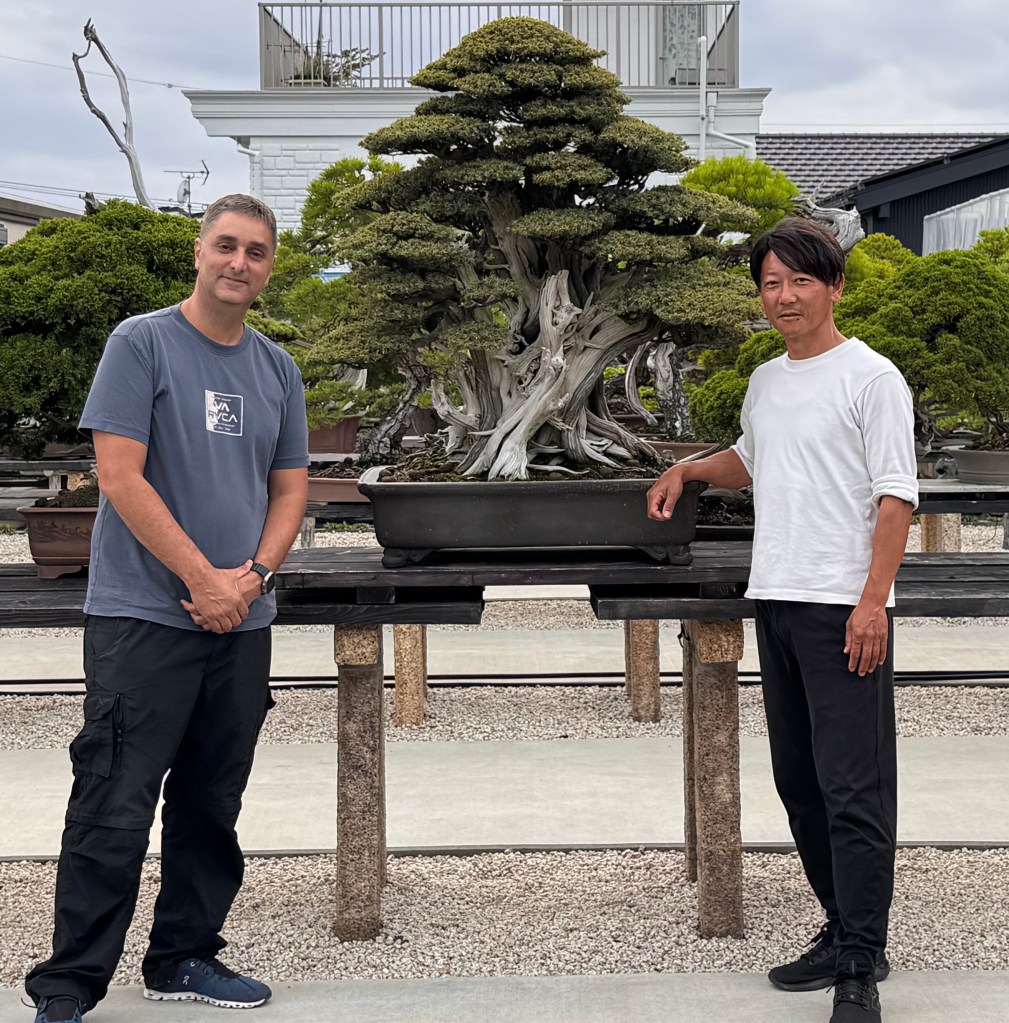
    Taiga welcomed us warmly and gave us a full tour — stunning trees, and pots that stopped me in my tracks. One in particular: a Bigei. I called Shai on the spot for a second opinion. His answer left no room for debate: “Take it. Price doesn’t matter — it’s a Bigei. Take it.” So I did.

    Jeff and I spent a couple of hours wandering the nursery — for him, it was his first time stepping into this world, and his curiosity about my new obsession was obvious. Don’t be surprised if BonsaiNomad gets a guest contributor someday.

    We drove back to Tokyo as the light faded — tomorrow, back to work with the team in Japan. But the weekend had already given me more than I bargained for: an old friendship renewed, a hidden gem of a nursery, and a Bigei pot I’ll treasure for years.

  • Japan Bonsai Pilgrimage, Part 3: Bjorn!!!

    Japan Bonsai Pilgrimage, Part 3: Bjorn!!!

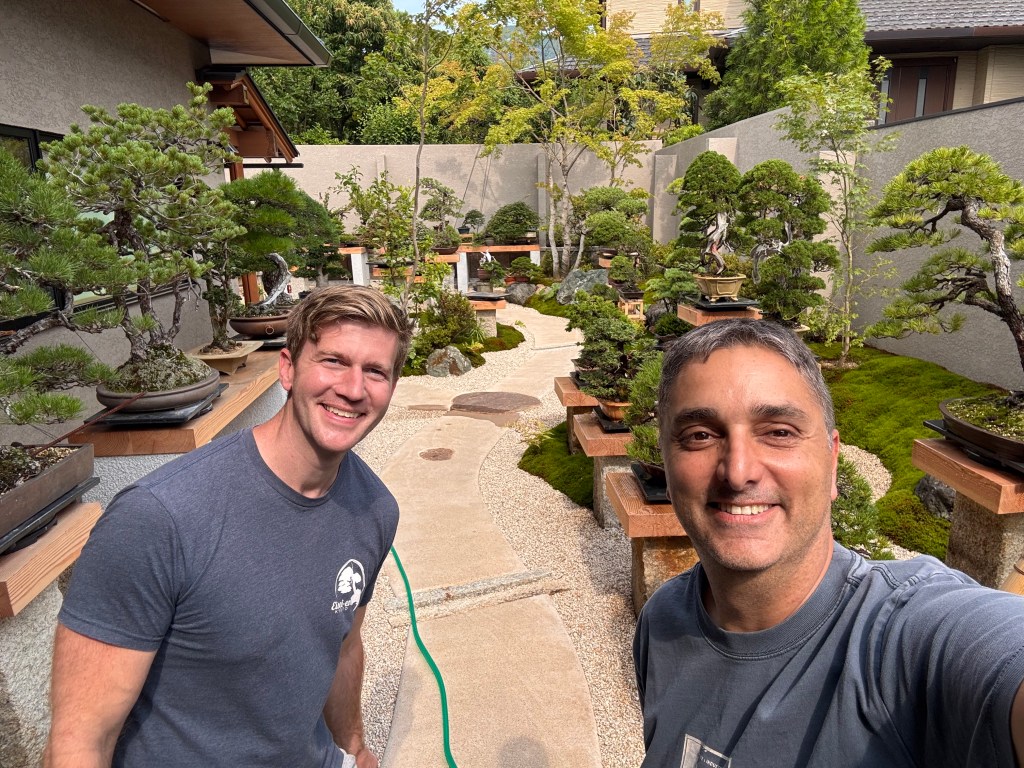
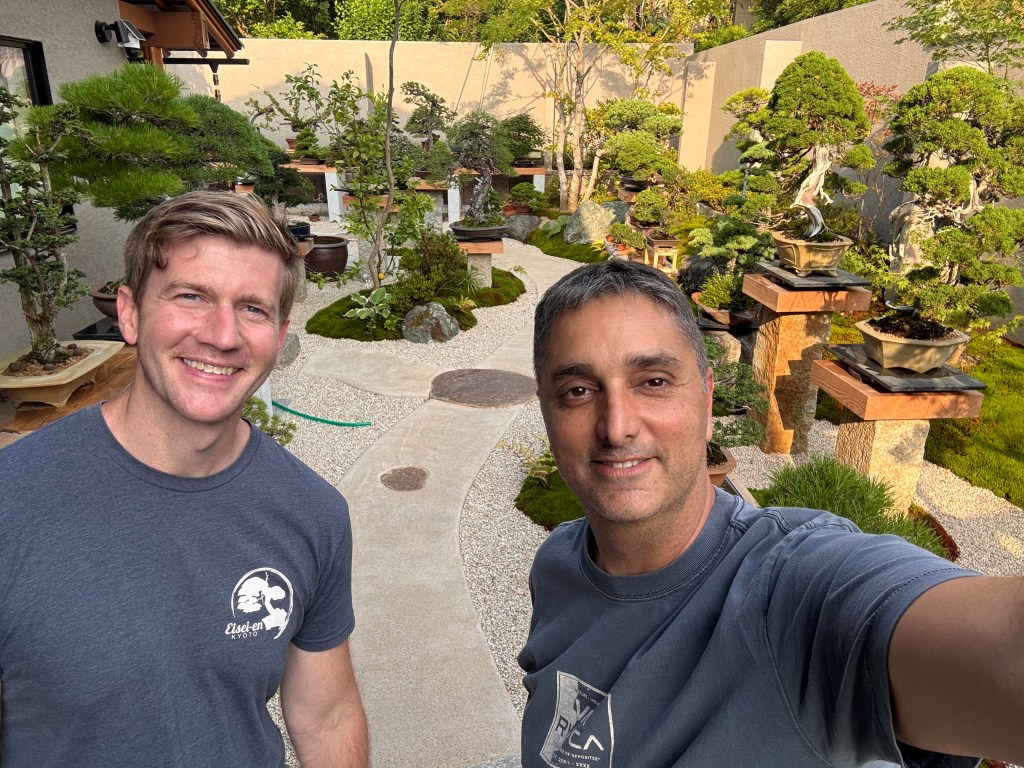
    If you’ve spent any time in the bonsai world, you know the name Bjorn Bjorholm. As the founder of Bonsai-U and Eisei-en, he’s brought hundreds of video lessons to enthusiasts everywhere — I’d guess there’s barely a serious bonsai person today who hasn’t learned something from him online. I certainly have.

    Bjorn’s own story is part of what makes him so compelling: a Nashville native who apprenticed in Osaka, built his own center back home, and then — after years of sharing his journey online — made the leap to move permanently to Kyoto with his wife and daughter. Many of us followed along as he designed his new garden from the ground up, and getting to see it in person had been a quiet dream of mine for a long time.

    Through Shai, my teacher and mentor, I reached out — and Bjorn said yes right away, offering me two full days at his place.

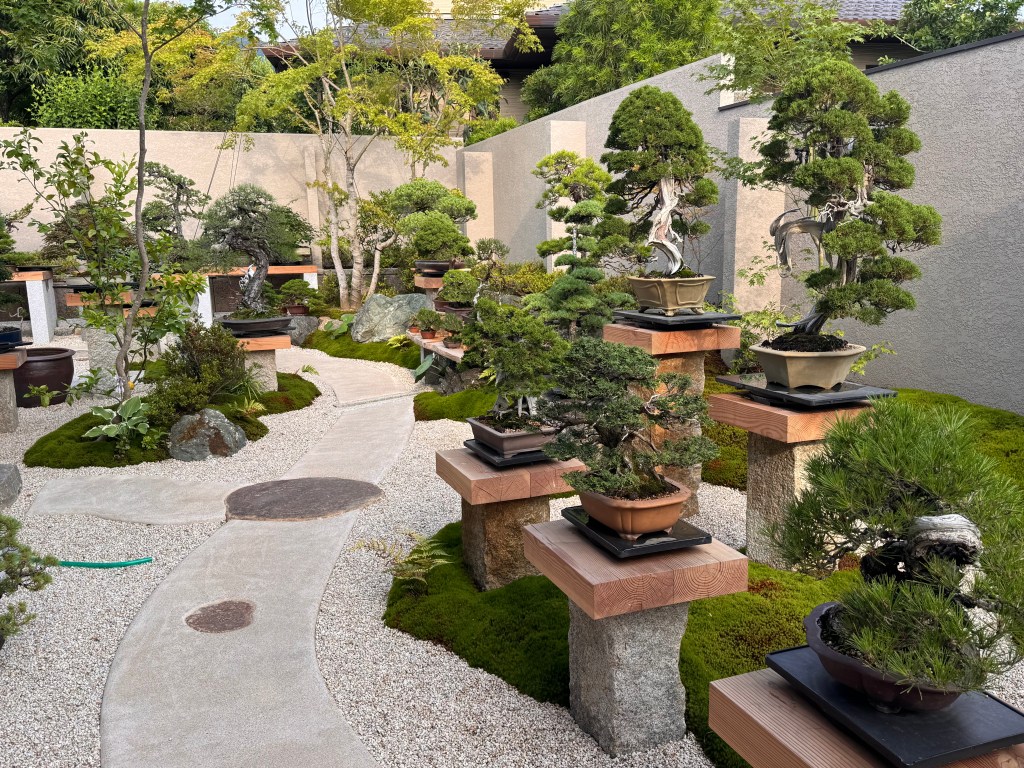
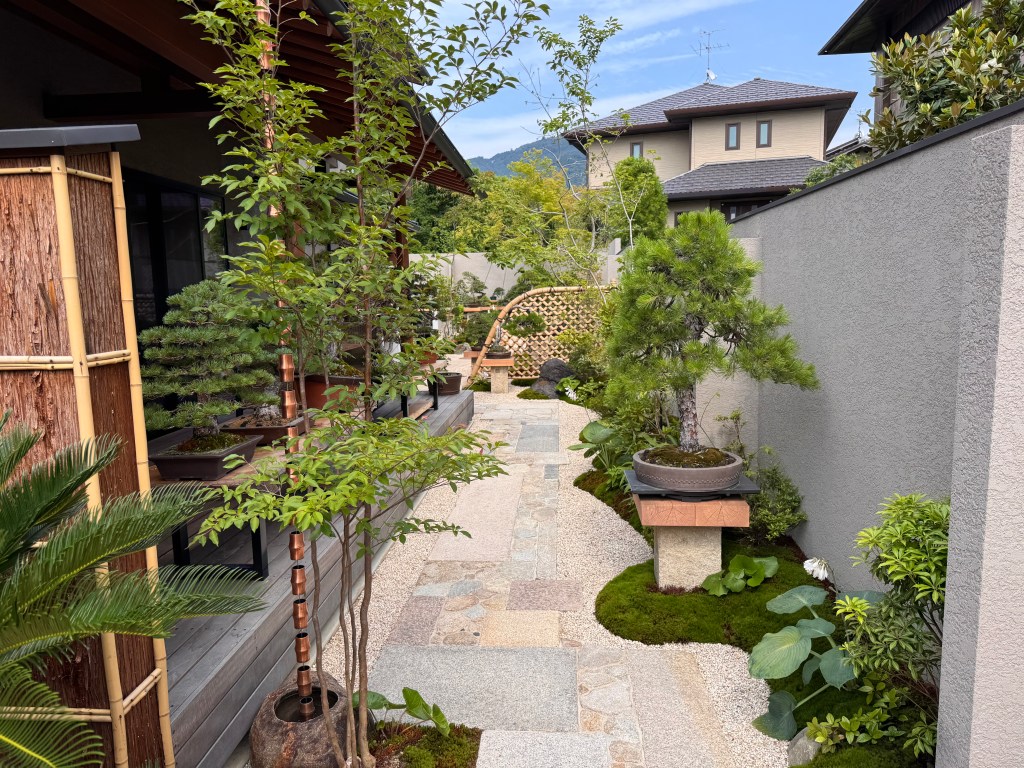
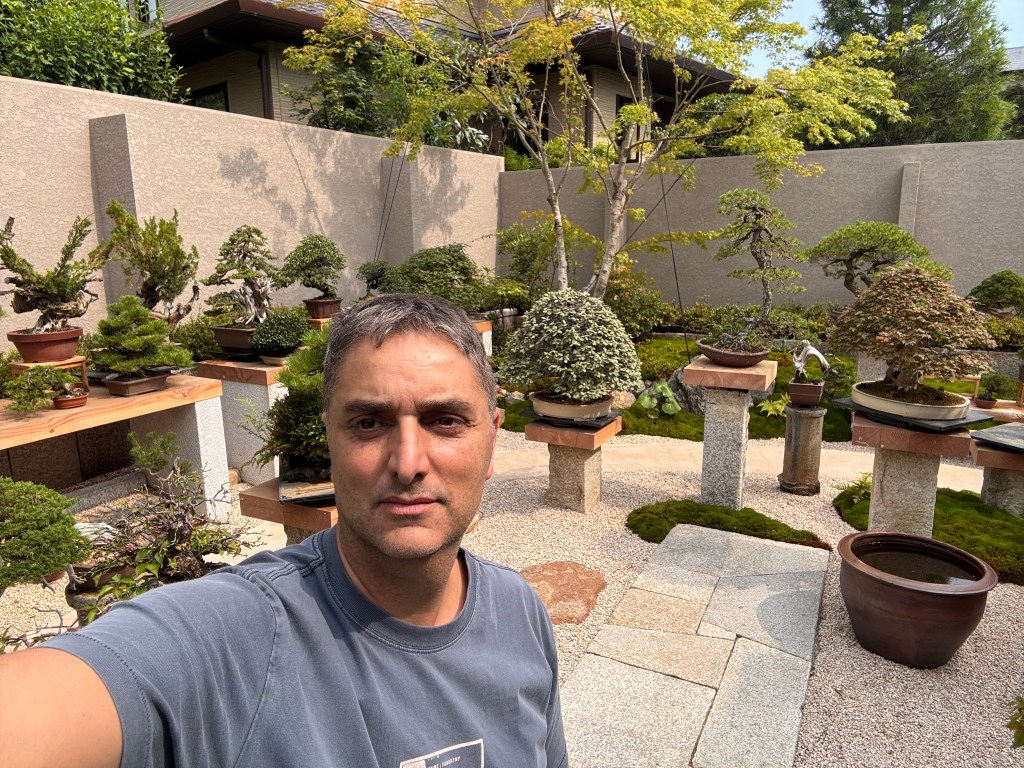
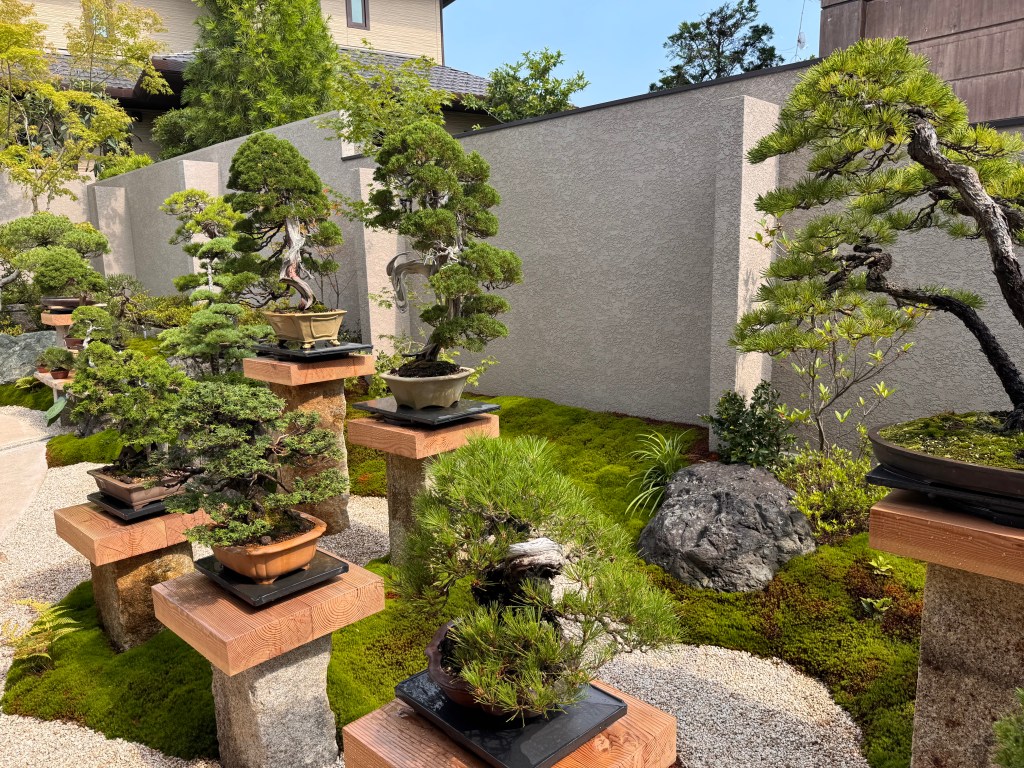
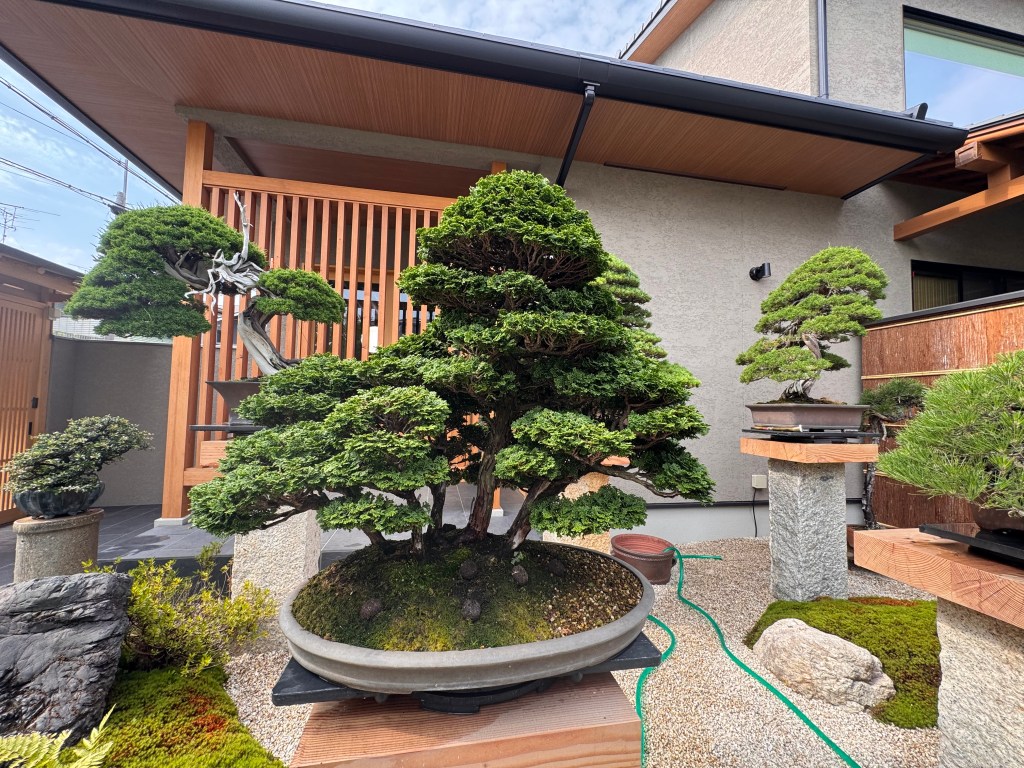
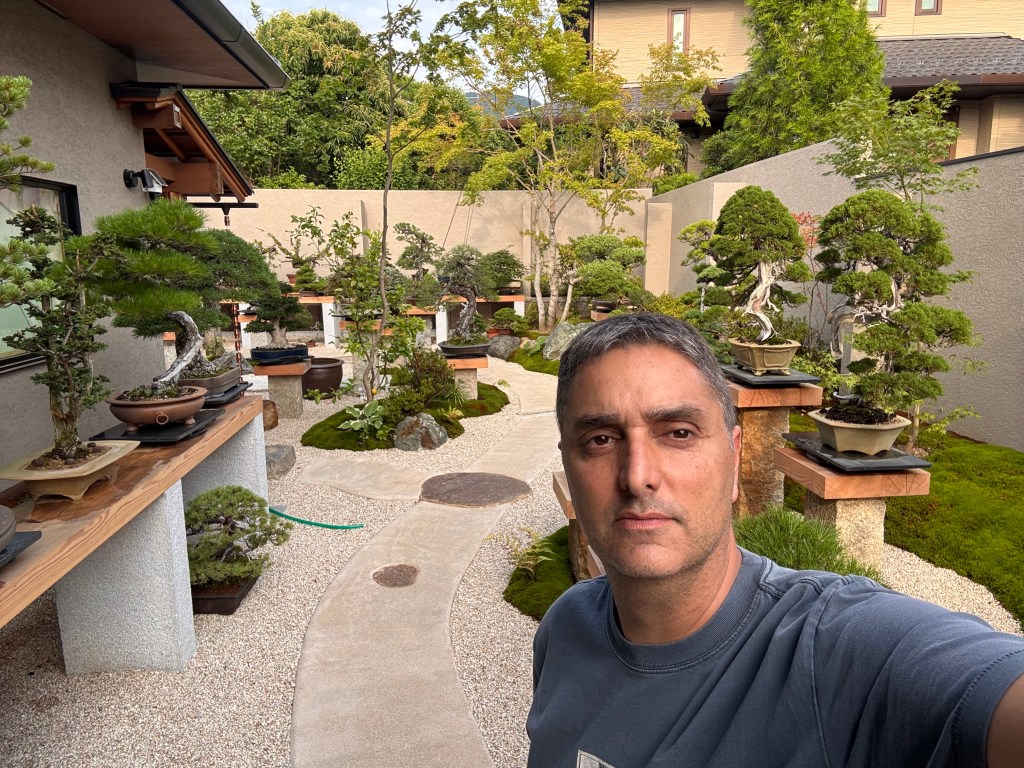
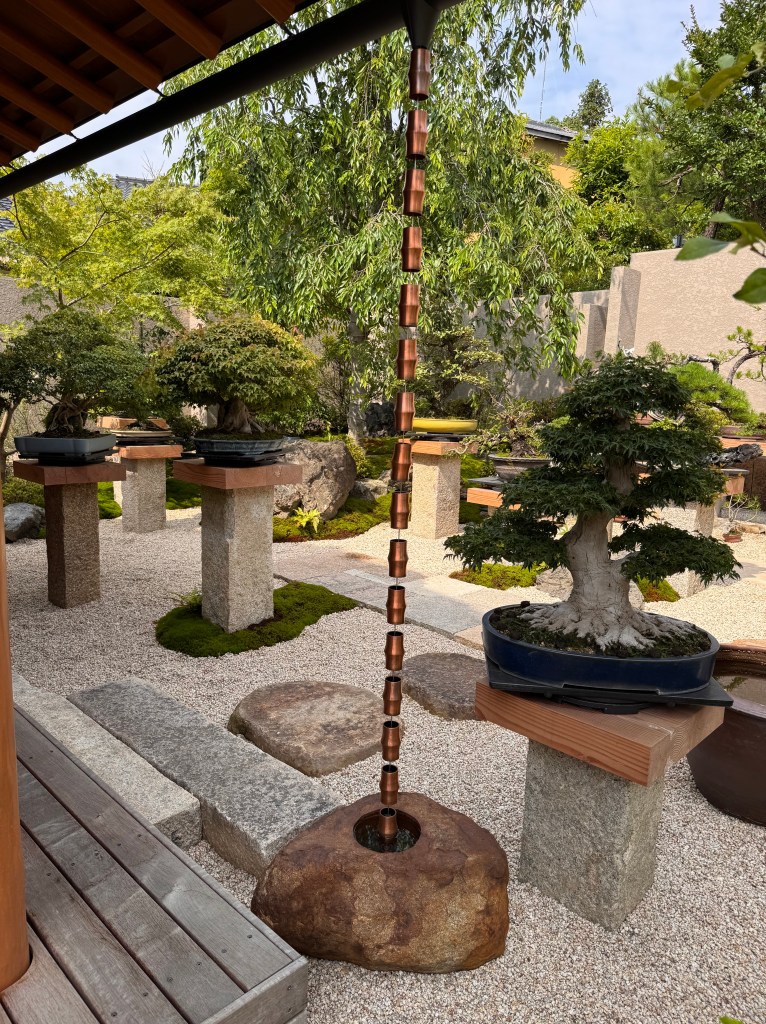
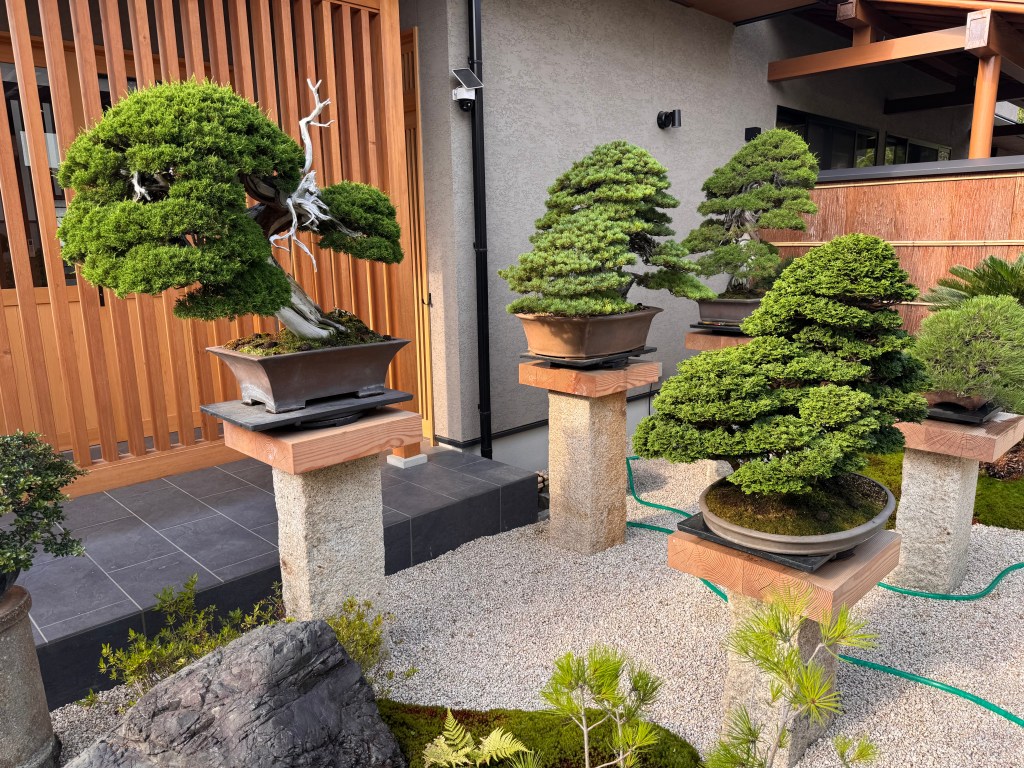
    Walking into his garden in person, after watching so many videos of it, was something else. Every detail felt considered — the landscape, the stands, the rocks, the trees, even the gutters were quietly beautiful. It’s the kind of space that represents where so many of us hope to get to one day: bonsai as art and science, with an aesthetic sensibility running through everything.

    The gutter!!

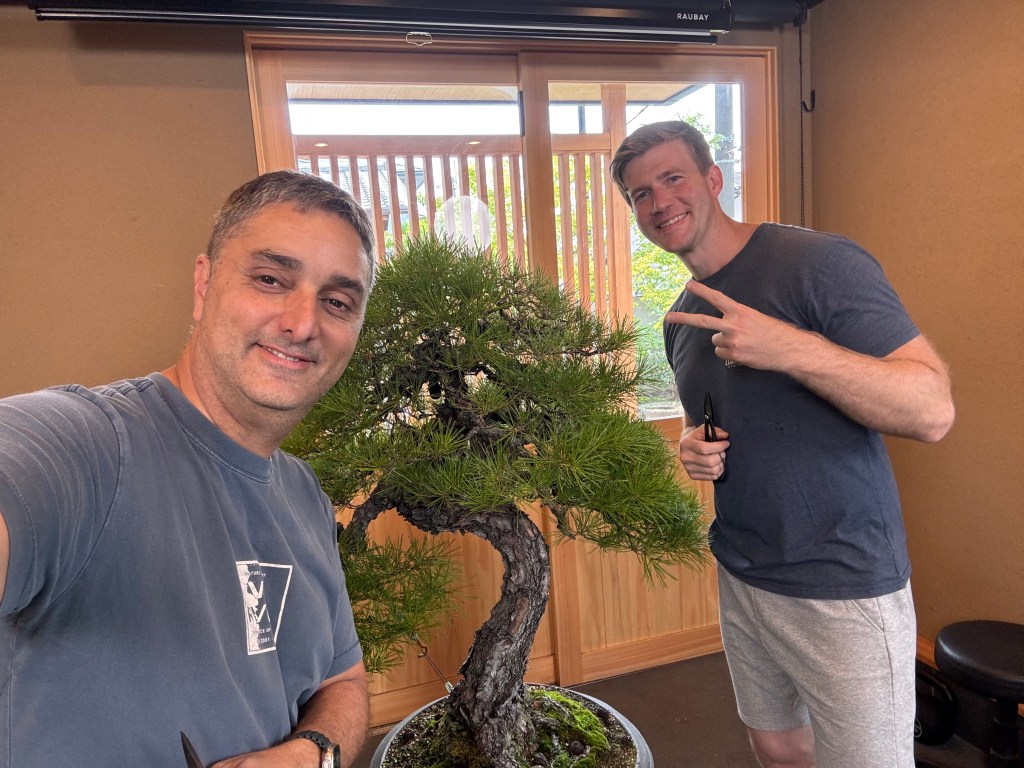
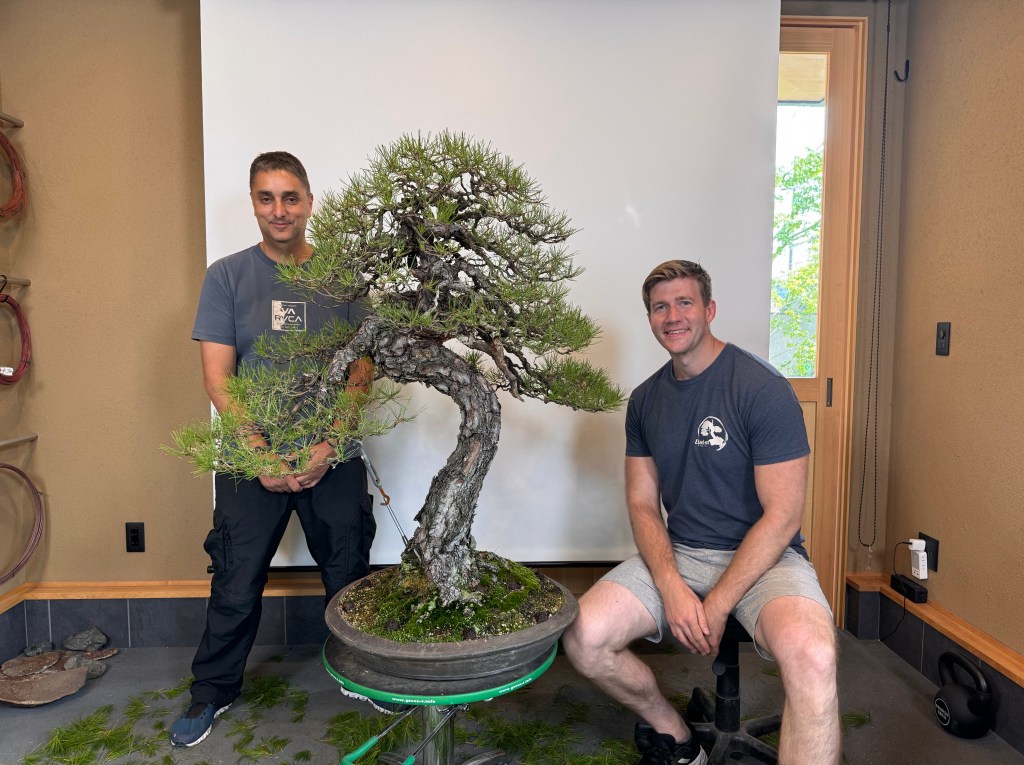
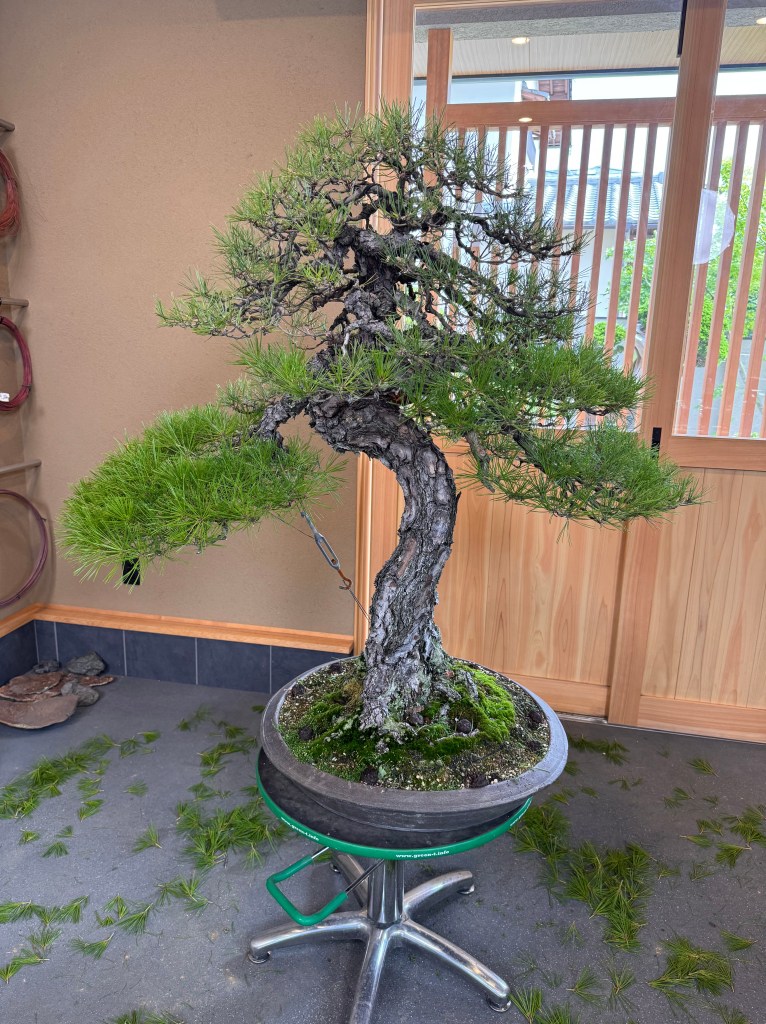
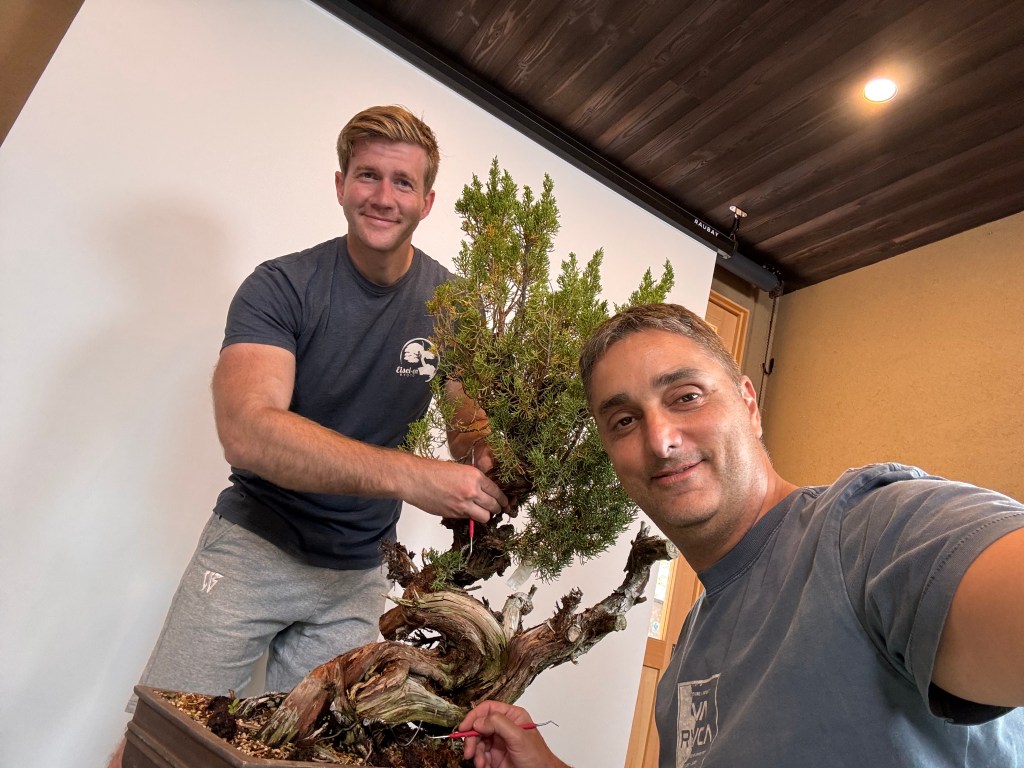
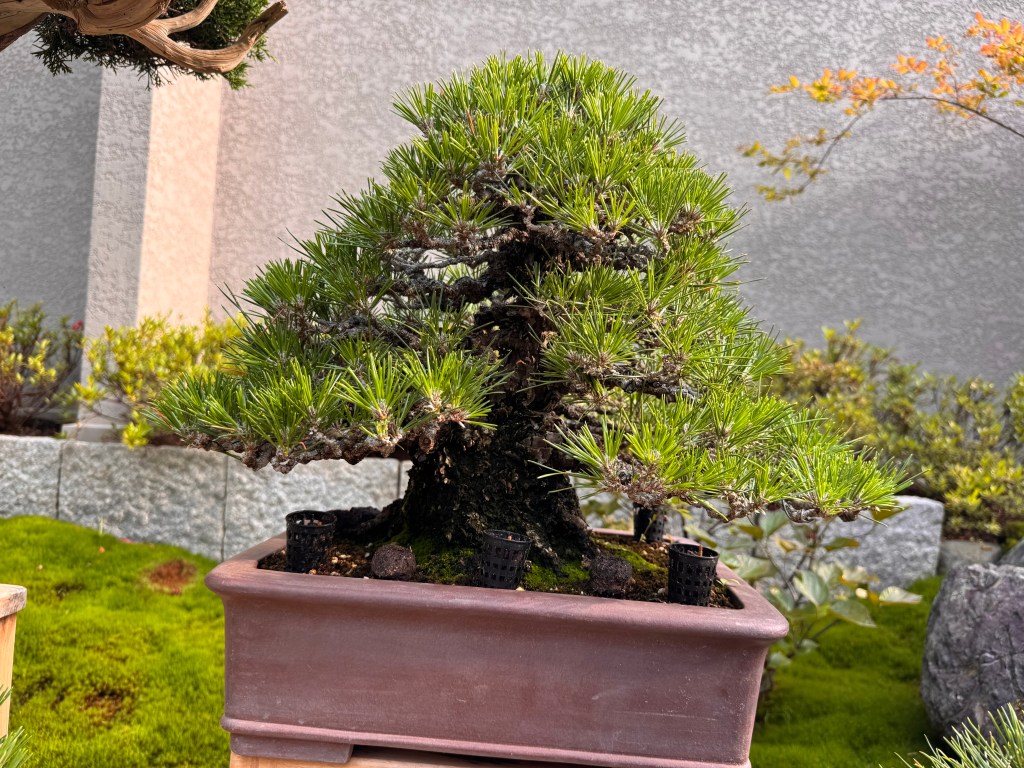
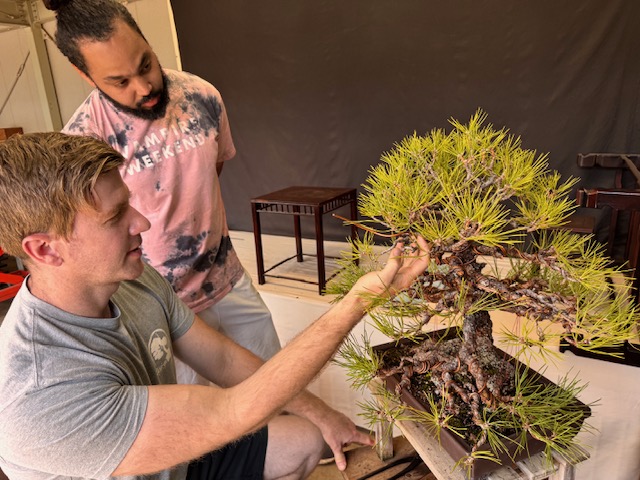
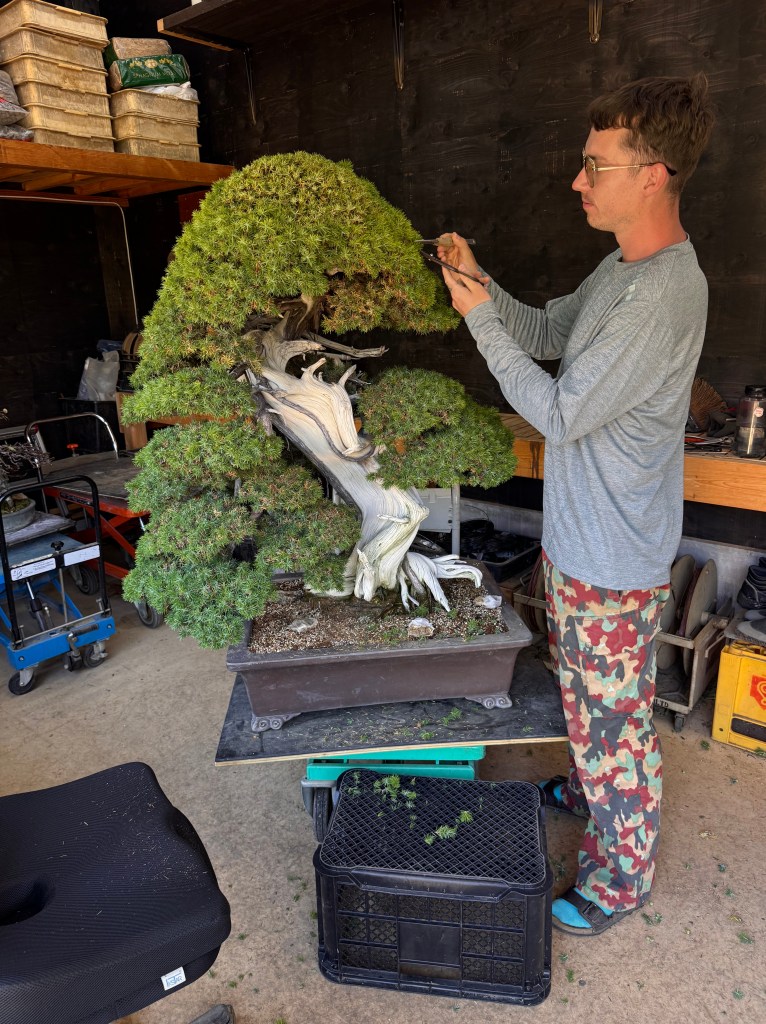
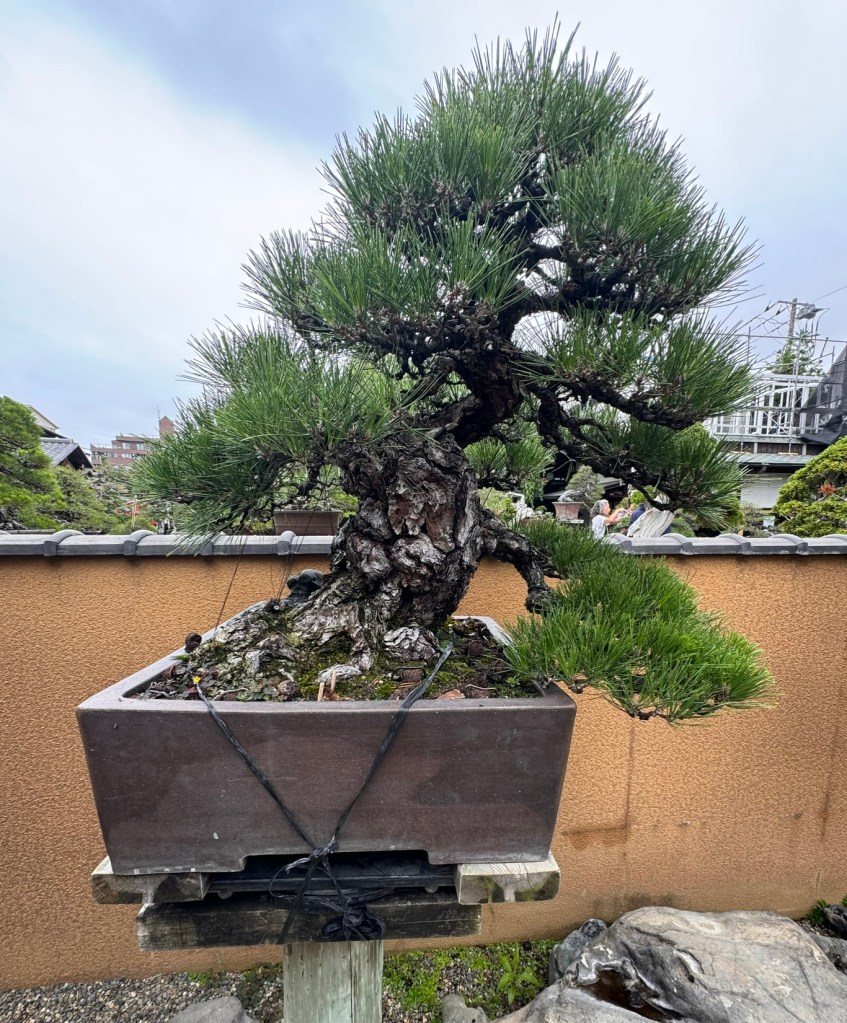
    After taking it all in, it was time to get to work. Bjorn offered a few options, and since it’s pine candle season, we went for it — starting with mekiri (candle cutting) on a striking red pine that had once been part of the famous Kokufu exhibition in 1977.

    The final result

    Bjorn walked me through it patiently, and we spent a couple of hours working through the tree, learning to tell strong, medium, and weak candles apart. Along the way we talked — about my path into bonsai, the growing scene in Israel, his own journey. It felt less like a lesson and more like a conversation between friends.

    From there we moved to a second tree — a raw, likely yamadori material from a forest collection — and started talking through styling options, beginning some early deadwood work.

    before departing his house – had to have the last round again – to absorb it all….

    One day this tree will be mine!

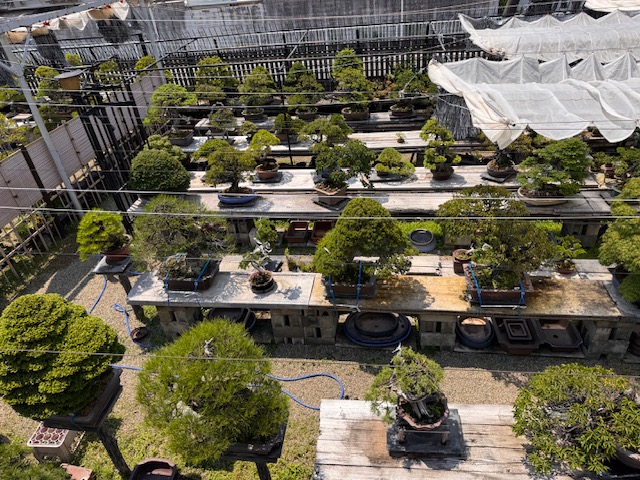
    On the second day, Bjorn took me to Fujikawa Kokonoen, the nursery in Osaka where he’d apprenticed years before. It’s one of the legendary names in Japanese bonsai — Mr. Fujikawa is a master known for decades of refining some of the finest pine and deciduous material in the country, and the nursery itself is essentially a living museum of trees that have passed through generations of careful work.

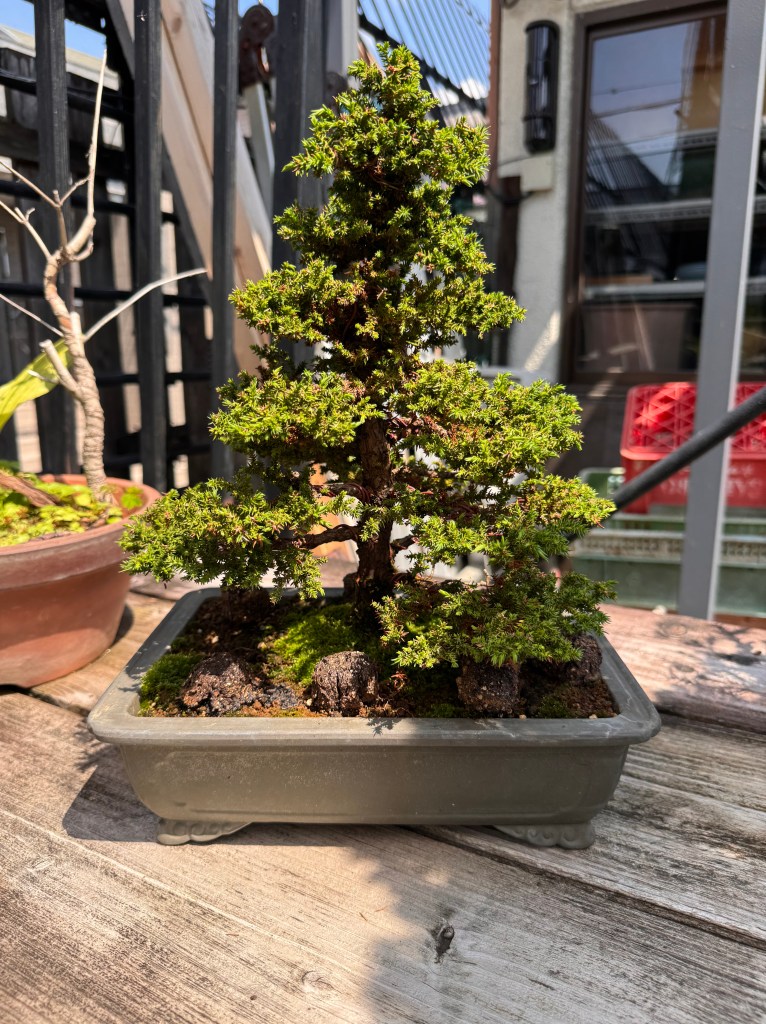
    Japanese Cedar – early stages but already perfect

    As we walked in, we met Joe, an American apprentice just four weeks into the program. We joked that he was still in the “everything is amazing” smiling phase — and honestly, watching him watch Bjorn, you could see the admiration plainly. Joe’s Japanese is still basic, so having Bjorn there to translate with the oyakata was a huge help.

    Joe was working on a black pine, and Mr. Fujikawa asked Bjorn to give him some pointers. There was something special about watching that — the expert guiding the newcomer, translating not just language but technique. When Mr. Fujikawa came over afterward to review the work, he seemed pleased, and through Bjorn he told Joe: it’s fine for where he’s at, but work slowly, don’t rush, be patient — if you work slow and smart, you actually get to a better result faster. Three generations of bonsai knowledge, right there in one exchange.

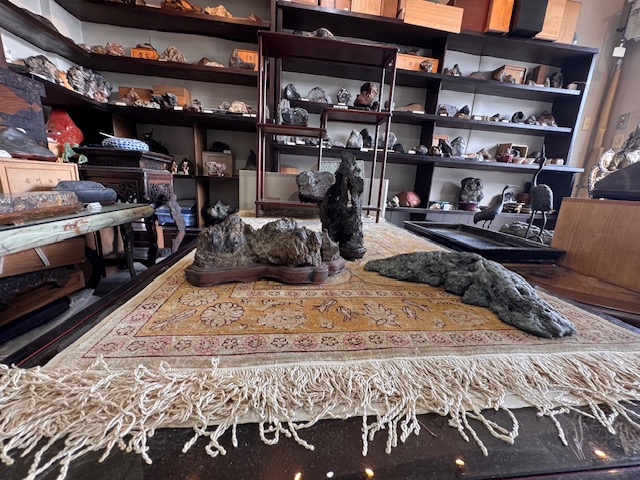
    When Bjorn introduced me to Mr. Fujikawa, I went through the same ritual that’s become a thread of this trip — I gave him the last of my pomegranate bowls, which he clearly loved. He invited me to sit with him for tea, a welcome break from the heat, and afterward we walked through his garden together and took some photos. Before we left, he gave me a gift: a heavy suiseki stone. Lucky for me, my suitcase still had room…

    On the drive back to Kyoto, we talked a lot — about the different masters and their approaches, but also about something more sobering: the sense that the level of bonsai material in Japan is quietly declining, as Chinese buyers acquire so many trees that they rarely get the chance to reach true perfection before being sold.

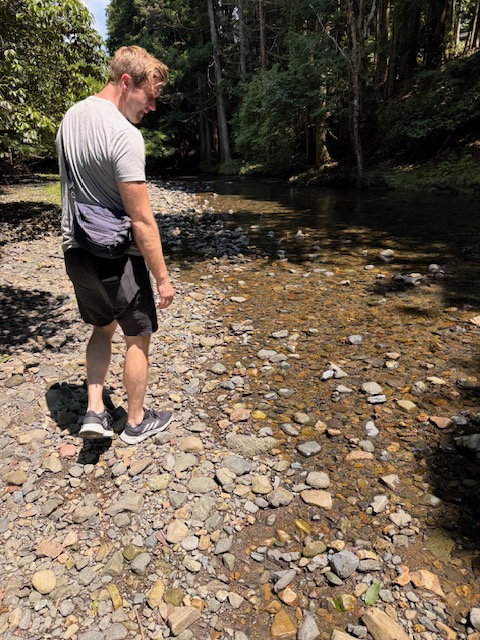
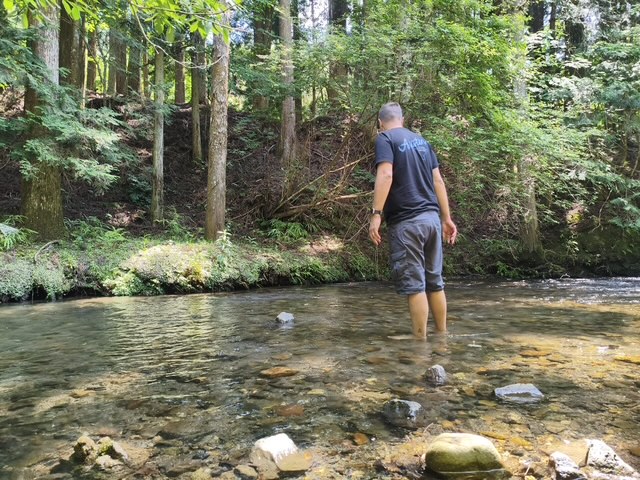
    To round off the adventure, Bjorn suggested something completely different — not trees this time, but stones. He’s a Suiseki enthusiast himself, and on the way back to Kyoto we stopped at the confluence of the Kurama and Kamogawa rivers, famous for the unique stones found there — searching the riverbed for shapes that echo mountains and landscapes in miniature.

    It was a strangely meditative experience. A couple of months ago I never would have guessed I’d be wading through a river in Japan hunting for stones — my wife Anna has always been the one drawn to suiseki, something I’ll admit I never quite got. Now, somehow, I get it.

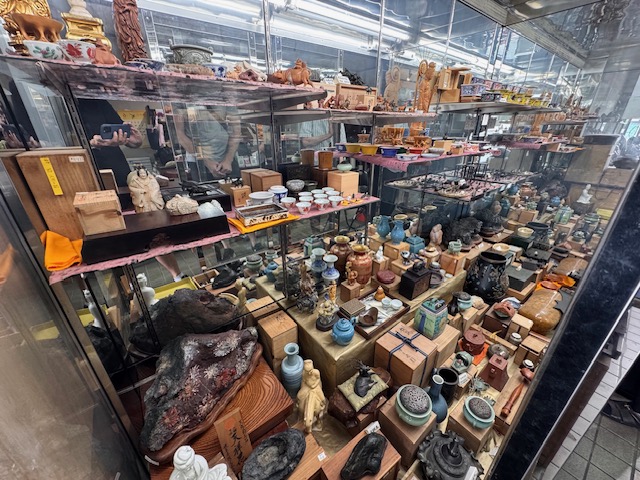
    After a while searching, we visited Kawai Kosoen, a collector’s shop unlike anything I’d seen — stones paired with daiza stands carved to fit their exact contours, antique suibans for miniature zen gardens, decades of quiet artistry in every corner. A calm, grounding way to close out the day.

    That afternoon with Bjorn — trees, garden, stones, zen — captured something I’ll carry with me for a long time.

    And with that, the bonsai pilgrimage comes to an end. As I start the long journey home — suitcase heavier with pots and a stone I definitely didn’t plan for — I’m reminded that the real weight I’m carrying isn’t in the luggage. It’s in everything I saw, learned, and felt: gardens built with intention down to the last gutter, masters guiding apprentices with patience across generations, old friends made new, and a craft that connects art, nature, and time in a way that’s hard to put into words.

    This trip didn’t feel like an ending. If anything, it felt like a beginning — a deeper appreciation for the path, and a renewed hunger to keep walking it.

    Until the next journey, Sanoyara Japan – and thank you for eveything you gave me!

    BonsaiNomad

  • Daitoku-ji’s Hōshun-in – A Garden Just For Me

    Daitoku-ji’s Hōshun-in – A Garden Just For Me

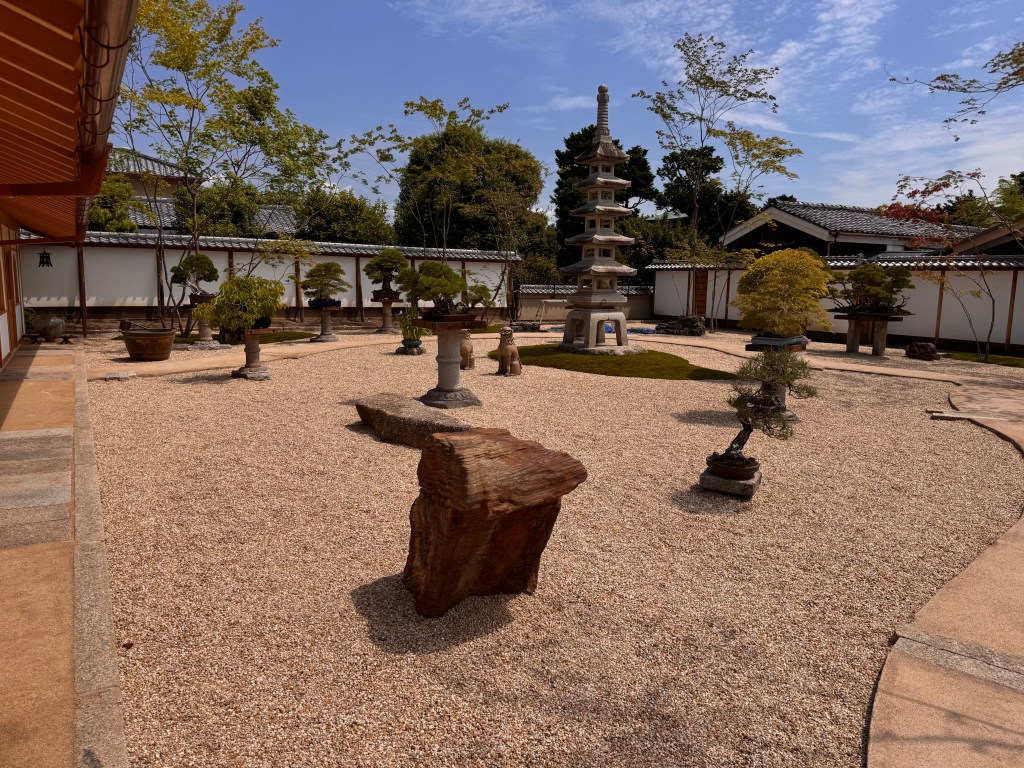
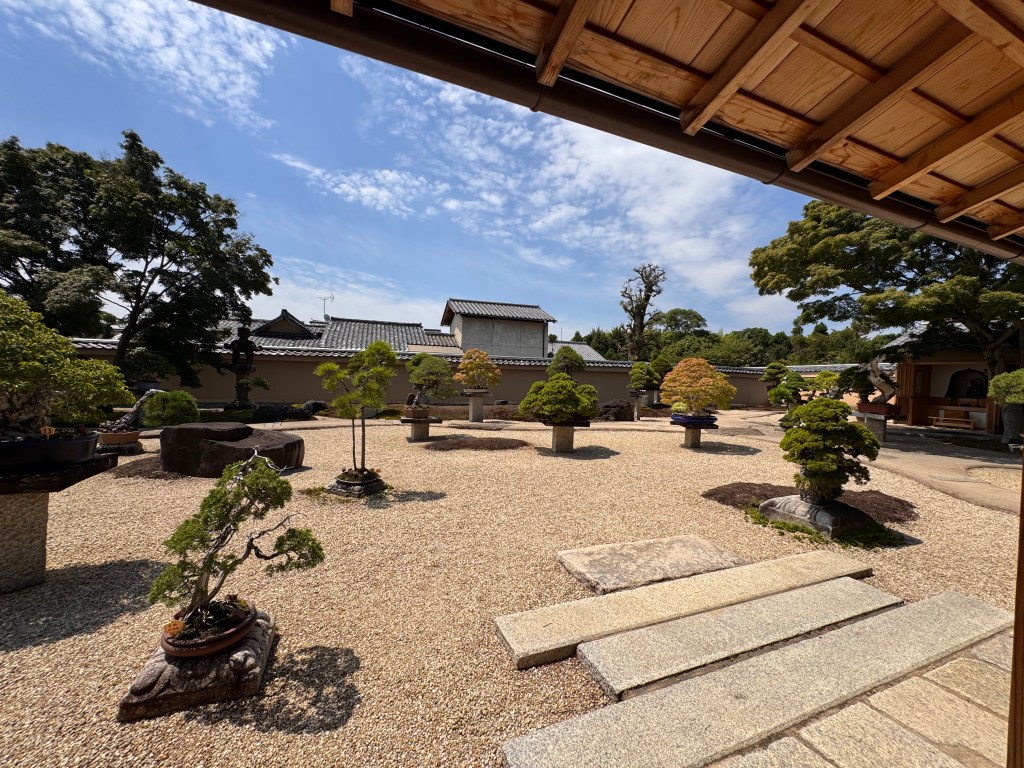
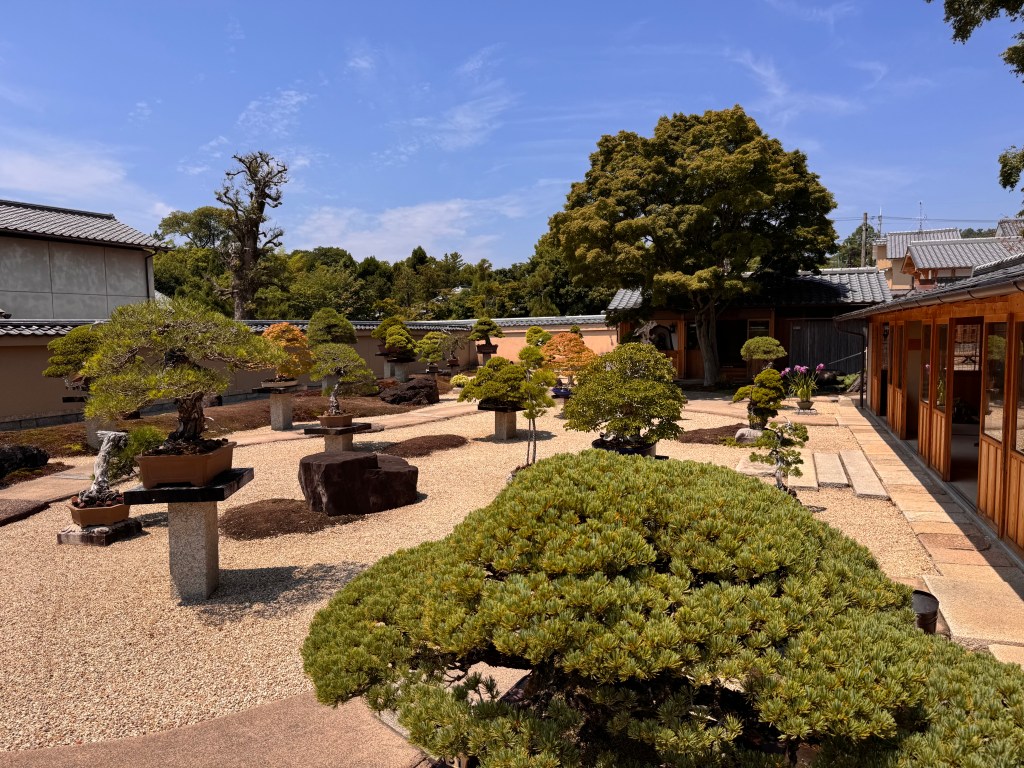
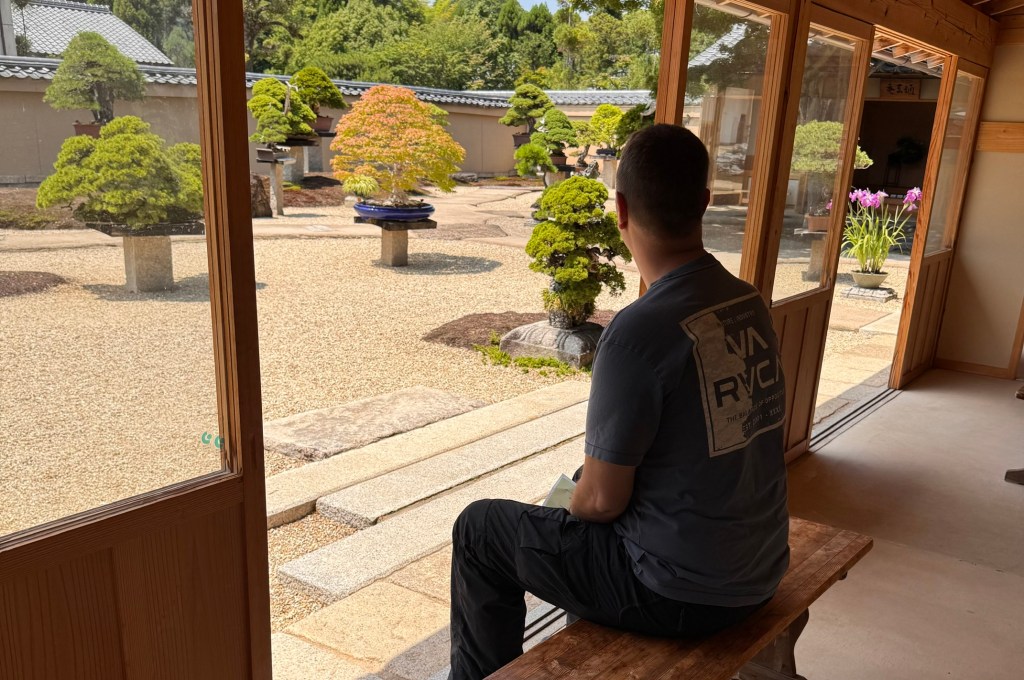
    I started my morning at Daitoku-ji, a vast Zen temple complex in northern Kyoto, founded in the 14th century. Among its many temples and gardens, I made my way to Hōshun-in — a famous bonsai garden I had known only from books and countless bonsai videos. I arrived just as the gates opened, and for the entire visit, the garden was mine alone — just me and the trees.

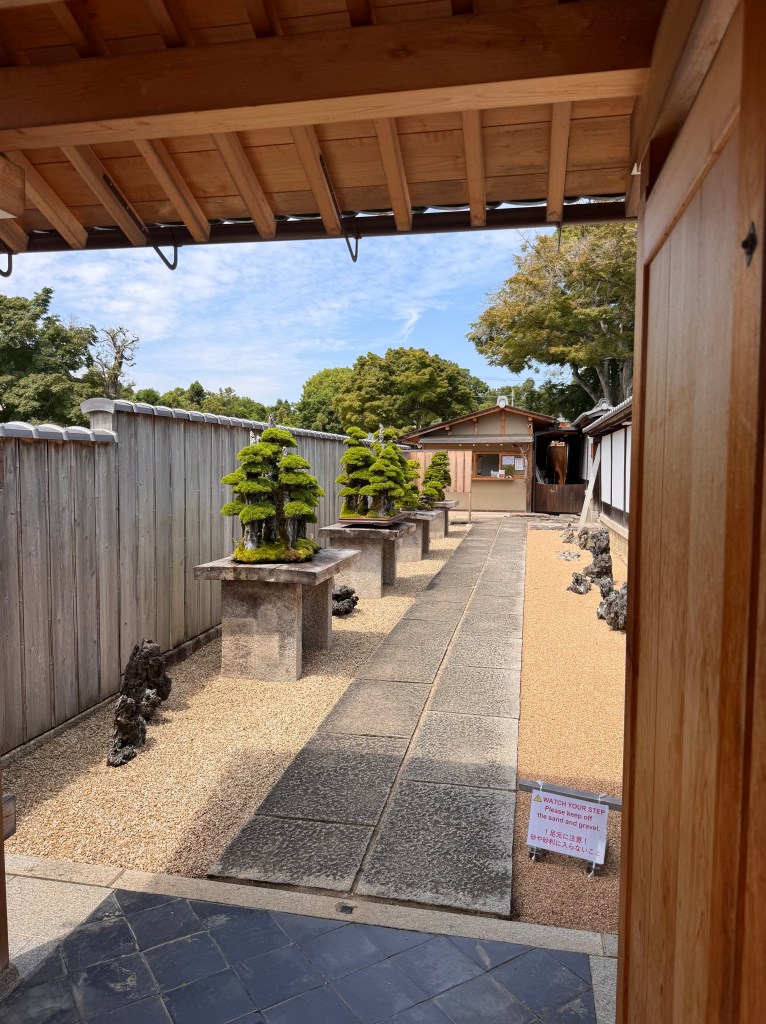
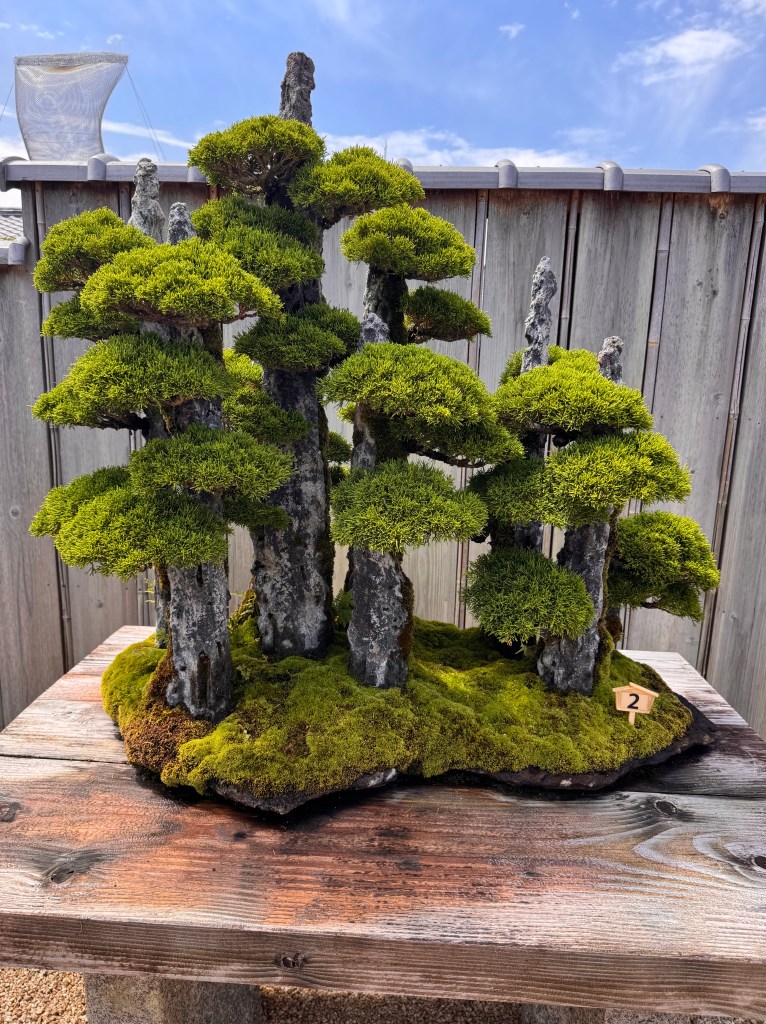
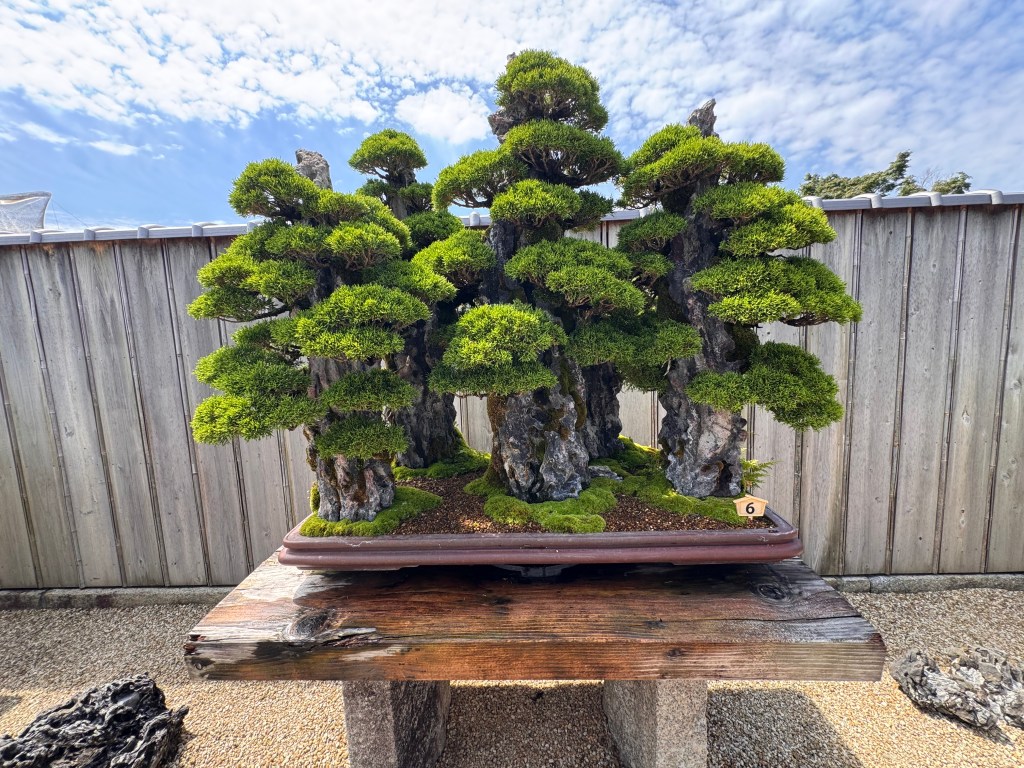
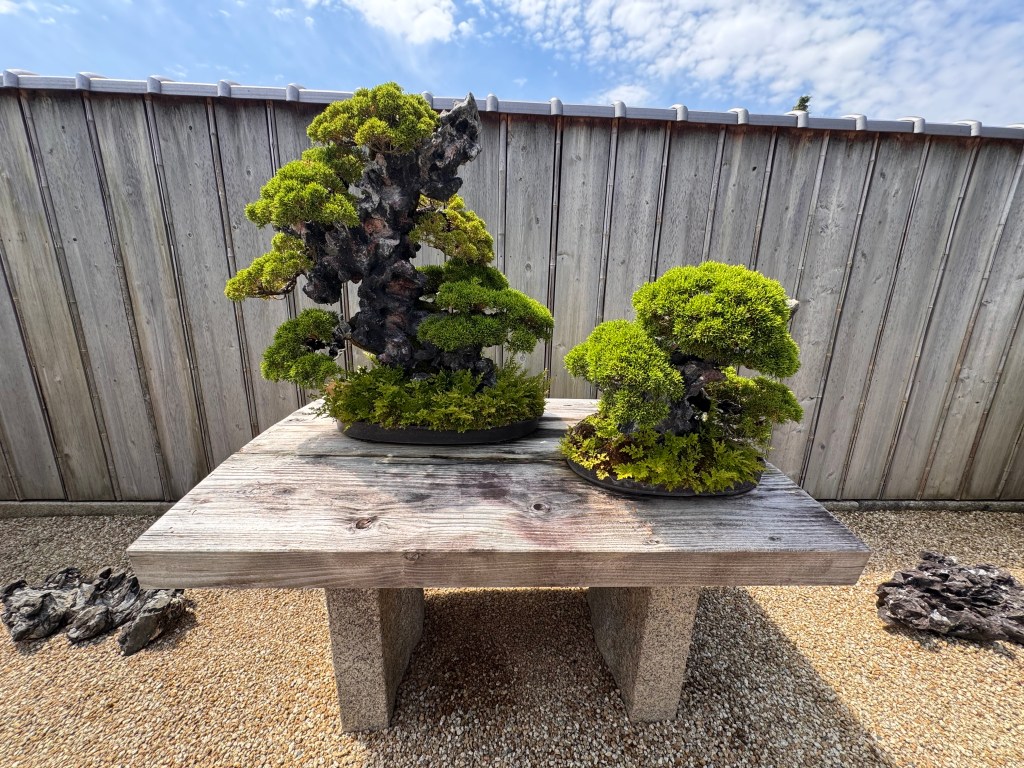
    I walked the marked trail and went tree by tree, taking my time with each one. The collection is really impressive — pines, junipers, maples, all displayed outdoors on individual stands, numbered and labeled. If I could have a display like this in my own backyard one day, that would be a dream.

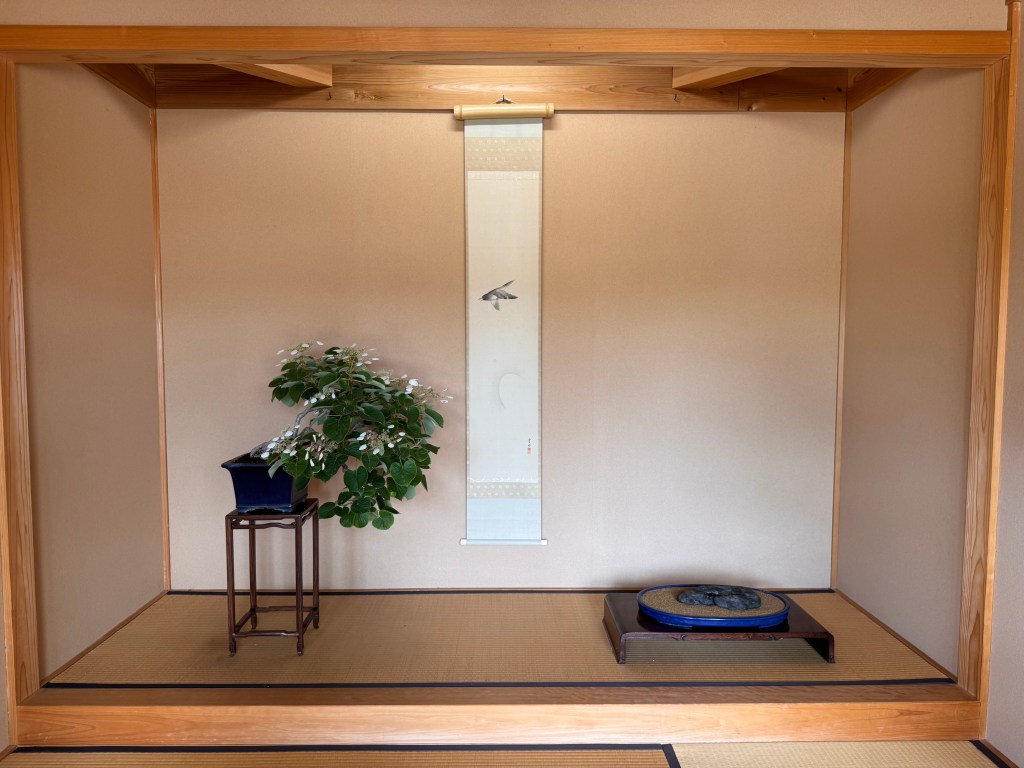
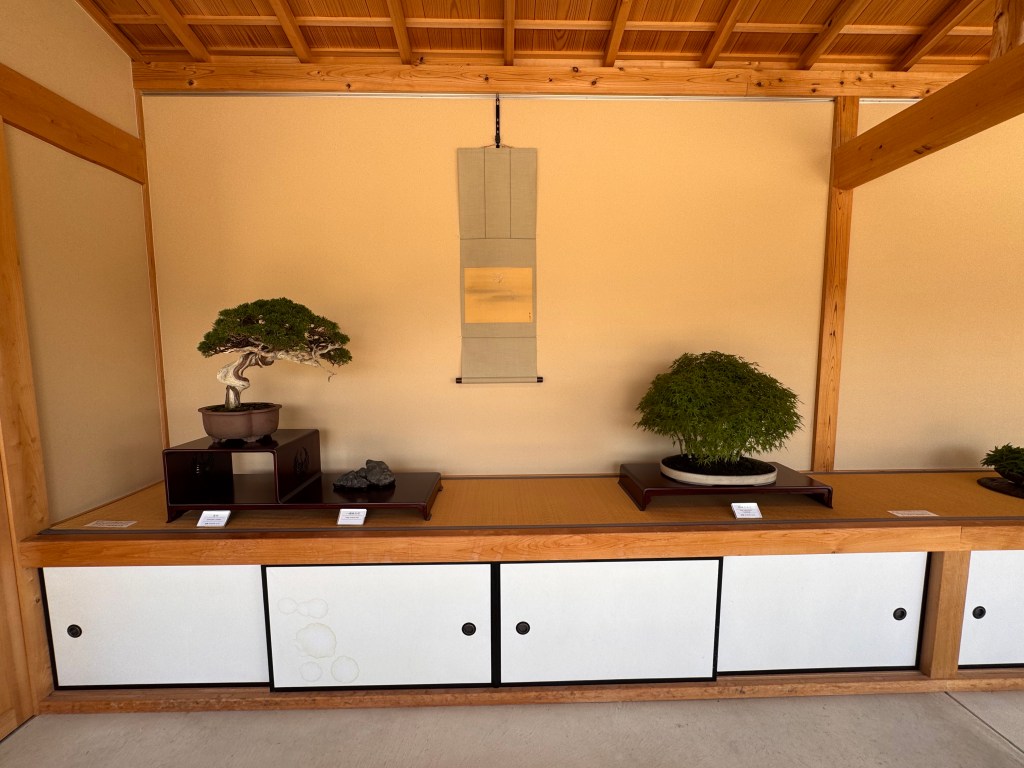
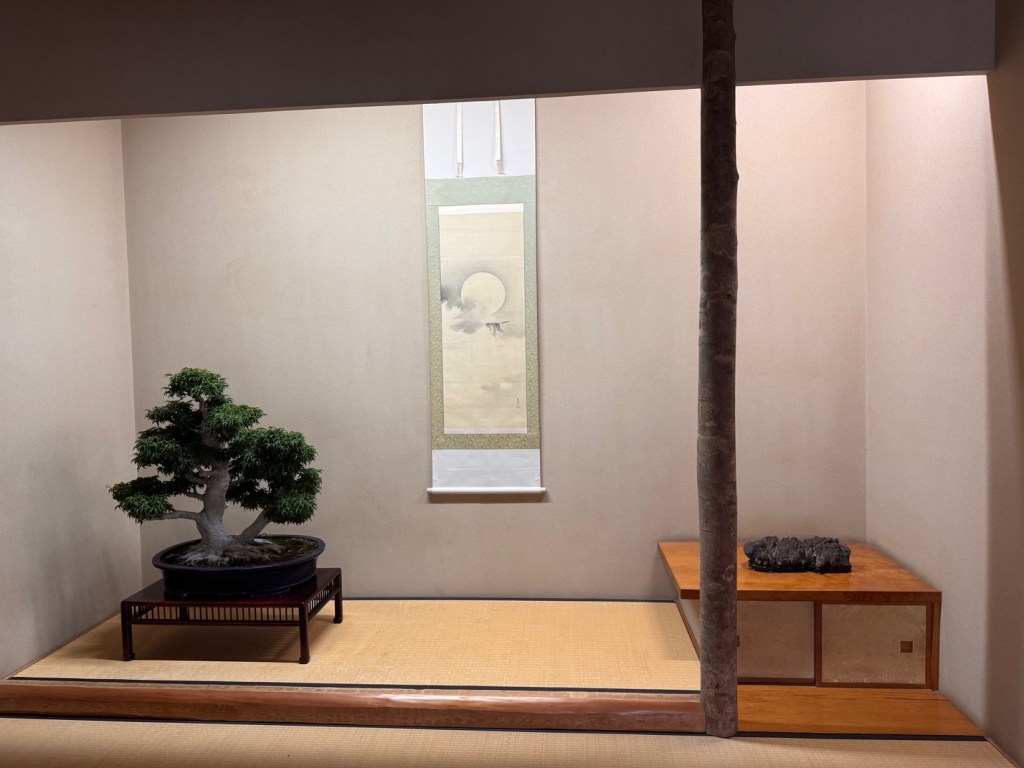
    Indoors, the display alcoves – “Tokonoma” – showed me something I hadn’t fully appreciated before — the complete picture. A tree, a hanging scroll, a viewing stone, sometimes a second accent tree, all arranged together to tell one seasonal story. In one alcove, a flowering hydrangea sat beside a scroll of a swallow in flight, with a small stone on a tray beside them — sea, sky, and shore, distilled into three objects on tatami. In another, a juniper and a maple flanked a scroll, with a black stone shaped like a distant mountain resting on its own little stand.

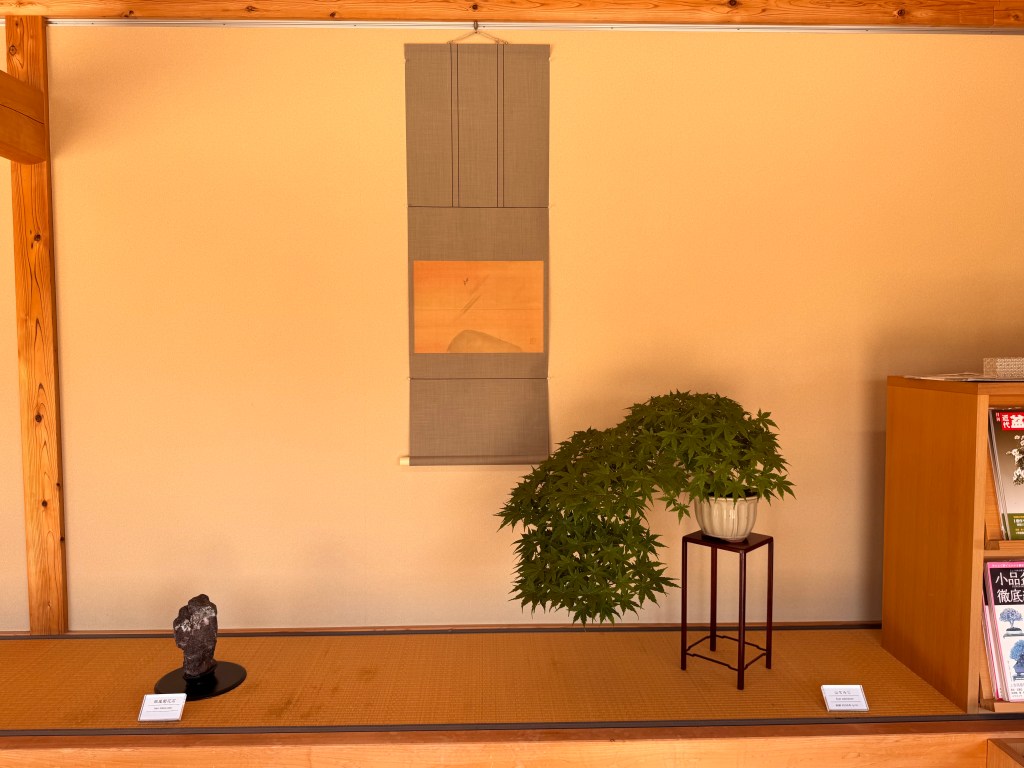
    Then there was a rock displayed completely on its own, no plant at all — labeled Yase Sudachi-ishi, a stone from the Yase area, presented with the same reverence as any tree. That’s when something shifted for me.

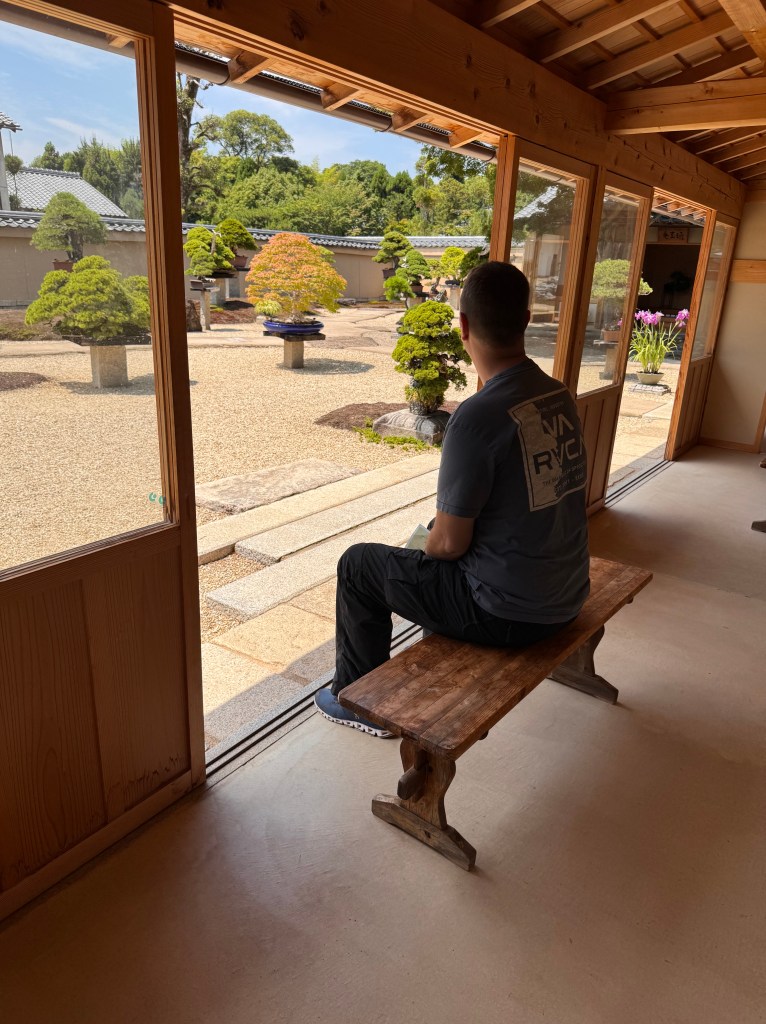
    I sat on a bench for what must have been thirty minutes, just looking. Thinking about how six months ago I knew nothing about any of this, and now here I was, alone in a centuries-old temple garden, completely absorbed. What had brought me to this new passion? What does it actually mean to spend this much time and care on something so small, so slow? It led me somewhere bigger — toward what’s really important in life.

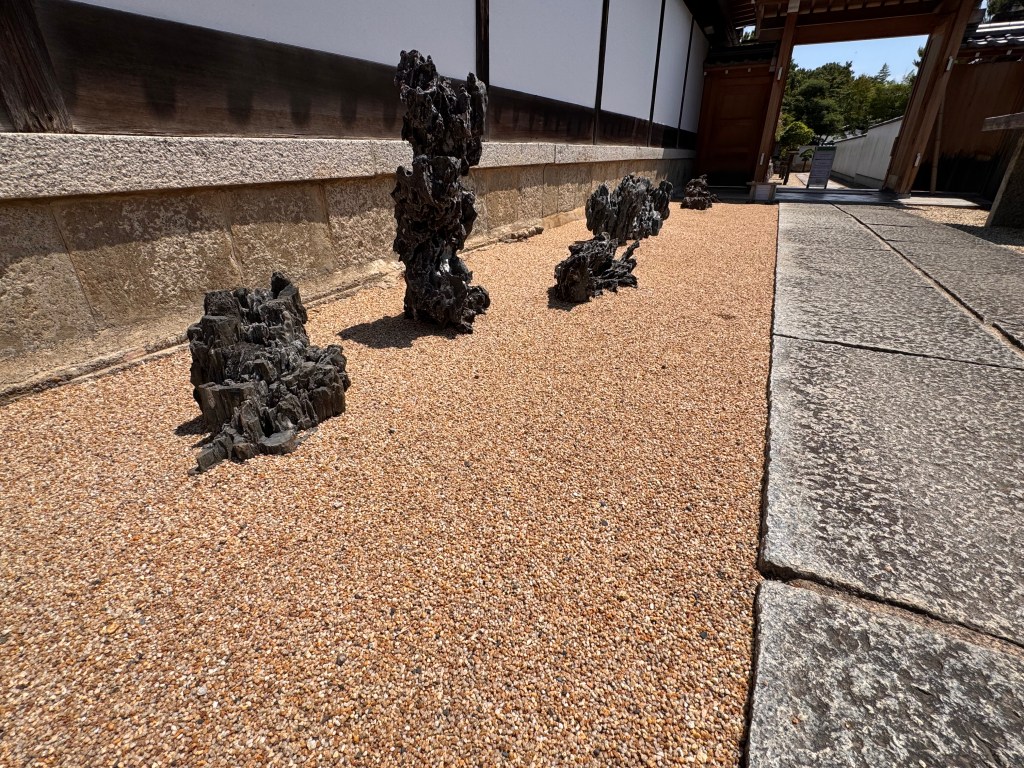
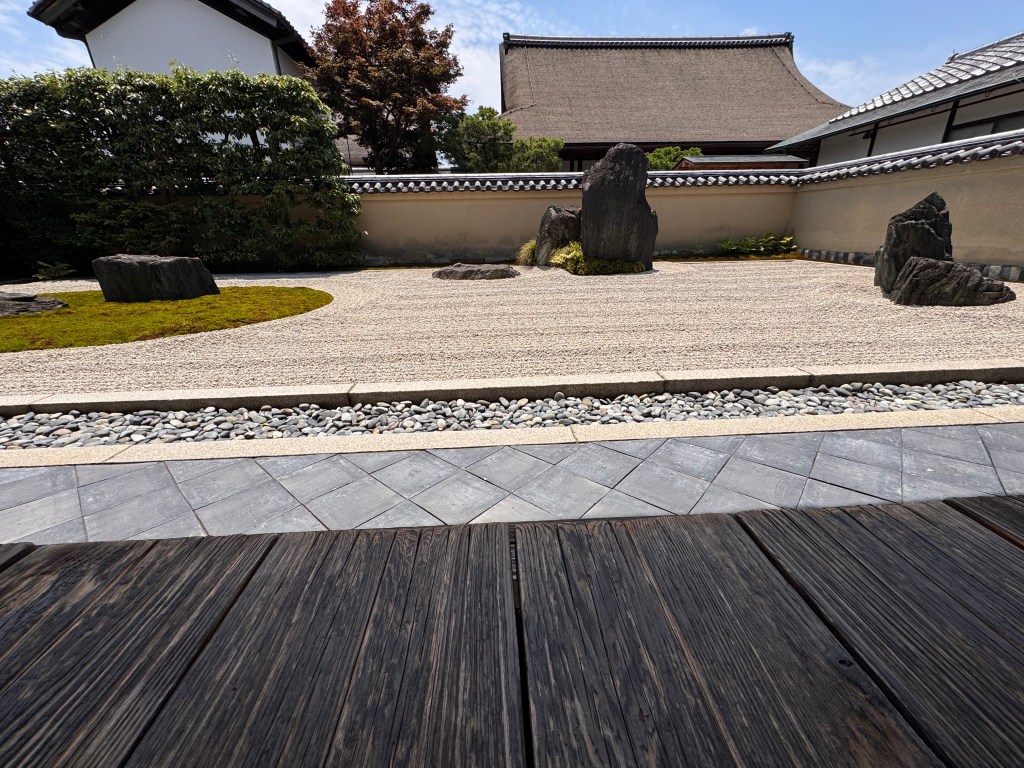
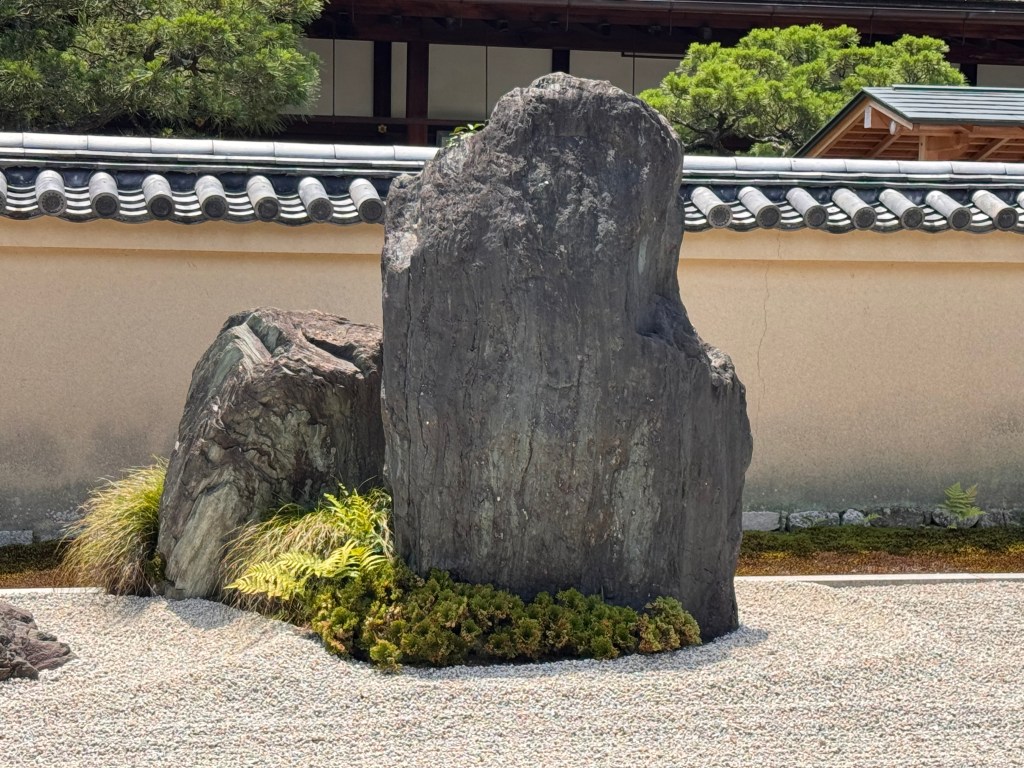
    When I got up and looked again, I noticed the details I’d usually walk past: the overall garden setting, the moss, and — the rocks. Wow. These rocks. All of a sudden it hit me. This wasn’t just a nice garden with nice stands holding nice trees. It was the entire landscape — the sea, the mountains, the forests — compressed and suggested through stone and moss and form. The individual bonsai stopped being individual specimens and became elements in something much larger, the way a single stone in a Zen garden stands in for an entire mountain range.

    As I walked away, I noticed more stones along the trail leading toward the garden — mountains, on the way in, that I hadn’t seen as mountains the first time. Only the trees, on the way in. The complete picture, on the way out.

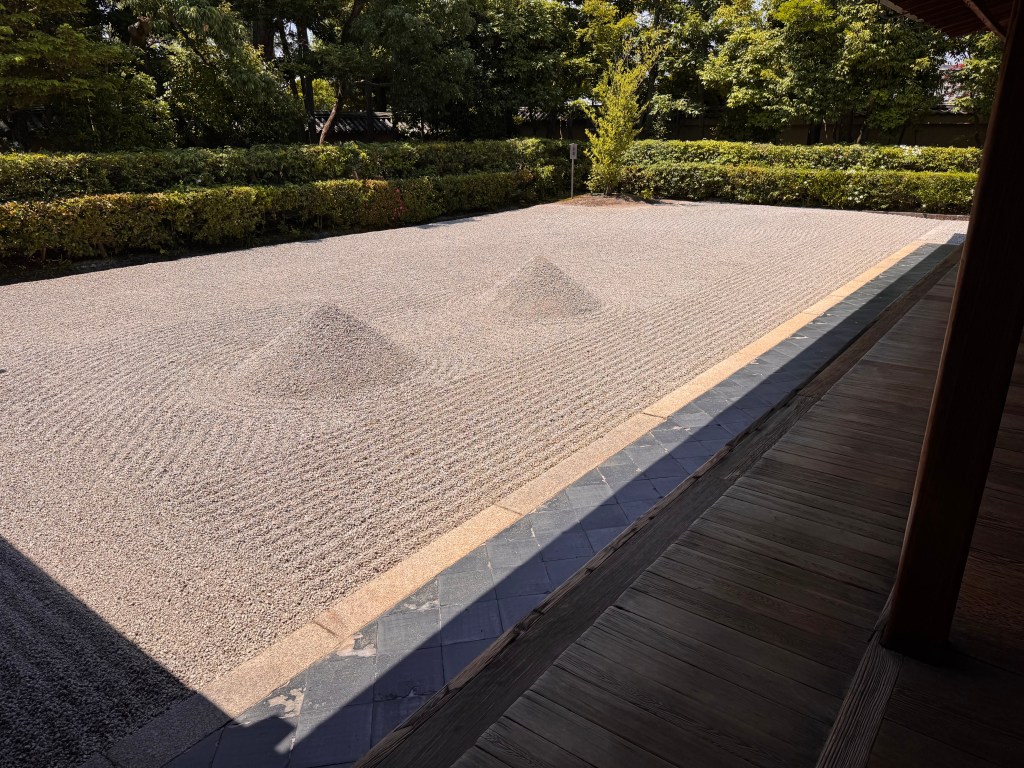
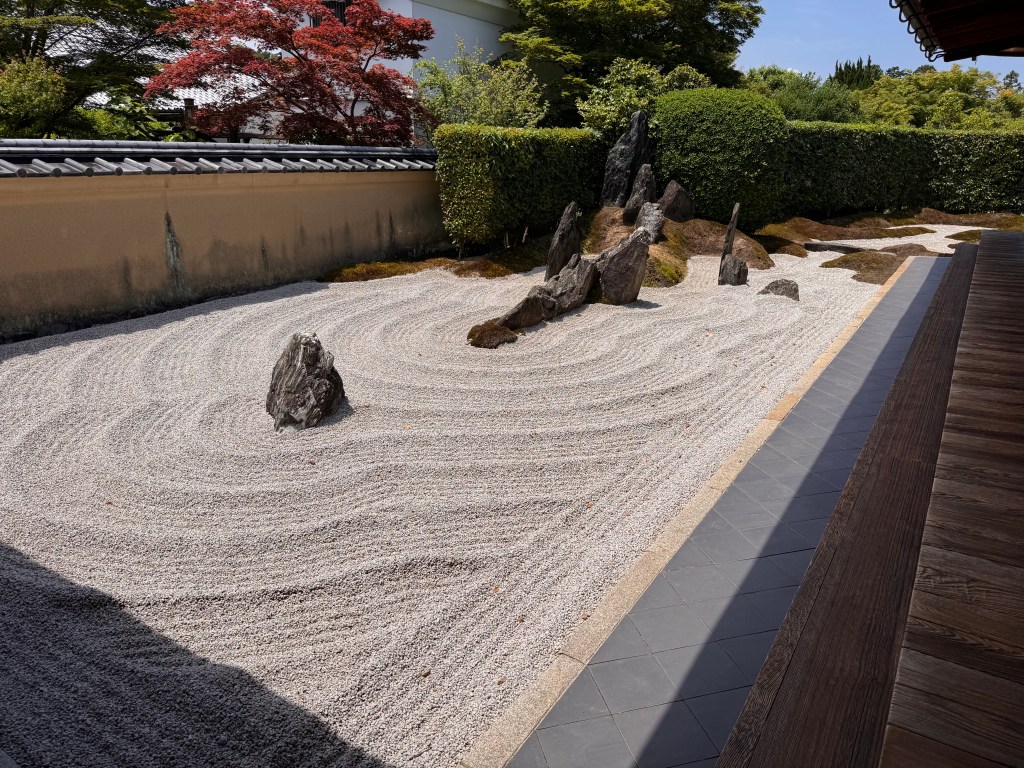
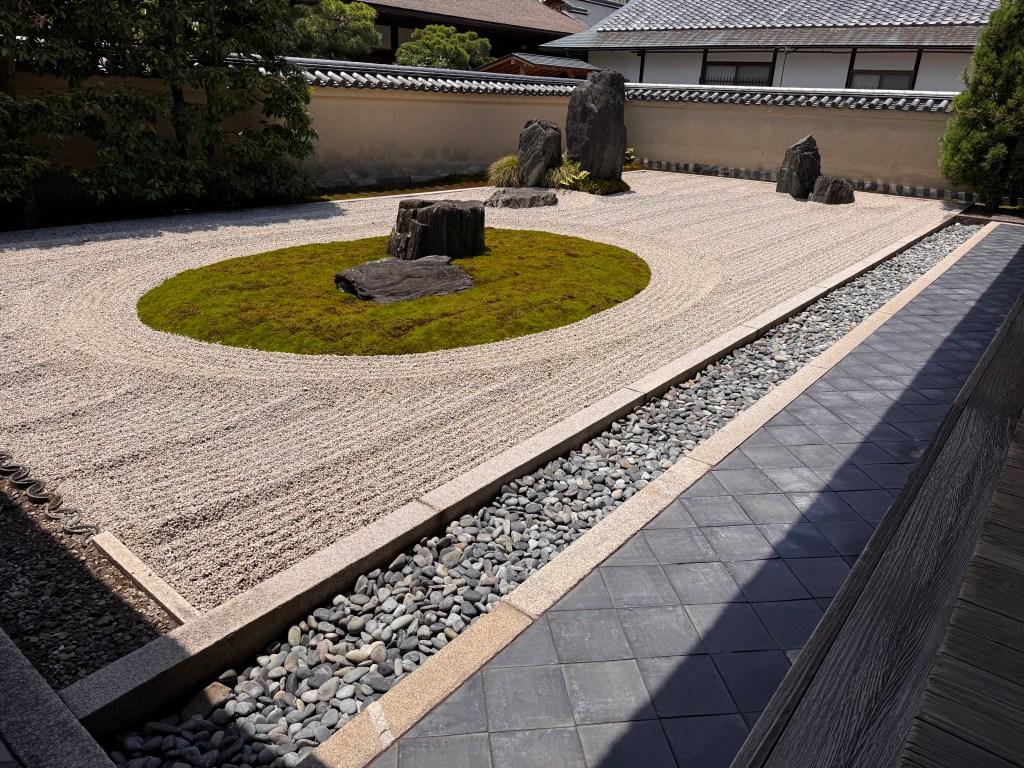
    From Hōshun-in I continued into the wider Daitoku-ji complex — a sprawling maze of walled sub-temple compounds connected by stone paths, red-lacquered gates, and centuries-old pines leaning over tiled walls. Daitoku-ji is the headquarters of the Rinzai Zen school founded in the 14th century, and many of its sub-temples hold their own karesansui, dry landscape gardens — where the principle I’d just stumbled onto at Hōshun-in is taken to its purest form.

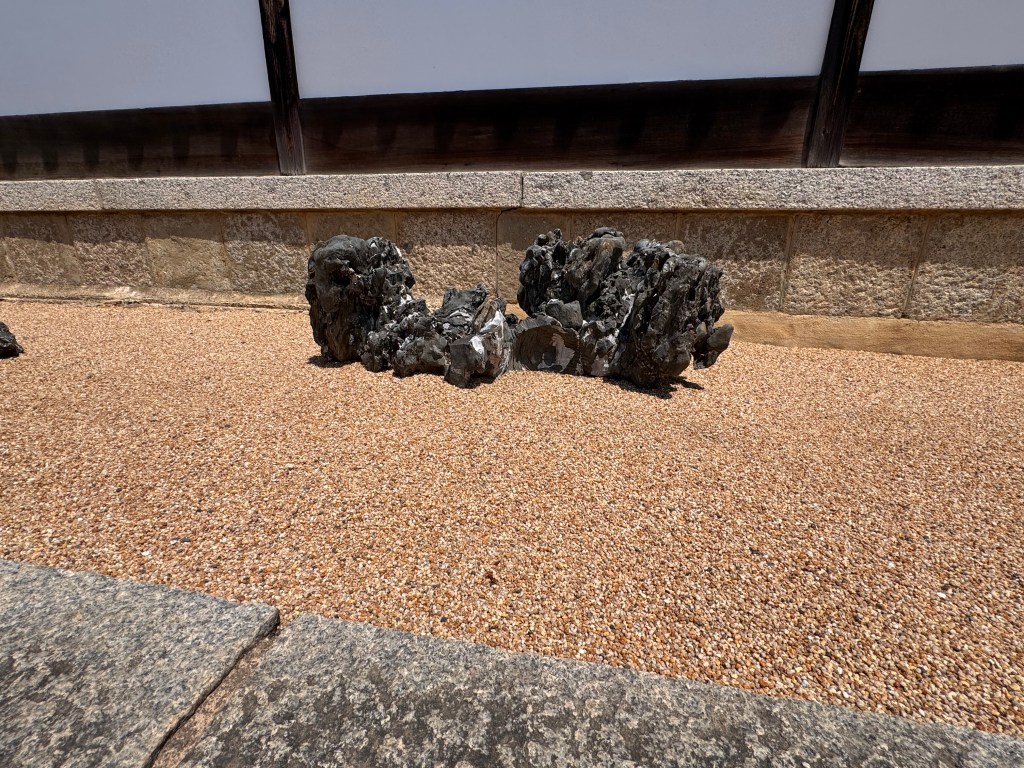
    A Zen garden uses rock, raked gravel, and moss instead of water and living plants to create a distilled, abstract landscape meant for contemplation rather than walking through. Raked gravel represents water — rivers, oceans, ripples around obstacles. Large vertical rocks represent mountains, islands, or sometimes a Buddhist triad. Moss suggests forest and the passage of time. And the empty space between elements is as important as the elements themselves — it’s where the mind completes the scene.

    Walking these gardens after my morning at Hōshun-in, I couldn’t unsee it. Every rock was a mountain. Every raked line was water. The whole complex was one continuous meditation on landscape, scaled from a single bonsai pot to an entire temple ground.

    I left Daitoku-ji slower than I arrived — which is really the whole point, I think. From here – to another part of Kyoto – Visiting Bjorn! something I’ve been looking forward to for a long time. More on that soon.

    .

  • Japan Pilgrimage Part 2: Heading South Tokyo → Nagoya → Tokoname

    Japan Pilgrimage Part 2: Heading South Tokyo → Nagoya → Tokoname

    There’s something quietly thrilling about a pre-dawn departure from Tokyo. The Shinkansen south earns its reputation – Mount Fuji sliding past the window like it’s posing, and you forgive it completely for being such a cliché because it really is that beautiful. Ninety minutes later, Nagoya.

    Aichi-en: A Garden 130 Years in the Making

    Nagoya doesn’t always make the bonsai pilgrim’s shortlist – Omiya gets the glory, Kyoto gets the mystique. But for pine bonsai at the highest level, Nagoya has Aichi-en (愛知園).

    I’d reached out in advance, and it was Andrej who came back to me – a young apprentice from Slovakia, now in his fourth year training under Junichiro Tanaka. He sorted out the visit and was waiting at the garden when I arrived. The master came later that morning, so my introduction to Aichi-en was entirely through Andrej – and I couldn’t have asked for a better guide.

    Four years in, sharp and ambitious, clearly devoted to the craft. He said something that stayed with me: sometimes it’s better to arrive with no bonsai experience at all. Starting from scratch is easier than unlearning years of bad habits. Real wisdom from someone who crossed the world to learn this properly.

    Andrej walked me through the history of the garden – and straight to its most legendary resident.

    Founded in 1896 by Sukijiro Tanaka, a farmer back then who planted a thousand apricot trees. One of them looked different. Something in its form caught Sukijiro’s eye and he dug it up and potted it. A week later, a tsunami hit the region and destroyed all 999 trees still in the ground. The odd one – the potted one – survived!!

    That tree is still alive today. One hundred and thirty years old. Still standing in the garden it helped create.

    It survived a second catastrophe too. During World War II, Nagoya was heavily bombed. Much of the garden was destroyed. When the smoke cleared, the apricot tree was still there. Twice the world tried to take it. Twice it refused.

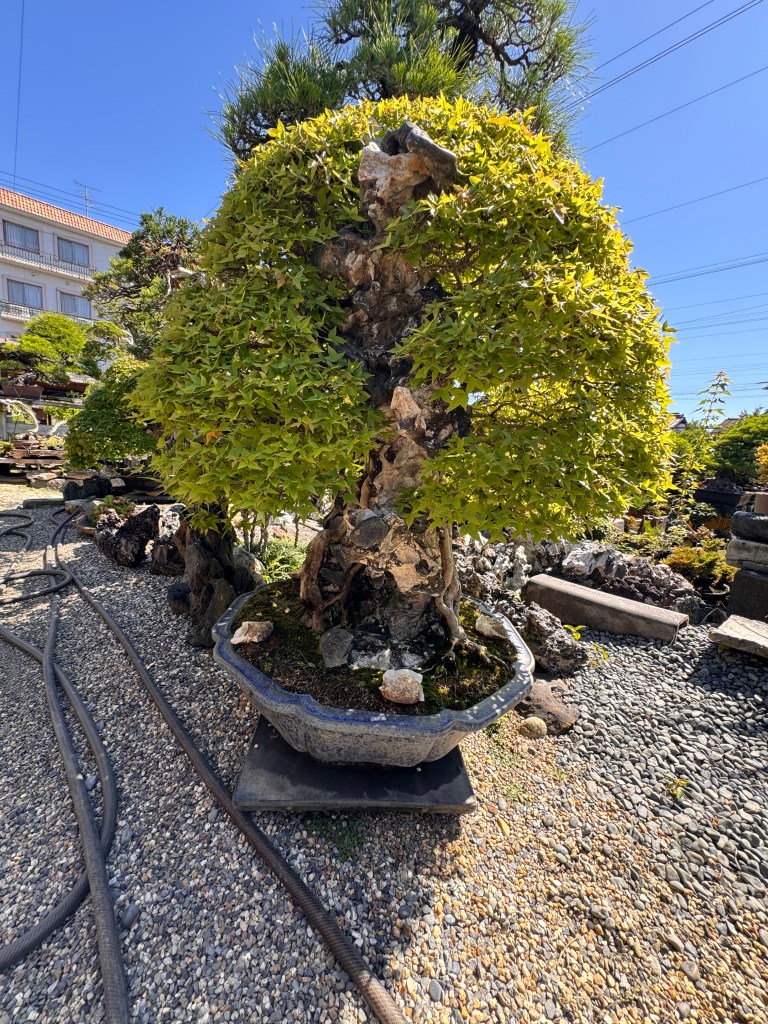
    The garden’s second great symbol is quieter but no less powerful – deciduous trees growing on a rock, an image that somehow captures everything bonsai is about: resilience, beauty emerging from the most unlikely conditions.

    When Junichiro arrived, I gave him the pomegranate bowl I’d brought from Israel – the same gift I’d carried to Kimura. He held it, turned it over, genuinely appreciated it. He’s different from the other masters I met on this trip – more open, more modern, speaks English, teaches his students from the very beginning without the rigid formality you find elsewhere. Different style, different energy. No less inspiring.

    Every garden on this pilgrimage has moved me differently. That, I think, is the real lesson. There is no single path to mastery in bonsai. There are only people who care deeply, each finding their own way to the same devotion.

    Tokoname: Beauty and Melancholy

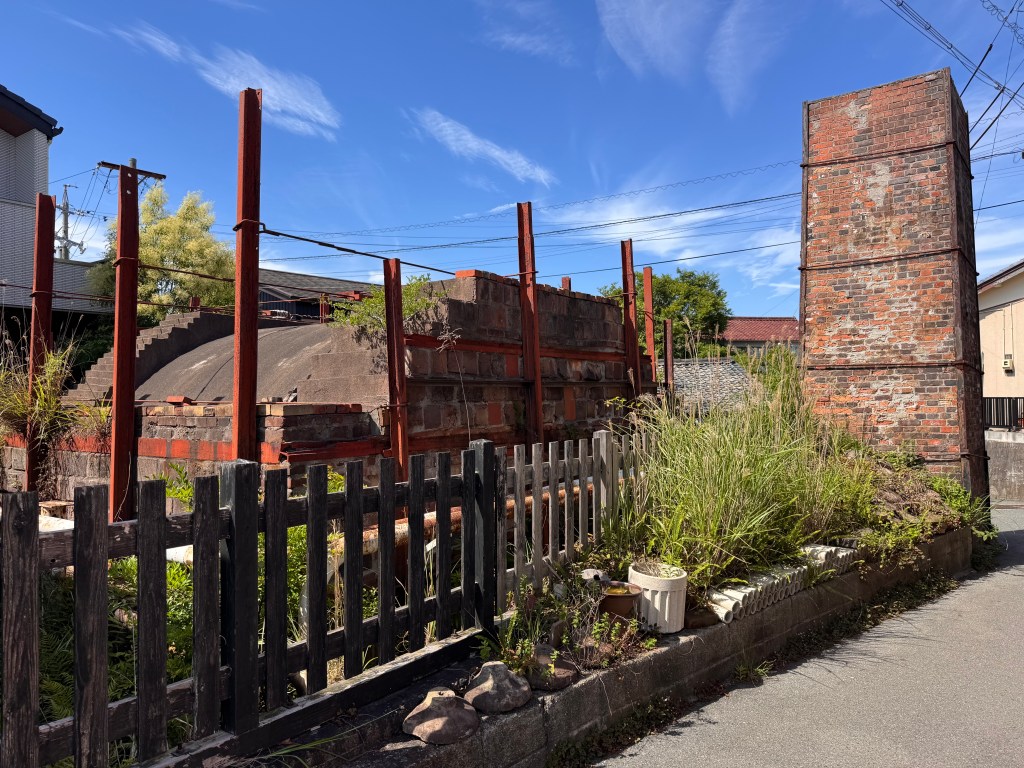
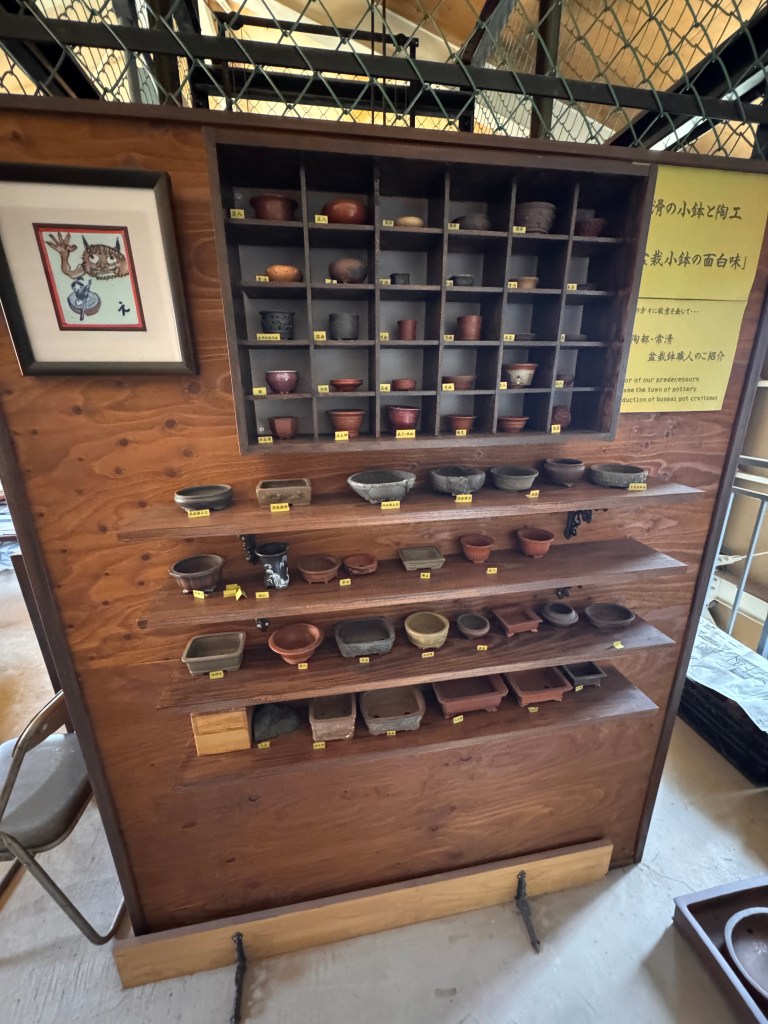
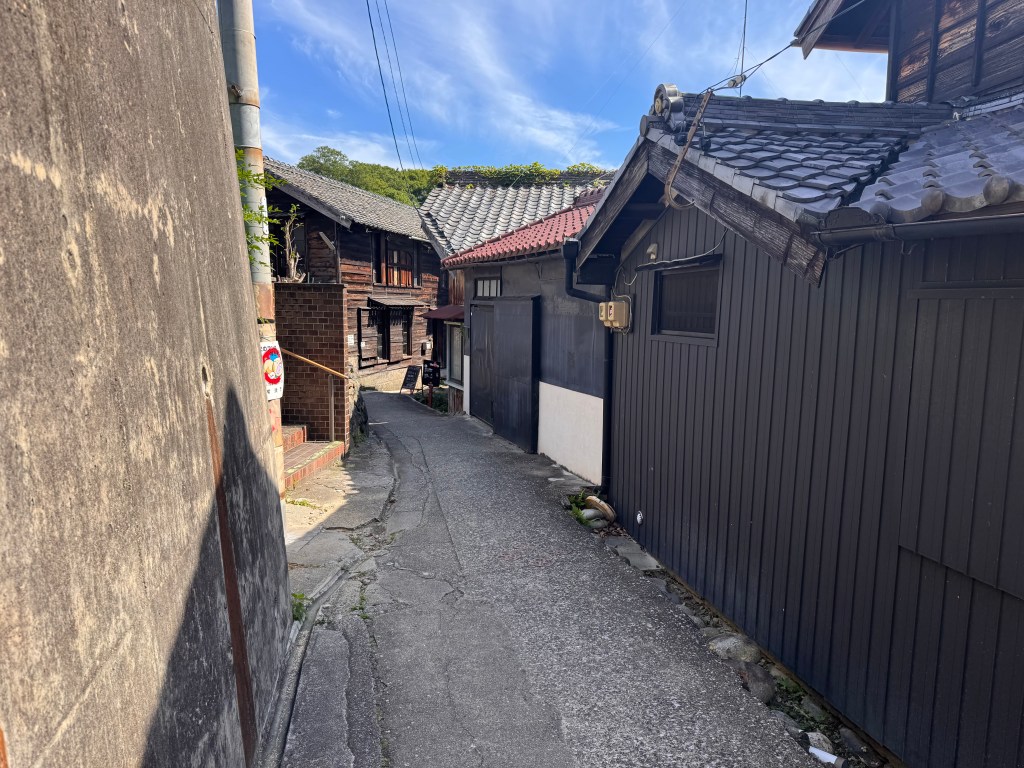
    Tokoname is about 45 minutes south of Nagoya, and it holds a sacred place in the bonsai world. The old town is stunning – narrow alleys, clay walls embedded with discarded kiln pieces, ancient climbing kilns standing like monuments to another era. Walking those streets, I felt genuinely transported.

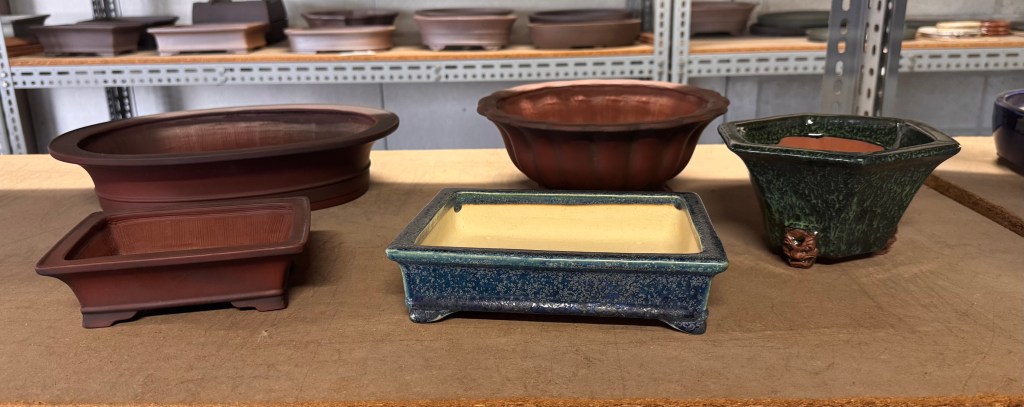
    My first stop was Marutatu Isomura Shouten – a tip from Jonas, and one of the best pieces of advice I received on this entire trip. It’s a warehouse full of Tokoname pots from different makers – the perfect place to start.

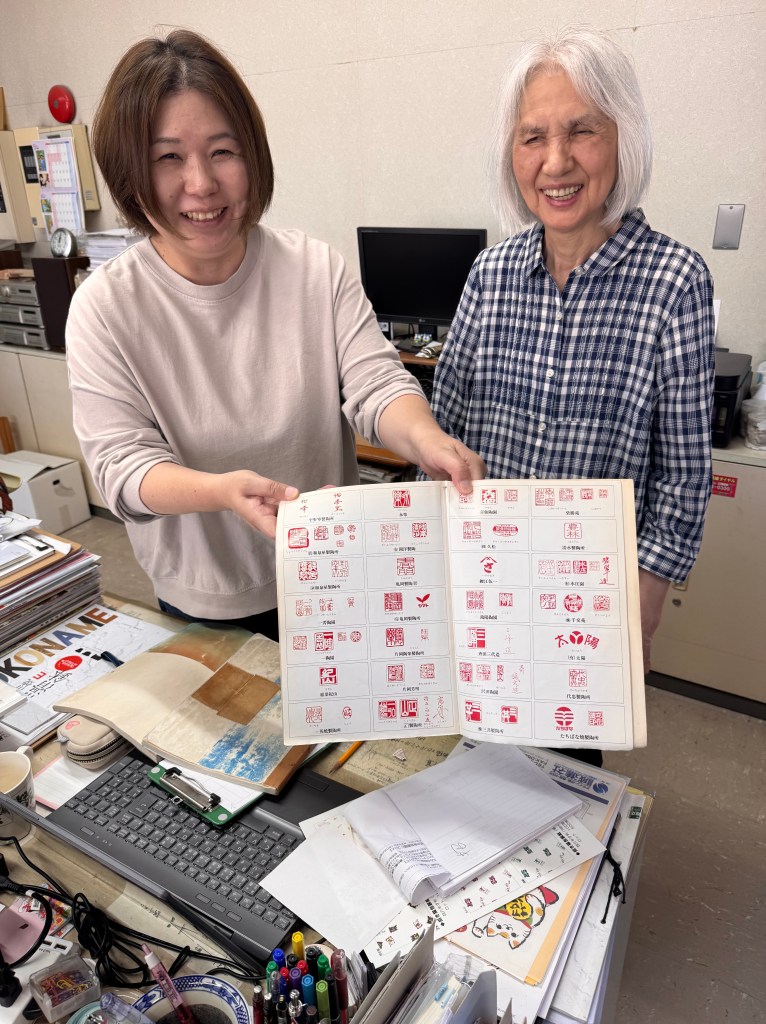
    The team there is wonderful – knowledgeable, warm, and deeply passionate about bonsai. I showed them a photo of the signature on a pot I had acquired years ago, without knowing who the artist was. Without hesitation, they reached for several thick, old reference books cataloguing potters’ signatures – a piece of living history in itself.

    Within minutes, they had the answer: Kizan. An old master potter who stopped producing pots more than twenty years ago. They explained that he used different signatures for different styles of his work, and they had every variation carefully documented. It was remarkable to witness such expertise and dedication firsthand.

    That moment alone was worth the trip. And then, of course, I bought pots. Classic Bigei pieces and more. It was stronger than me – I’ll figure out how to get them home later. Why worry now?

    But alongside the wonder of Tokoname, something else crept in. A melancholy I hadn’t expected.

    This is a tradition in decline. Many of the great pot makers have passed away. Others are too old to keep producing. The next generation has mostly chosen the big cities. Shops that once overflowed with famous Tokoname pots now stand largely empty – stock that won’t be replenished. A craft that may not survive another generation in the same form.

    It made me hold every pot with a reverence I hadn’t anticipated.

    Ikko Watanabe: Art in Silence

    The team at Marutatu called Ikko Watanabe on my behalf – without them, the afternoon would have been a very different story. He came to pick me up from the station himself.

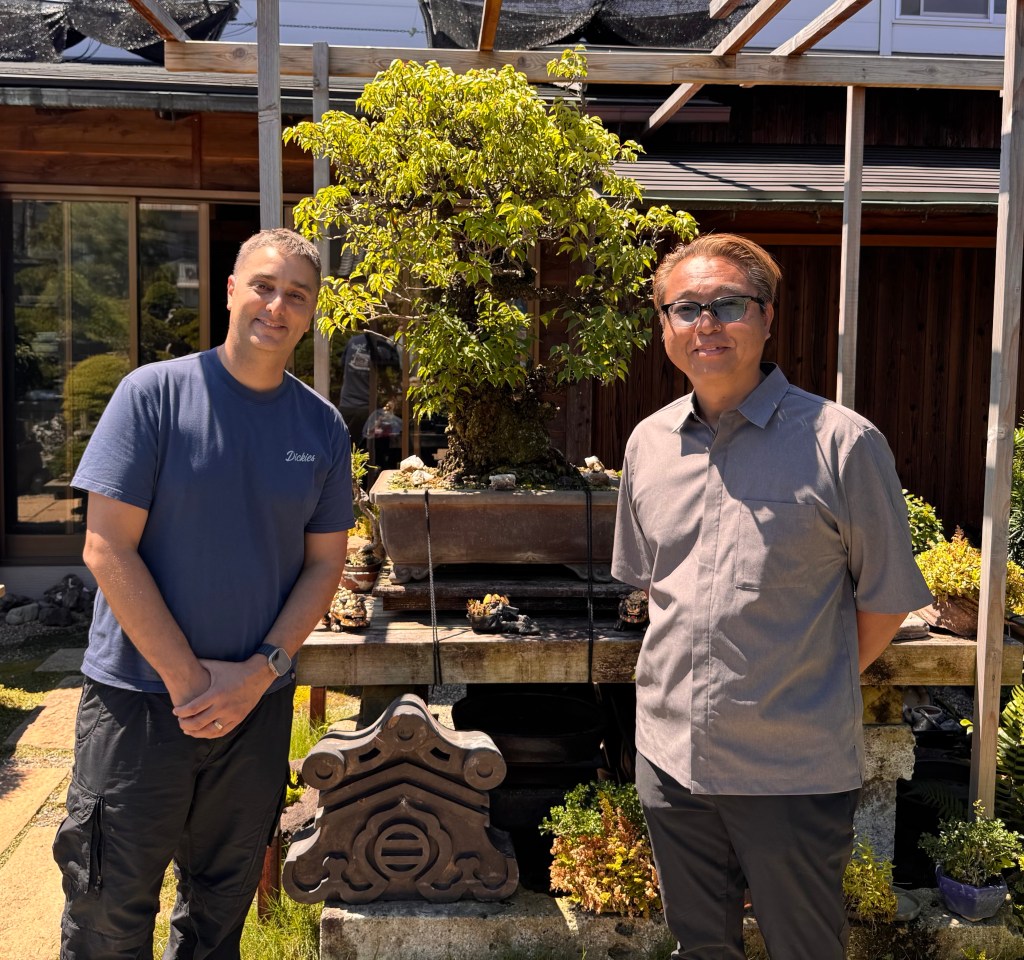
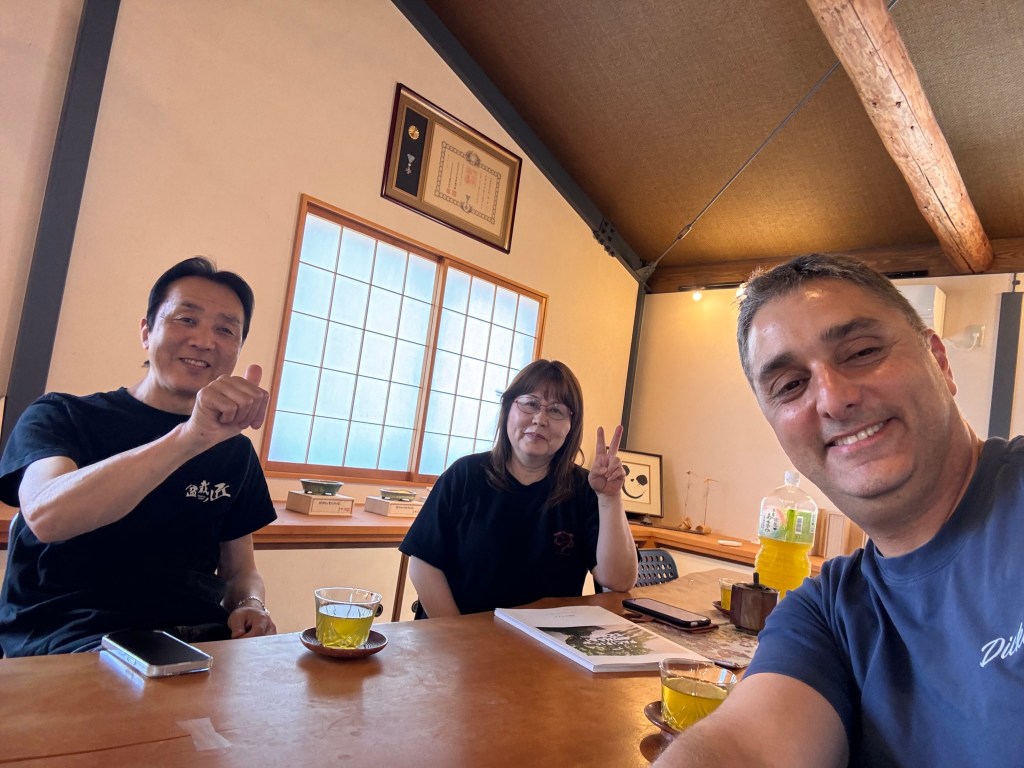
    Ikko was waiting – warm, smiling, a man who’d never met me before but said yes to a stranger’s text without hesitation. He welcomed me into his home, where his workshop sits, and I understood immediately I was somewhere special. On the shelves sat his pots – exhibition-level pieces, hand-built the old traditional way. And among them, pots made by his father, who passed away fifteen years ago. Two generations of work, side by side.

    We talked through Google Translate – perfectly sufficient for two people who love bonsai. He asked about Israel, about the community, about which trees we grow. His wife joined us, brought drinks and snacks, and we sat together for the better part of an hour. The kind of hospitality that makes you feel like you’ve known someone for years within twenty minutes.

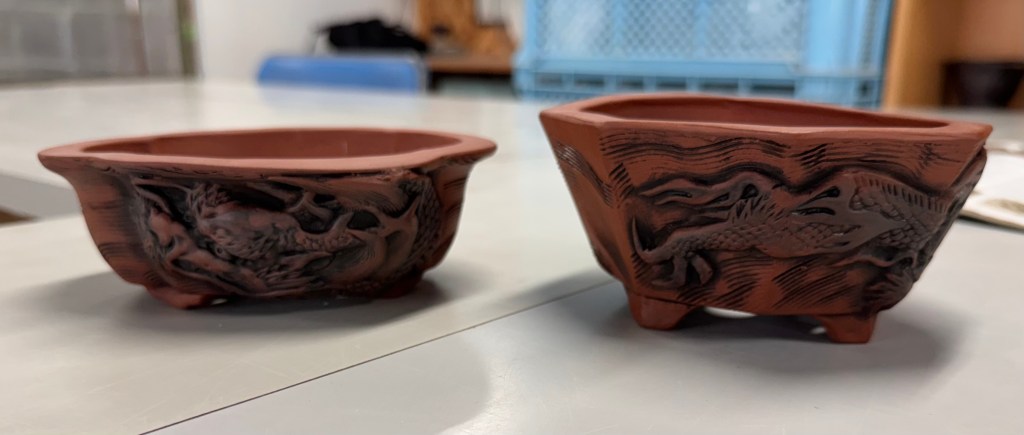
    Before moving on, Ikko connected me with Kakuzan Watanabe – another celebrated master – and pointed me toward the old town walking route. Kakuzan showed me his work, including his distinctive dragon markings pressed into the clay.

    I left his workshop with one of his pieces – that unmistakable signature now coming home with me to Israel.

    I did the walking tour. The kilns, the alleys, the walls of embedded clay.

    And then Ikko came back to pick me up.

    “Do you want to see how I work?”

    There was only one possible answer.

    I sat in his workshop and watched. No music, no conversation – just Ikko at his wheel, hands moving with a calm, unhurried precision that felt almost meditative. Each movement deliberate, each adjustment so small you might miss it. This is what a lifetime of craft looks like from the outside: absolute stillness in the hands, absolute certainty in the intention.

    Before I left, I asked if I could purchase a couple of pots home. He walked me to the shelves. I chose one of his own. Then he pointed to one of his father’s. The gesture needed no translation.

    Two pots. Two generations. Coming home to Israel.

    The train to Kyoto that evening was long, but the kind where you don’t mind staring out the window. A full day behind me — Andrej and the apricot tree that refused to die, the old books at Marutatu, Kakuzan’s dragons, Ikko’s hands moving in silence, and more pots than I care to admit wrapped carefully in my bag.

    Tokoname will stay with me. Not just for what I found there, but for what it made me feel: the fragility of beautiful things, and the importance of showing up while they still exist.

    Tomorrow: Kyoto, Bjorn, and the next chapter.

  • Shunkaen — Walking Through Kunio Kobayashi’s Living Museum

    Shunkaen — Walking Through Kunio Kobayashi’s Living Museum

    Some names you encounter in bonsai before you ever really understand what bonsai is. Kunio Kobayashi is one of them.

    Born in Tokyo in 1948 into a family involved in floriculture, Kobayashi came to bonsai later than you might expect – he was 28 years old when he saw a Japanese white pine at an exhibition and something clicked. From that moment, he built a career that placed him in the absolute top tier of the art. A thirty-time recipient of the most prestigious awards in Japanese bonsai, he is sought after both domestically and internationally. If Masahiko Kimura – whom I visited just days earlier – is the rebel genius who bent the rules of bonsai into something wild and sculptural, Kobayashi is the master of classical refinement, elegance, and depth. Two different visions of the same art. Both extraordinary.

    I had been following Kobayashi for a while before this trip — his books, his YouTube channel – and his trees had quietly become a reference point for me. The way he handles negative space, the stillness in his compositions. I wanted to see them in person.

    Shunkaen Bonsai Museum sits in Edogawa Ward, Tokyo, founded by Kobayashi in 2002. From my hotel in Ginza it was about an hour by train – a long ride into a quiet residential neighborhood that felt a world away from the city center. When you finally arrive, the transition is immediate. You step through a traditional entrance and the noise drops away.

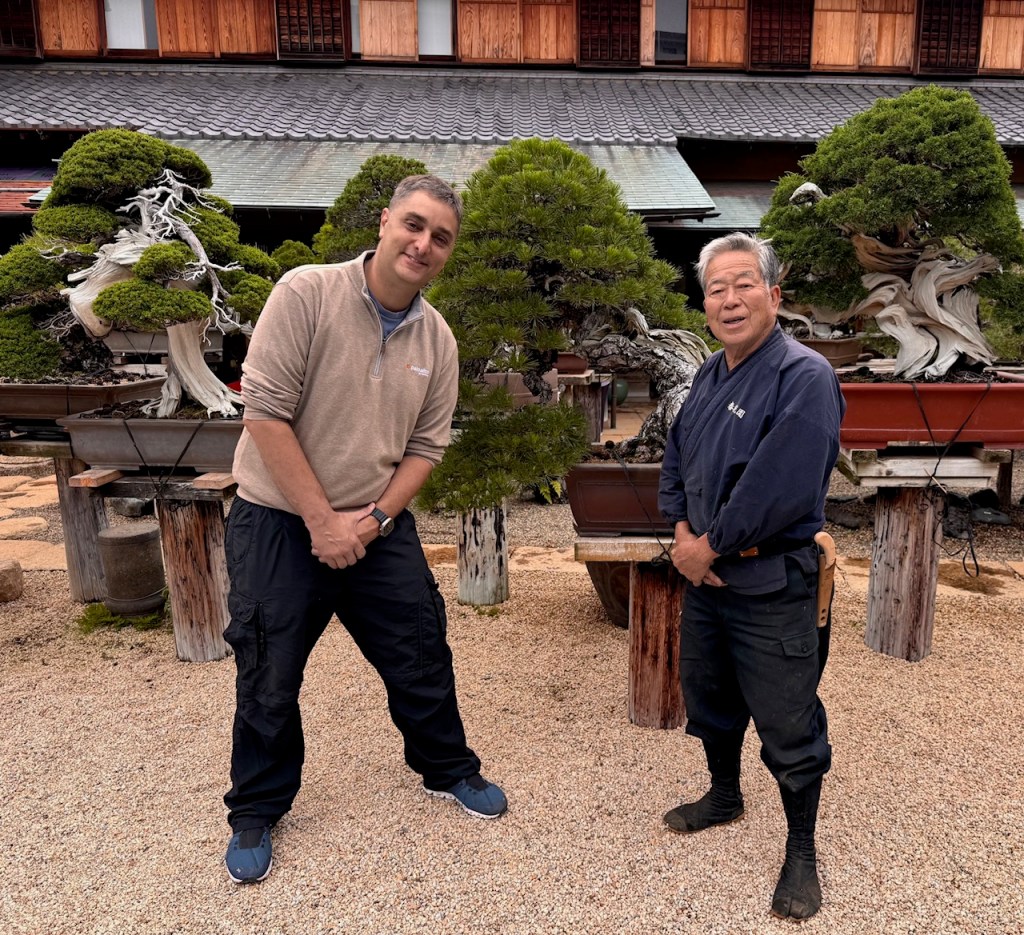
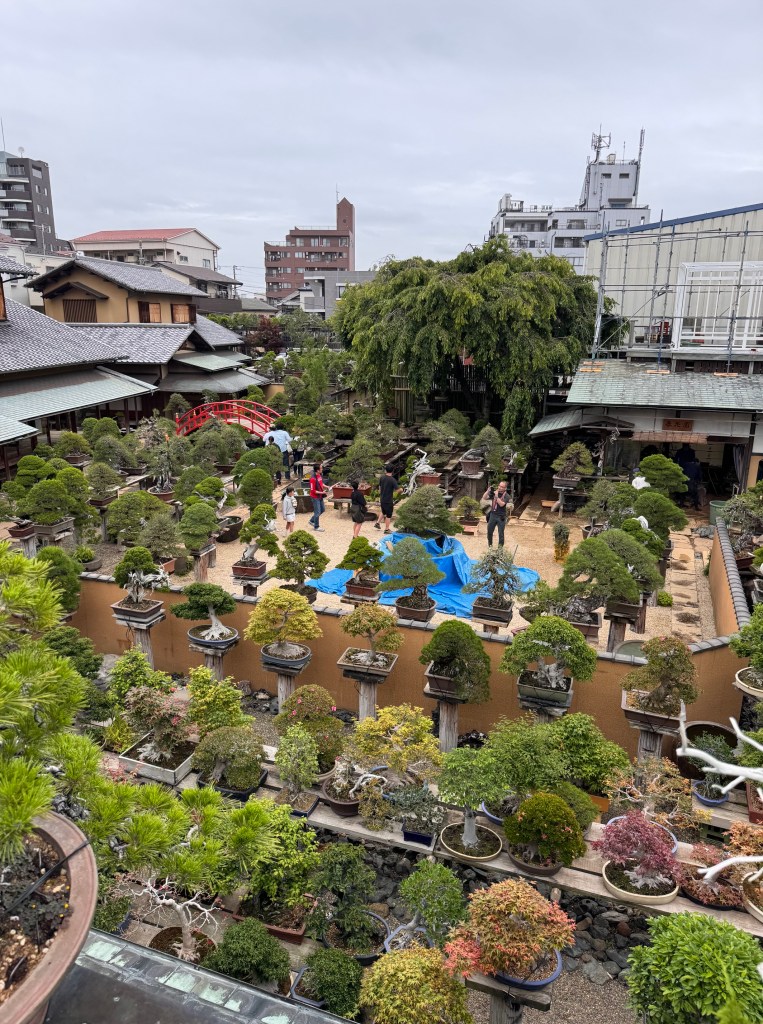
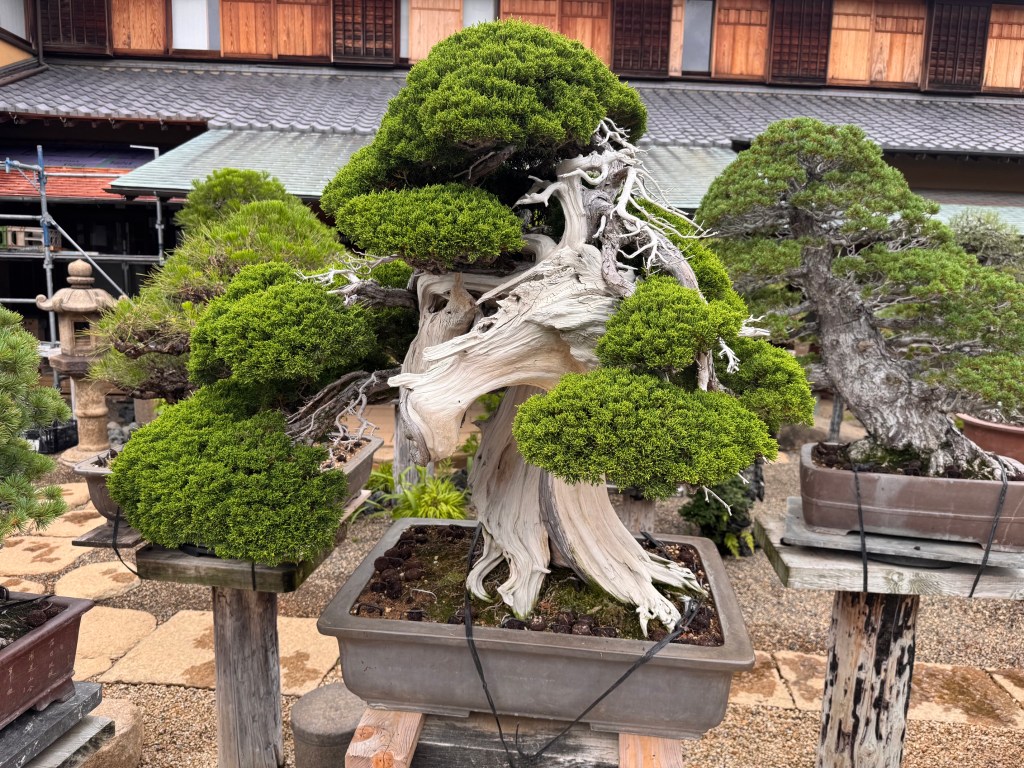
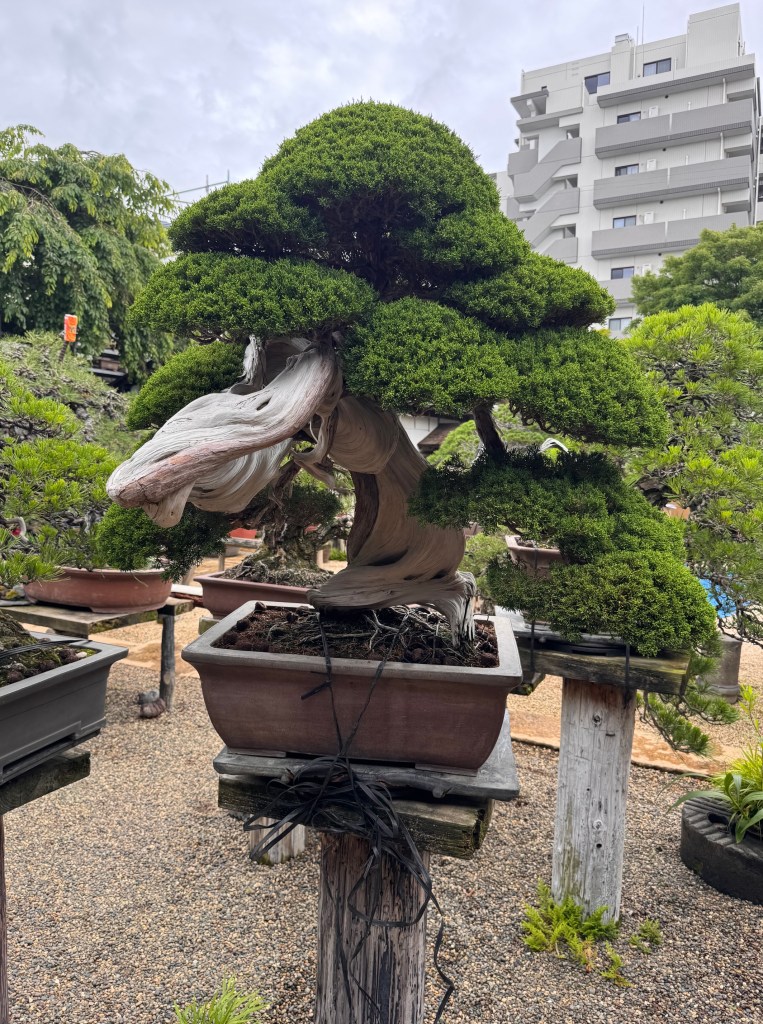
    At the center of the main courtyard stands a Japanese black pine estimated to be 1,000 years old. I stood in front of it for a long time. Around it, over a thousand bonsai works are displayed across 2,600 square meters of garden and traditional Sukiya-style structures.

    What made the visit especially memorable was the person who showed me around: Abdiel, an apprentice from Puerto Rico who has been training at Shunkaen for four years. Patient, generous, deeply immersed in the work. He walked me through tree after tree, sharing context and history, never rushing. Exactly the kind of guide you hope for.

    The Indoor Chambers — A Story in Three Parts

    Abdiel took me inside to the museum’s indoor exhibition area — a series of chambers where trees are displayed in rotation, brought in from the garden as needed since bonsai, of course, need proper sun and cannot live permanently indoors. The rotation itself says something about the care and intention behind every detail of this place.

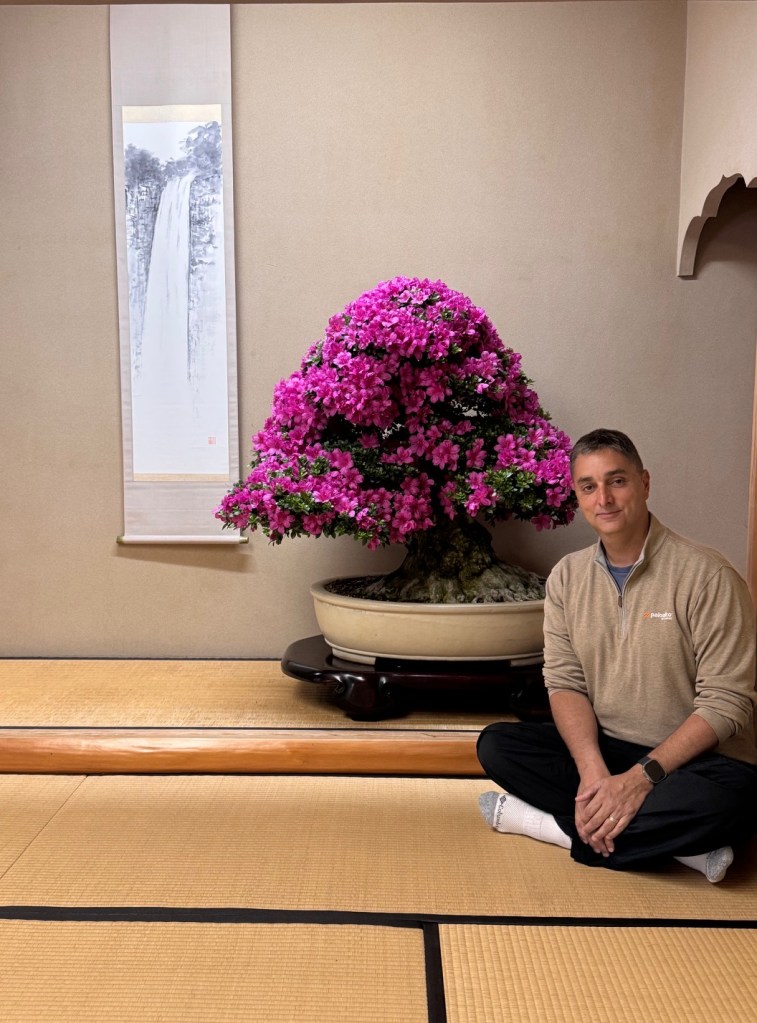
    What I encountered there stopped me in my tracks. Each display was not just a bonsai on a table. It was a complete composition: a bonsai on a specially crafted exhibition stand, beside a suiseki stone, beside a hanging scroll painting – each element chosen to speak to the others, all of them together telling a single story about a season, a landscape, a feeling.

    A word about Suiseki, because until that moment I honestly didn’t fully grasp what it was. Suiseki are naturally shaped stones, collected and displayed for the landscapes they suggest — a mountain, a cliff, a shoreline. They are not carved or altered; their beauty is found, not made. And standing there in that chamber, it suddenly became clear: the bonsai is a miniature tree. The Suiseki is a miniature mountain. Together they recreate an entire world in a space you could cross in three steps. The bonsai I had understood. The Suiseki I had seen. But seeing them composed together, with the scroll completing the scene above – that was the moment I truly understood what the Japanese bonsai display is trying to do. It’s not decoration. It’s storytelling.

    Abdiel noticed I was intrigued. So he took me to see Mr. Kobayashi’s personal suiseki collection. Remarkable pieces – stones that carry entire landscapes within them. A whole new world I hadn’t expected to walk into that day.

    Meeting the Master

    Then came the moment I had been quietly looking forward to since arriving in Japan.

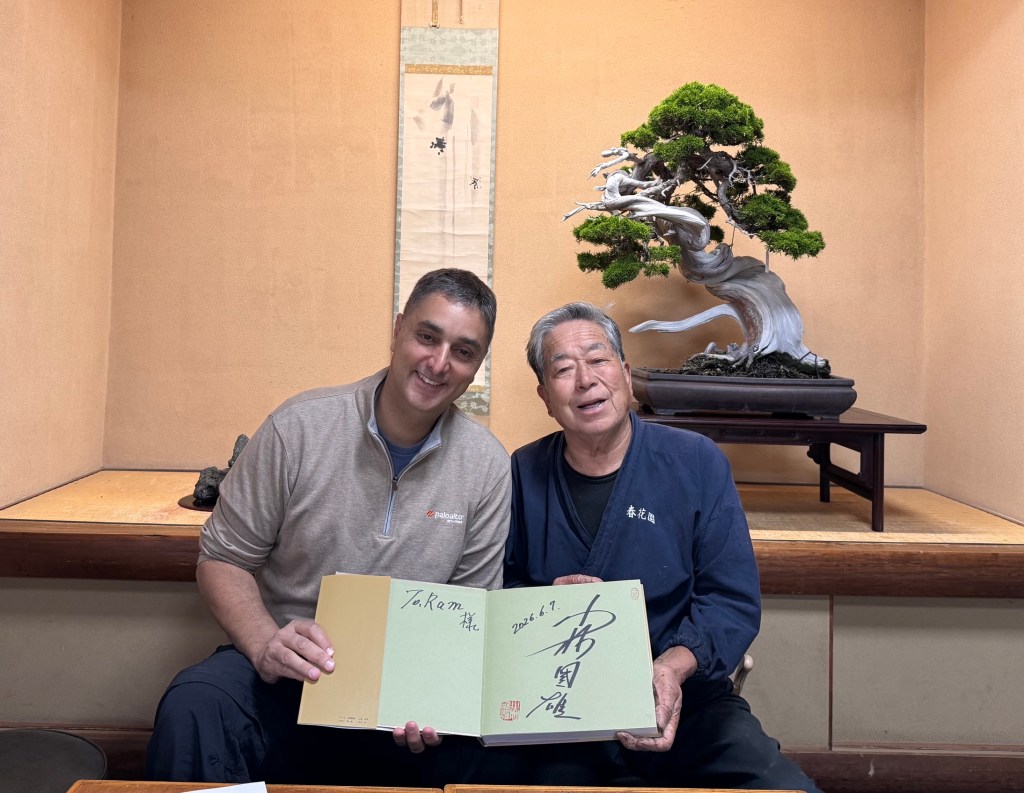
    Mr. Kobayashi appeared. Following the guidance of my teacher Shai back home, I had prepared for this – I knew the protocol. I introduced myself properly, and I presented him with a gift I had brought from Israel: a pomegranate-shaped ceramic bowl, a symbol of home. He appreciated it. In return, he gave me two books – one of them dedicated entirely to the art of suiseki. Given what I had just discovered that morning, the timing felt almost too perfect.

    Pine Season in the Garden

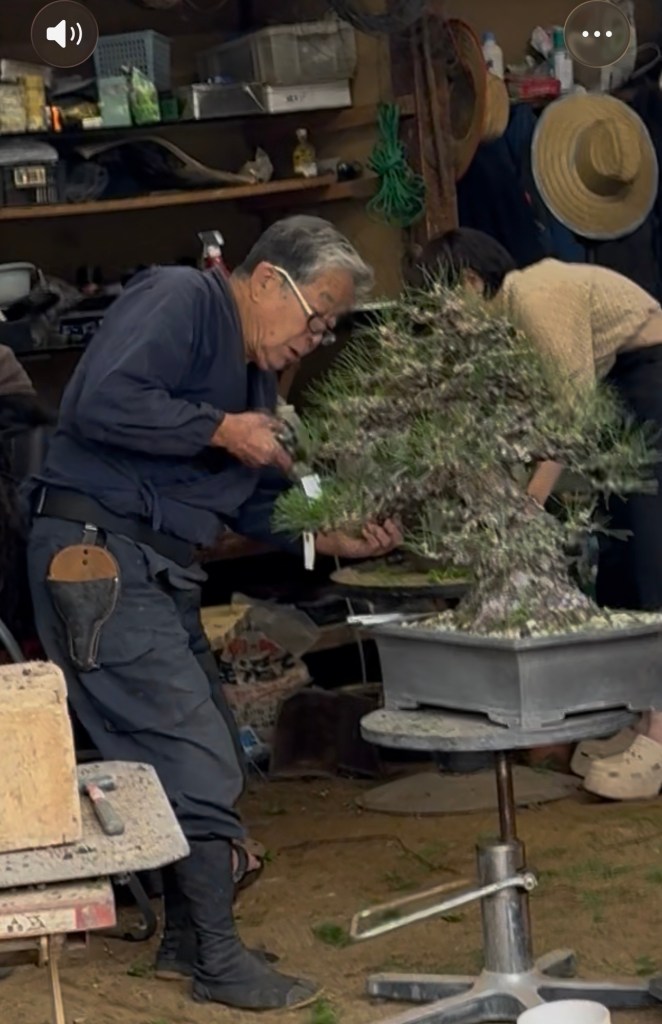
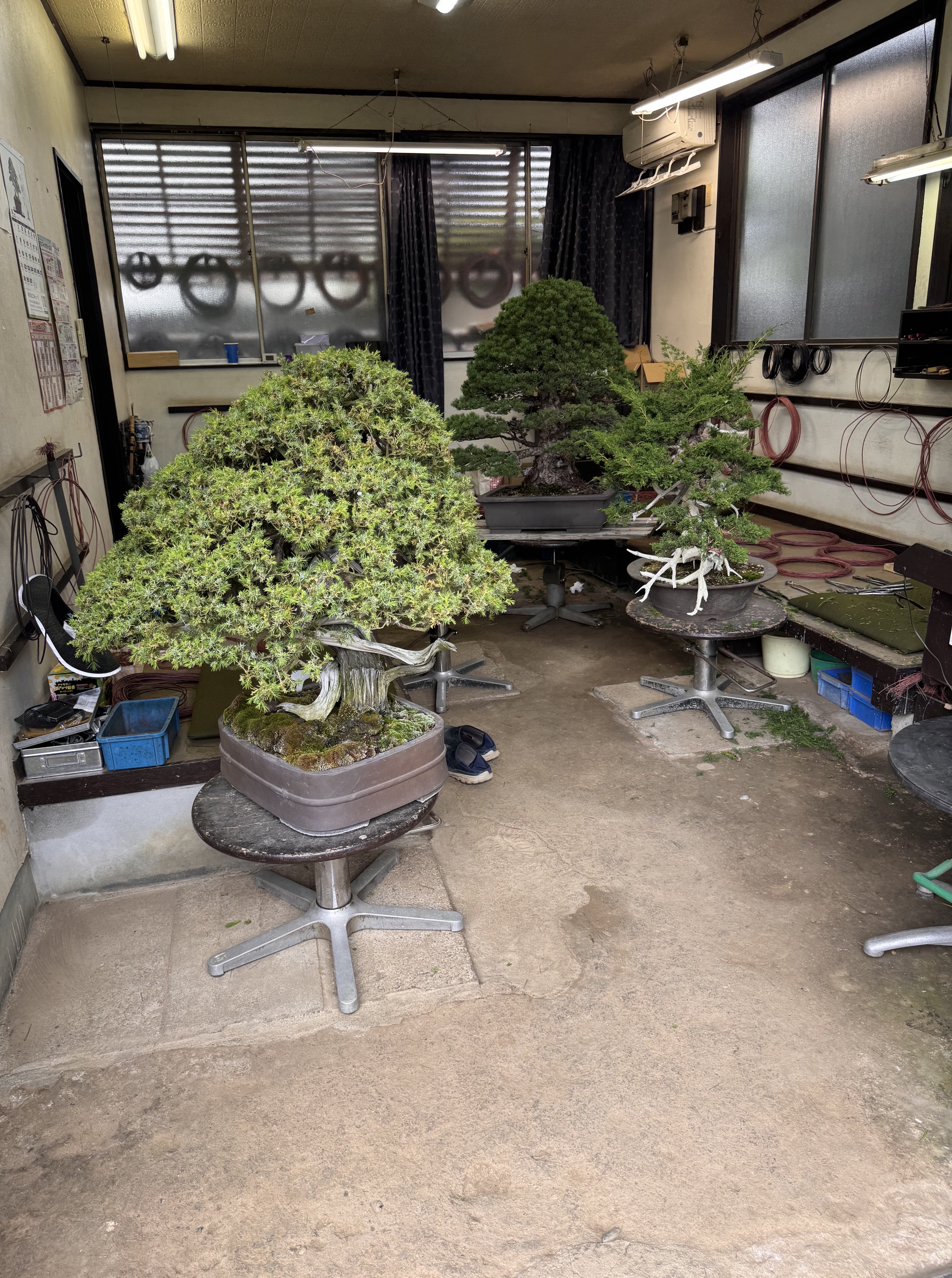
    I returned to the garden and continued exploring. It was peaceful – but also very much alive with work. Pine season had arrived, and Mr. Kobayashi himself was out among the trees with his apprentices, removing needles by hand to balance the energy distribution across the branches. Watching a master do the same patient, seasonal work that bonsai growers do everywhere – just on trees of a completely different scale and age – was quietly moving.

    Mr Kobayashi in action

    And then I saw it.

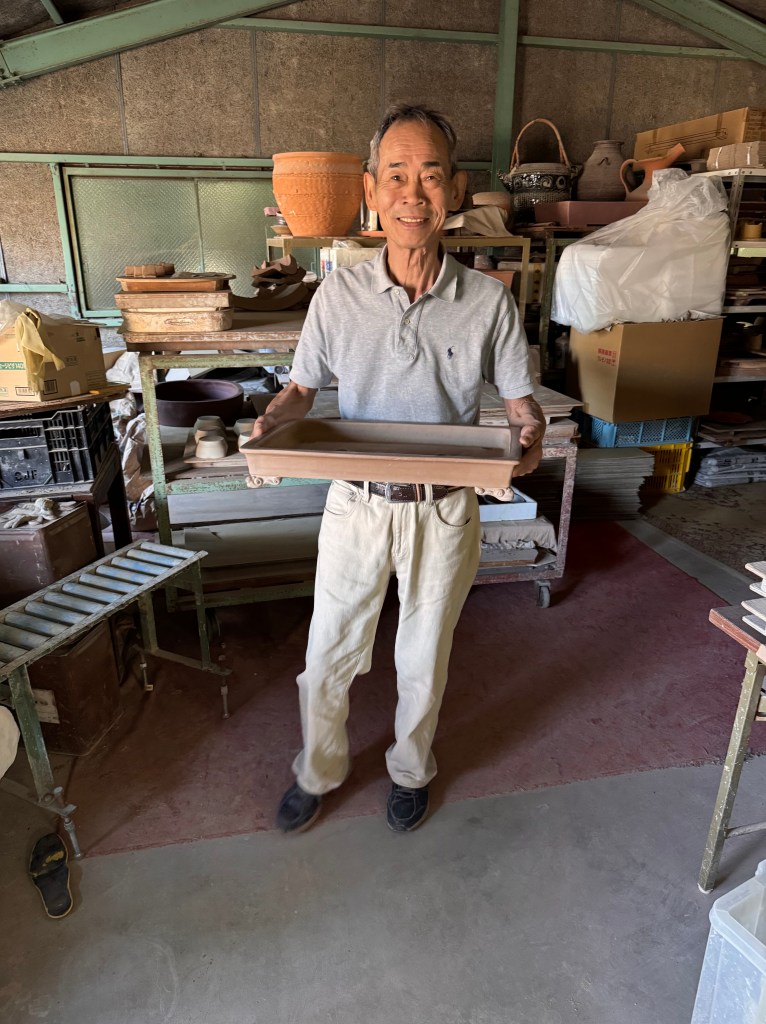
    Tucked under one of the exhibition tables, as if it had been waiting there – a large bonsai pot. I crouched down to look at it more carefully. I had a suspicion. I asked Abdiel. He confirmed it: a Gyouzan pot. One of the most celebrated pot makers from Tokoname. A collector’s piece. And Gyouzan, I learned, had passed away earlier this year. These pots will not be made again.

    I hesitated for exactly one moment.

    Price wasn’t really the question – you can’t put a price on something like that. The question was more practical: the pot was bigger than my suitcase. I was flying back to Israel. I had already transported one large ceramic piece on this trip. But some decisions make themselves, and this was one of them. I purchased it. I still don’t know how I’m getting it home – as I write this, still in my Tokyo hotel, that problem remains unsolved – but we will find a solution. There was no other choice.

    The End of a Beautiful Day

    I made my way toward the exit. And then – a small moment that I keep coming back to – Mr. Kobayashi came out again, just to say goodbye.

    He didn’t have to do that. But he did.

    Great artist. Very kind man. I hope one day I’ll have the opportunity to return.

    BonsaiNomad

  • Bonsai Pilgrimage 2026 — Standing in Kimura’s Garden

    Bonsai Pilgrimage 2026 — Standing in Kimura’s Garden

    BonsaiNomad | June 2026

    There are moments in a journey that you plan for weeks and then, when they finally happen, they exceed everything you imagined. My visit to Masahiko Kimura’s garden was one of those moments.

    Let me start with some context for those who don’t know the name — though in the bonsai world, that’s hard to imagine.

    Masahiko Kimura didn’t just push bonsai forward — he detonated it into the modern era. Born in Ōmiya, Saitama in 1940, he began his apprenticeship at age 15 under master Motosuke Hamano at Toju-en Bonsai Garden — a training that would last eleven years. But what came after is what defined him. His designs were first seen as controversial because they broke many traditional rules of bonsai — dramatic deadwood, impossible curves, living sculpture that nobody had attempted before. He became known as the “Magical Technician of Kindai Shuppan,” though apparently he never much liked the title. Today, his garden in Saitama remains a pilgrimage site for serious bonsai practitioners.

    I had been following his work since I started this hobby — his books, YouTube videos, the junipers that appear again and again in every serious bonsai publication. When I began planning my Japan trip, visiting Kimura’s garden moved quickly to the top of the list. Not a “nice to have.” A must.

    The problem: his garden is open to the public only by appointment. And the location? Quite confidential — understandable when you consider that some of his trees are valued at seven figures. I reached out through every connection I had. Doors stayed closed.

    And then Bjorn came through.

    I won’t say more than that — some doors open through trust and relationships built over years, and I’m grateful for the people in this community who share them. Bjorn arranged the visit and, in true style, equipped me in advance with a message in Japanese to show the apprentices.

    When I arrived and walked up the path to the garden, a group of apprentices met me — mostly Japanese, and one who had come all the way from Peru. They asked who I was. I showed them Bjorn’s message. The moment they read it, everything changed — warm smiles, welcoming gestures, an invitation to walk freely through the garden until Mr. Kimura arrived.

    What followed was something I still struggle to put into words.

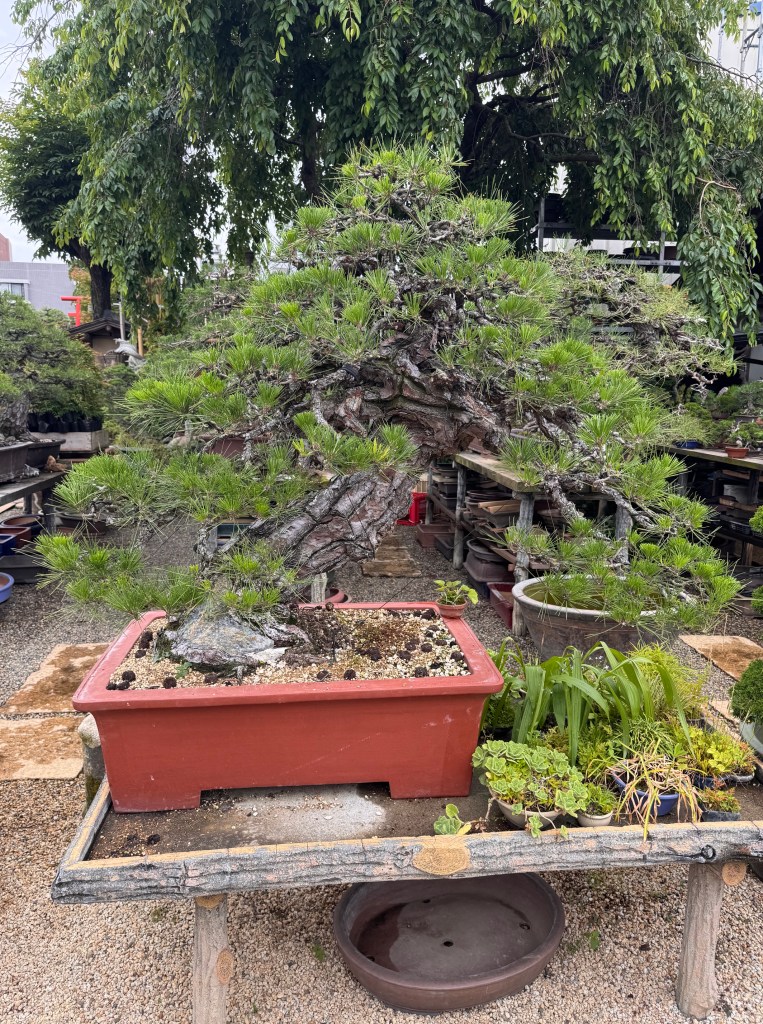
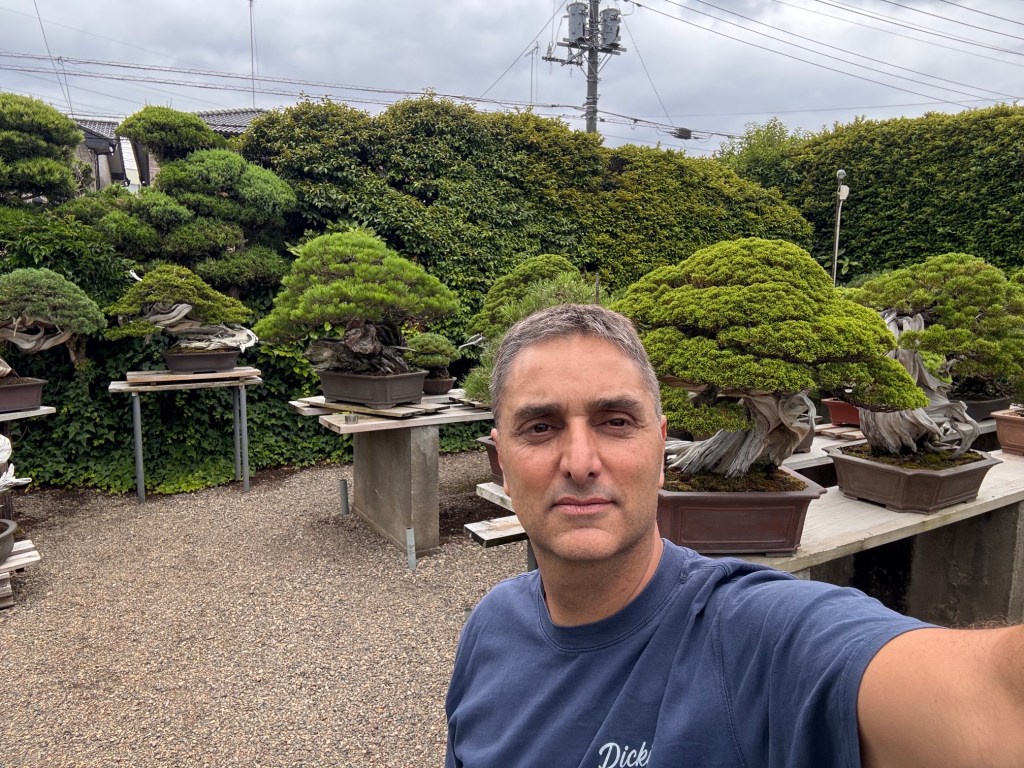
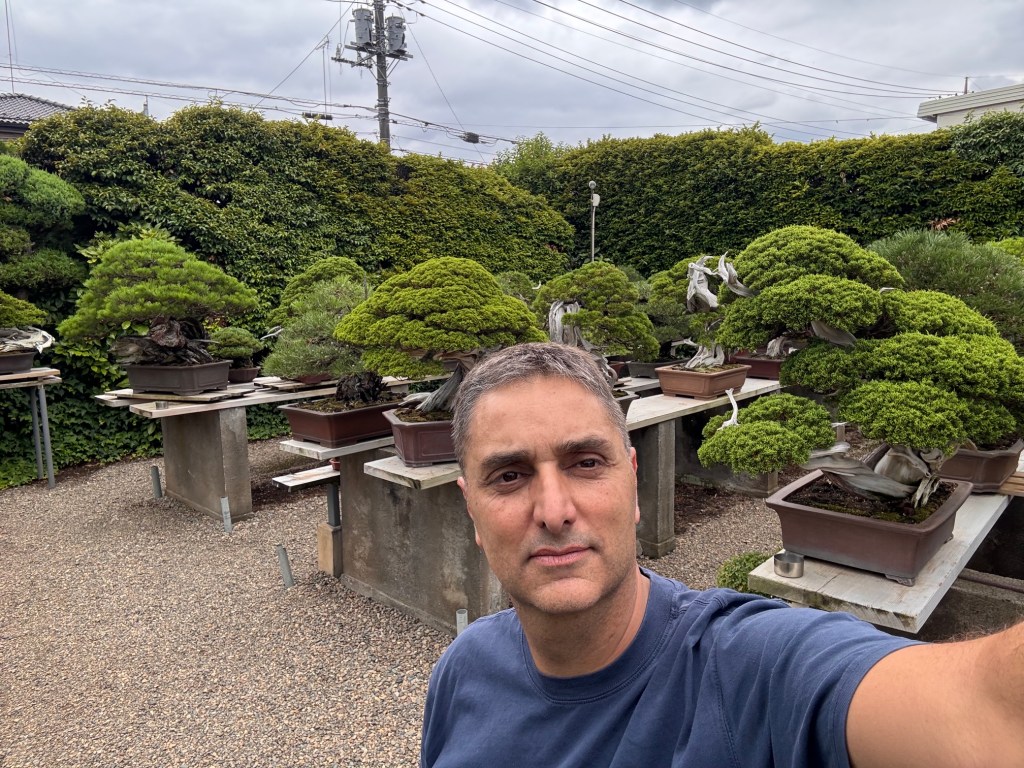
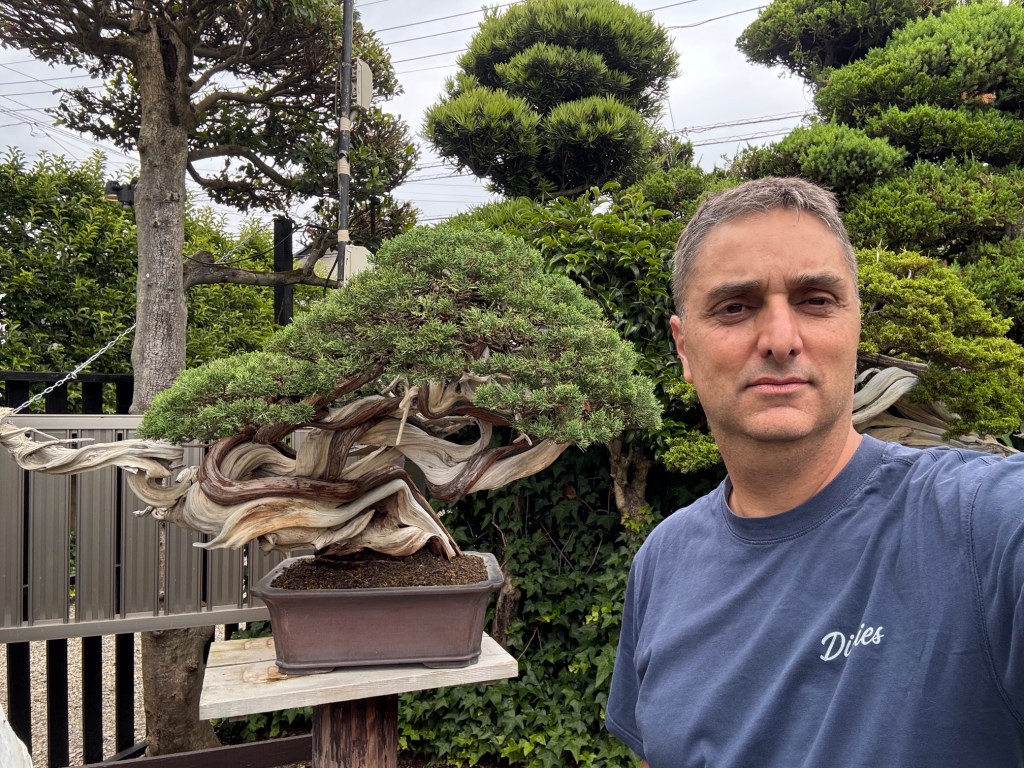
    His garden is like a museum, and anyone interested in Japanese bonsai will recognize at least half the collection from magazines and websites. I found myself walking alone among these trees for a couple of hours. No rush. No crowd. Just me and the most famous bonsai collection in the world. I recognized trees from books I’d studied at home in Israel. Trees I had seen in photographs for months, suddenly right there in front of me — close enough to touch.

    Then Mr. Kimura arrived.

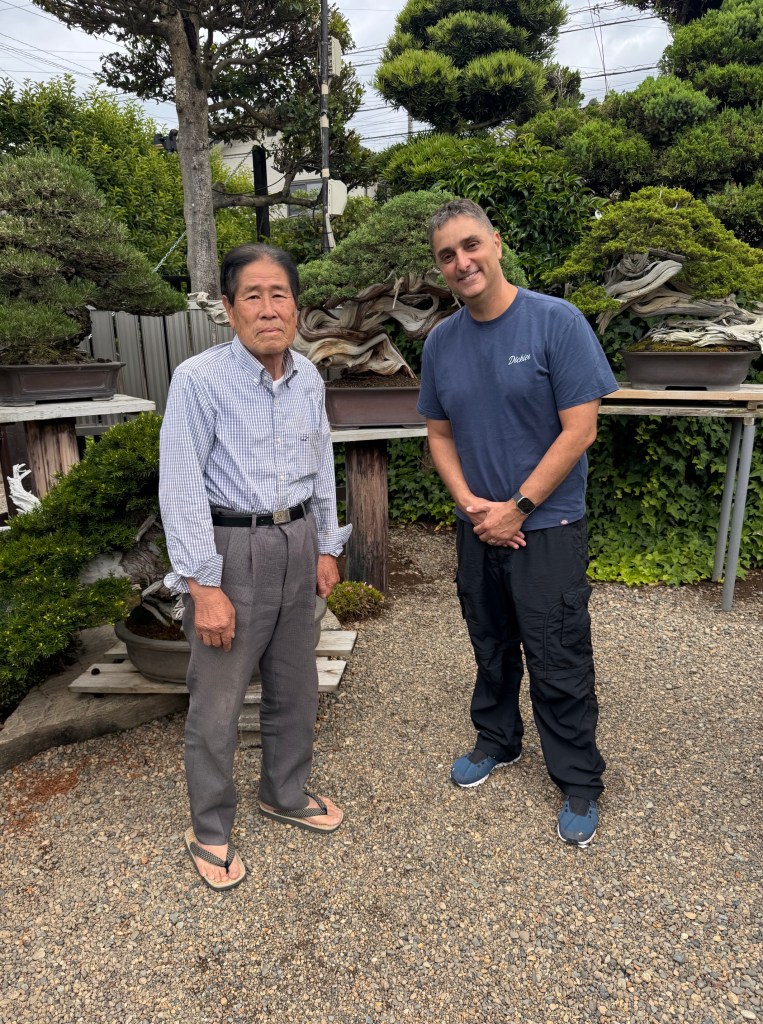
    He is 85 now , and his health means he no longer spends the full day at the garden. But he came. I introduced myself in broken Japanese — something I had prepared, though I’m sure my pronunciation did it no favors — and presented the gift I had brought from Israel: a pomegranate-shaped bowl. A symbol of home, of abundance, of the land I come from. He looked at it carefully, seemed genuinely appreciative, and then walked with me through his trees for a few minutes, quietly, the way someone moves through a space they have tended for decades.

    Then he went home to rest.

    Those few minutes were enough. More than enough.

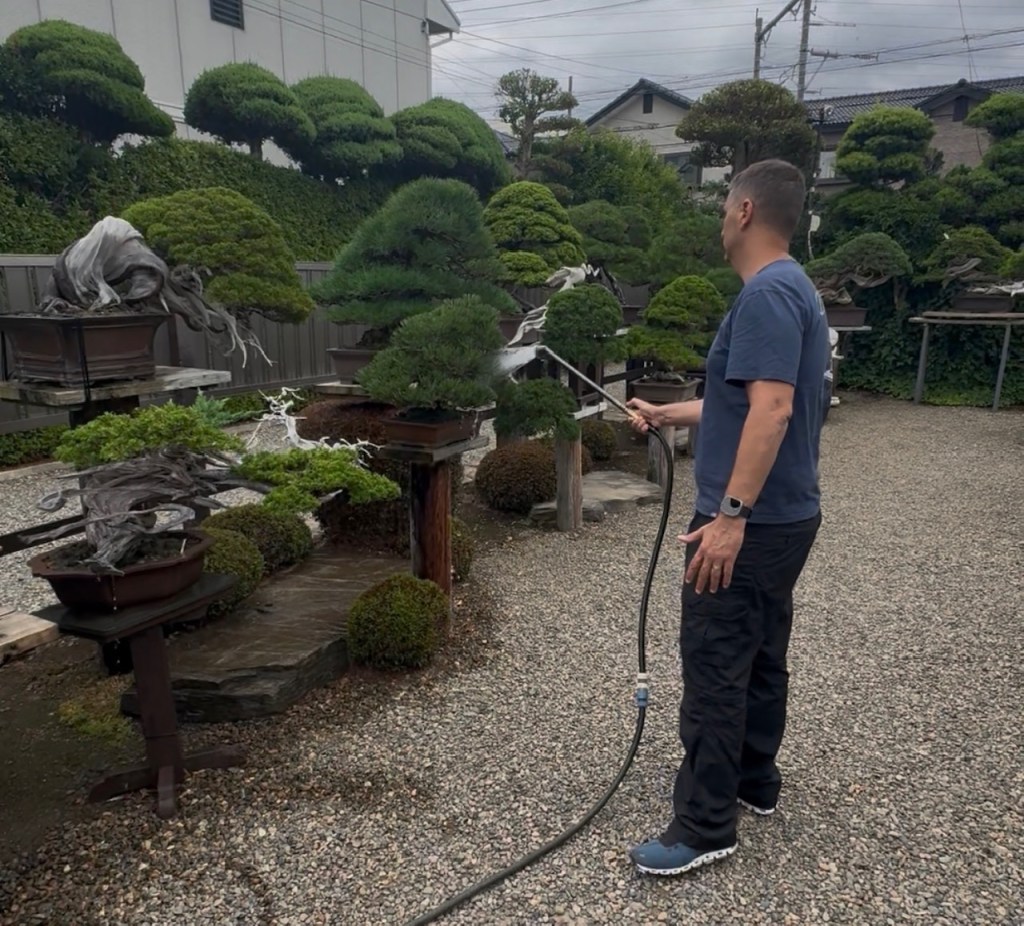
    I stayed longer, chatting with one of the apprentices — Google Translate doing the heavy lifting. He told me about life as an apprentice: the early mornings, the discipline, the years of commitment it takes to earn a place in a garden like this. Hard work and deep purpose. At some point we stopped talking and just watered some of the trees together. Famous trees. Trees I had read about. And there I was, holding the hose.

    Kimura’s effect runs deeper than the trees themselves — into how people think about line, about drama, about pushing past what they thought was possible. Standing in his garden, I understood that in a new way. His Shimpaku junipers are his most famous and award-winning species , and seeing them in person — the deadwood, the impossible movement, the sheer sculptural force of them — is nothing like a photograph. And the pine forests. Simply beautiful. Quietly monumental.

    Six months into this hobby, I stood in the garden of the man who redefined it. I arrived as a pilgrim and left as something more — not a master, not even close, but someone who has now seen with his own eyes what this art can become.

    The road continues. More gardens, more teachers, more trees.

    BonsaiNomad

  • Bonsai Pilgrimage – Japan 2026 · Part I ·

    Bonsai Pilgrimage – Japan 2026 · Part I ·

    Omiya Bonsai Village, Saitama

    June 2026

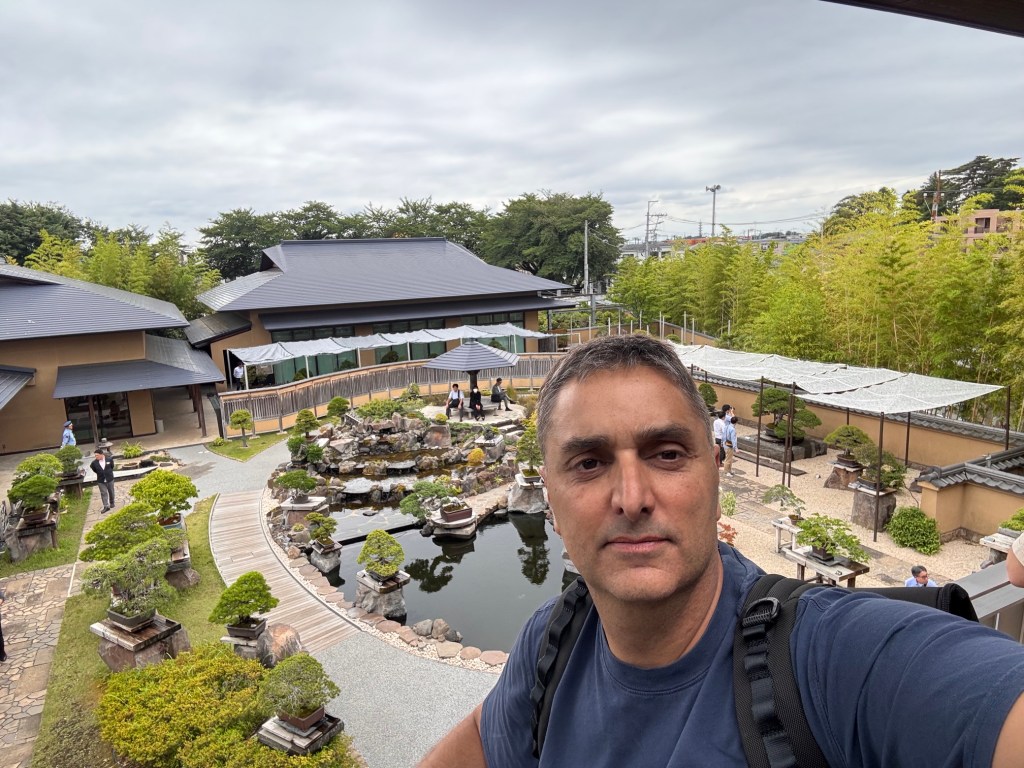
    It started, as so many pilgrimages do, with a red-eye flight and a city still half-asleep. After a hectic week of business in Australia, I boarded a night flight to Tokyo — a deliberate choice, refusing to lose a single day of what was a dream for quite some time. I landed in the early morning, dropped my bags at the hotel in Ginza, and within the hour I was on a train heading north. Destination: Omiya. A Village Born from Catastrophe

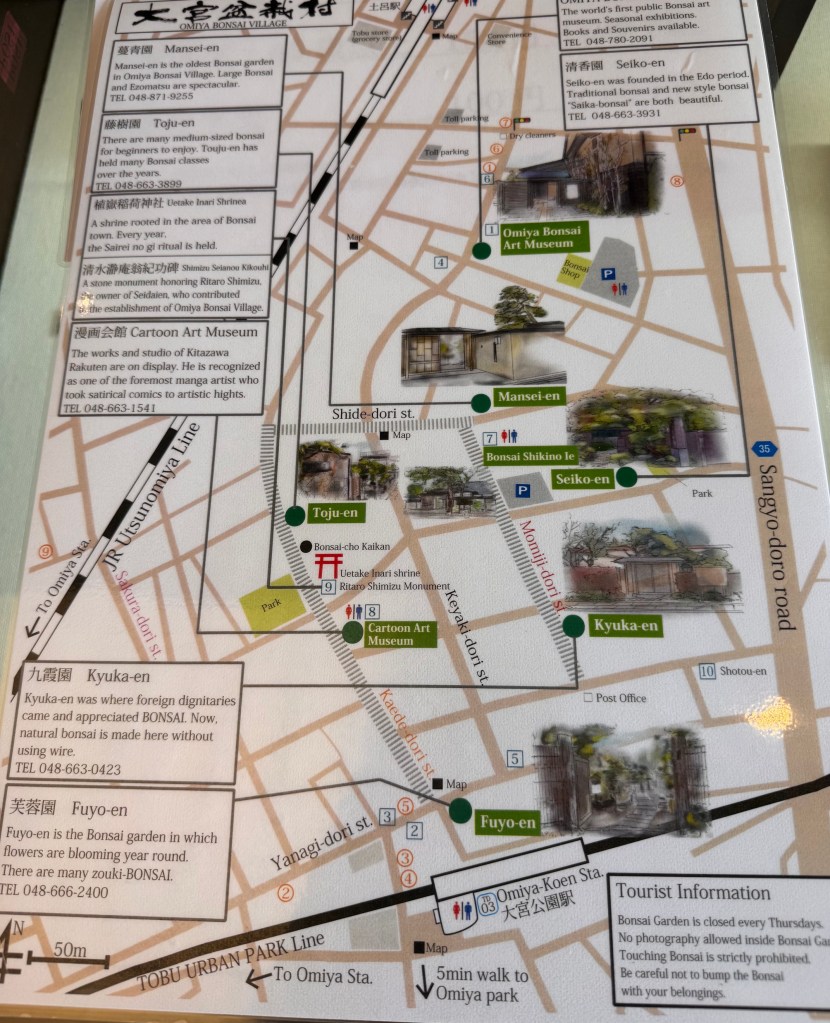
    The train ride gave me time to think about where I was going. Omiya Bonsai Village — or Ōmiya Bonsaimura — is not a theme park or a curated attraction. It is a living neighbourhood, born from disaster and shaped by a century of devotion.

    Omiya is a city in Saitama Prefecture, located 30 kilometres north of Tokyo. A collective of Tokyo’s foremost bonsai artisans identified the area as the perfect location for a village-like community of bonsai gardens. Environmental conditions were favourable — cleaner air, better-quality groundwater, and soil enriched by ancient eruptions of Mt. Fuji, giving it a low mineral content ideal for growing miniaturised trees.

    Following the widespread fires and destruction of the Great Kanto Earthquake of 1923, bonsai artisans were even more determined to leave the capital, and in 1925 Omiya Bonsai Village was established where it remains today. Previously underutilised land became a thriving hub of bonsai cultivation, home to as many as 35 nurseries in the years leading up to World War II. In 1942 the local government officially named the district Bonsaicho — literally, “Bonsai Town.”

    The founding residents even set special rules for the village: each household had to own at least ten bonsai trees, keep their garden open to the public, and avoid building any two-storey house that might cast shade on a neighbour’s trees. There is something quietly radical about a community organised around the protection of plants.

    Today the village’s name is known all over the world, drawing foreign visitors and bonsai enthusiasts who come seeking training, knowledge, and a glimpse of living masterpieces. The first World Bonsai Convention was held here in 1989, attracting visitors from 32 countries, and returned again in 2017 — cementing Omiya’s place as the spiritual home of bonsai culture.

    The Museum — A World First

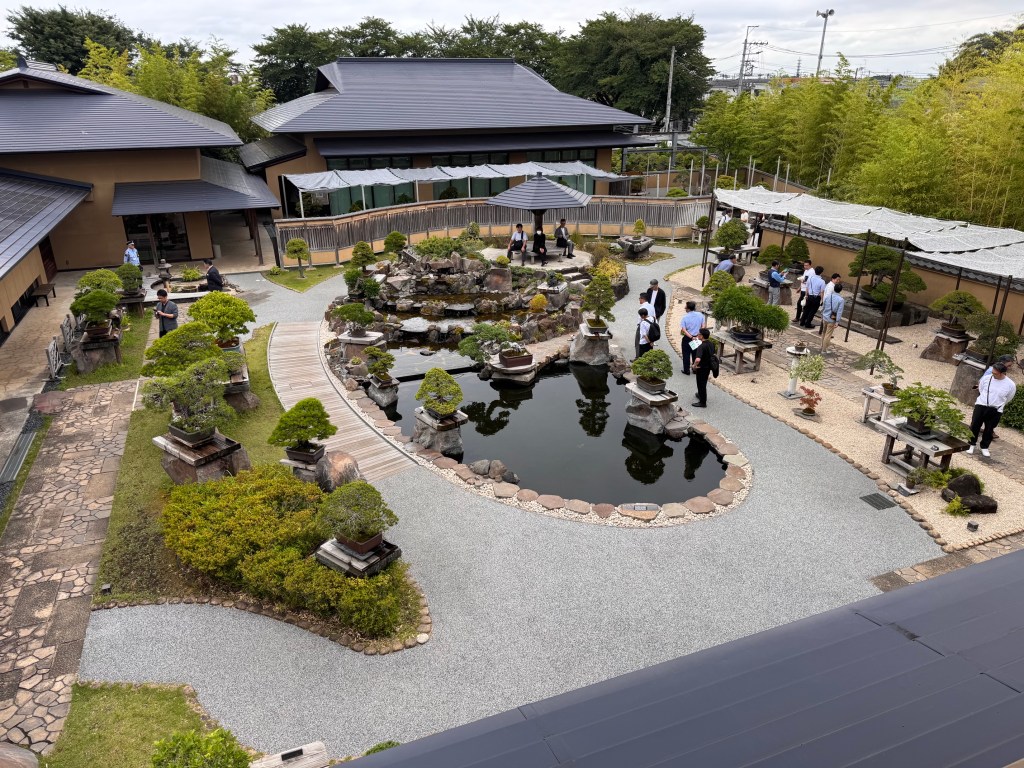
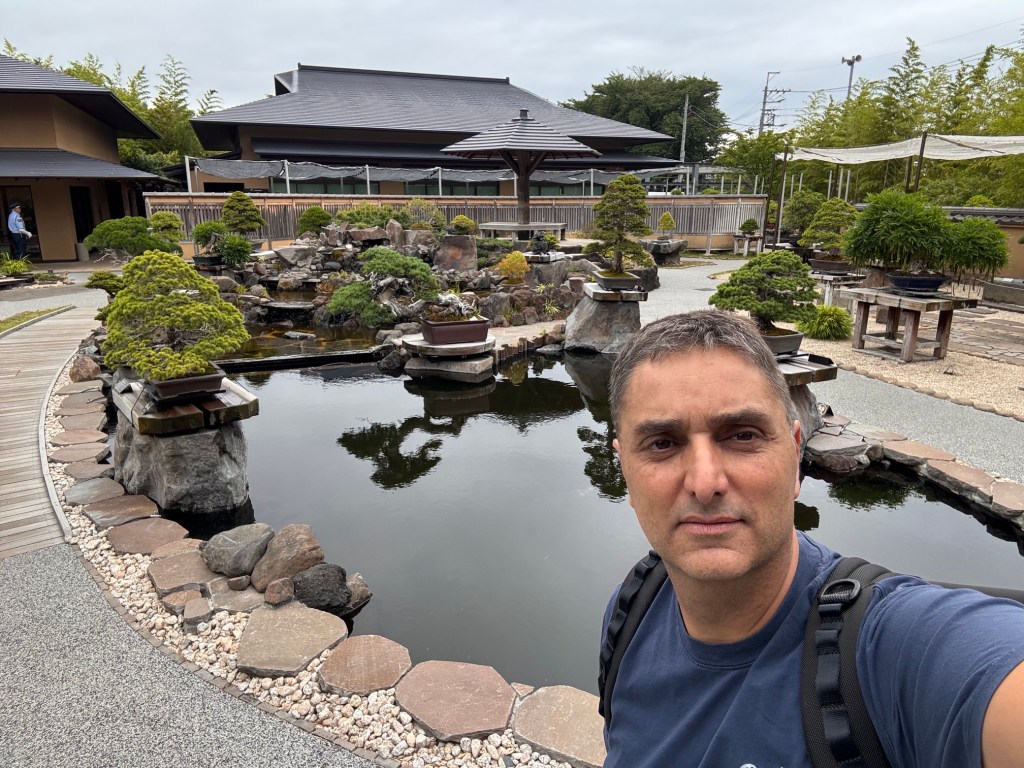
    My first stop was the Omiya Bonsai Art Museum — the world’s first museum solely devoted to bonsai, with a collection of over 120 masterpieces alongside woodblock prints and historic artworks centred on bonsai culture.

    What makes it unlike any other museum is this: the works are never finished. As they grow, they change. Every tree on display is a work in progress — and visitors can learn how each one is shaped and pruned over the course of its living life.

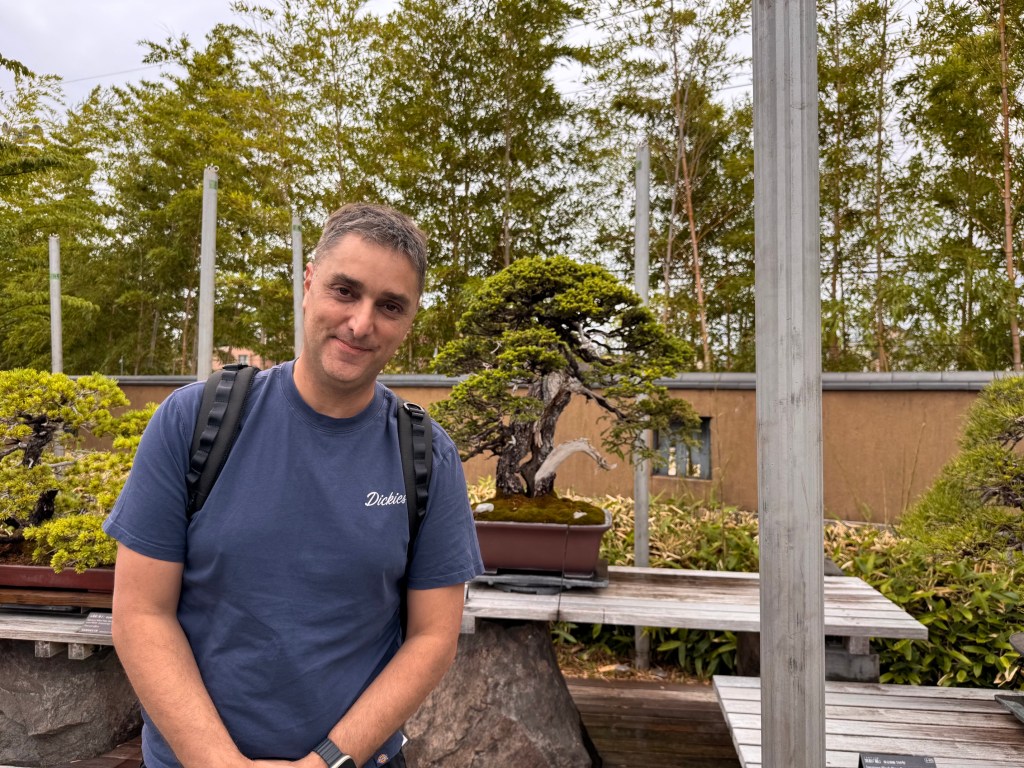
    Mind-blowing. All the trees are hundreds of years old. Some over a thousand. Standing in front of them, you feel the weight of time differently.

    I walked slowly through the exhibition, trying to take it all in. The oldest specimens have been alive longer than most nations. They were saplings when medieval Europe was rebuilding from the plague. They have outlasted dynasties, wars, earthquakes — and through all of it, they have been tended, shaped, and cared for by generations of hands. It is a profoundly humbling thing to stand in front of.

    The Six Nurseries

    There are six bonsai gardens in Omiya Bonsai Village, each shaped by the personality and aesthetic taste of its owner. Time allowed me to visit three — Mansei-en, Fuyo-en, and Toju-en — which I had been told were among the most compelling.

    All three were extraordinary — beyond anything I could have imagined before arriving. The most beautiful trees I have ever seen, displayed with the quiet confidence that comes from centuries of refinement. No spotlights, no dramatic staging. Just trees on benches, in silence, speaking for themselves.

    I’ll be honest: I felt something complicated walking through those gardens. Pure awe, yes — but also a particular sadness that comes from loving something you cannot have. In Israel, trees of this age and calibre simply don’t exist in bonsai form. Import restrictions make acquiring them impossible. You look at a six-hundred-year-old juniper and you understand, viscerally, that this is something that cannot be rushed or replicated. It must be grown, across generations, by people who accept they will never see it finished.

    That thought is both humbling and, strangely, liberating. It clarifies what the practice is really about.

    (Photography was not permitted in any of the three nurseries — privacy and protection — so these impressions live only in memory.)

    A Conversation with Sam

    At the last garden, I got talking with an apprentice — a young man named Sam, from the UK. He had been there six years. We stood in the late afternoon light while he told me about the life.

    Six days a week. Often seven. Early mornings and late evenings. The kind of commitment that closes off most other paths — but he spoke about it without complaint, with something closer to quiet satisfaction.

    What struck me most was the structure of learning:

    Year 1 — Chores. No trees. Cleaning, sweeping, carrying. Learning the rhythms of the garden, the hierarchy, the silence. The apprentice earns trust before earning access.

    Year 2 — First contact. Allowed to touch the trees, but only for the most basic maintenance tasks. Observation remains the primary mode of learning.
    Year 3 — The art of water. Only in the third year are apprentices taught how to water. This surprised me most. It is explained simply: watering is everything. Too much and the tree grows weakly; too little and development stalls. The water is the message you send the tree about what you want it to become. It takes a full year just to learn to read and respond correctly.
    Years 4–6 — Development and art. Only now does the formal teaching of bonsai shaping begin — wiring, timing, aesthetic intention. Everything before this was preparation.

    I thought about that for a long time on the train back to Tokyo. We live in an age obsessed with shortcuts and acceleration. And here, in this quiet corner of Saitama, people are voluntarily choosing the opposite — building their lives around the slowest possible version of mastery.

    A Final Thought

    Before leaving I had one more thought — and I’ll admit it made me smile. Sam’s path demands you start young. But maybe that’s the point. Maybe bonsai, precisely because it cannot be rushed, is the perfect discipline for someone who comes to it as a passion rather than a vocation. You are freed from the pressure of mastery. You can simply grow alongside the trees.
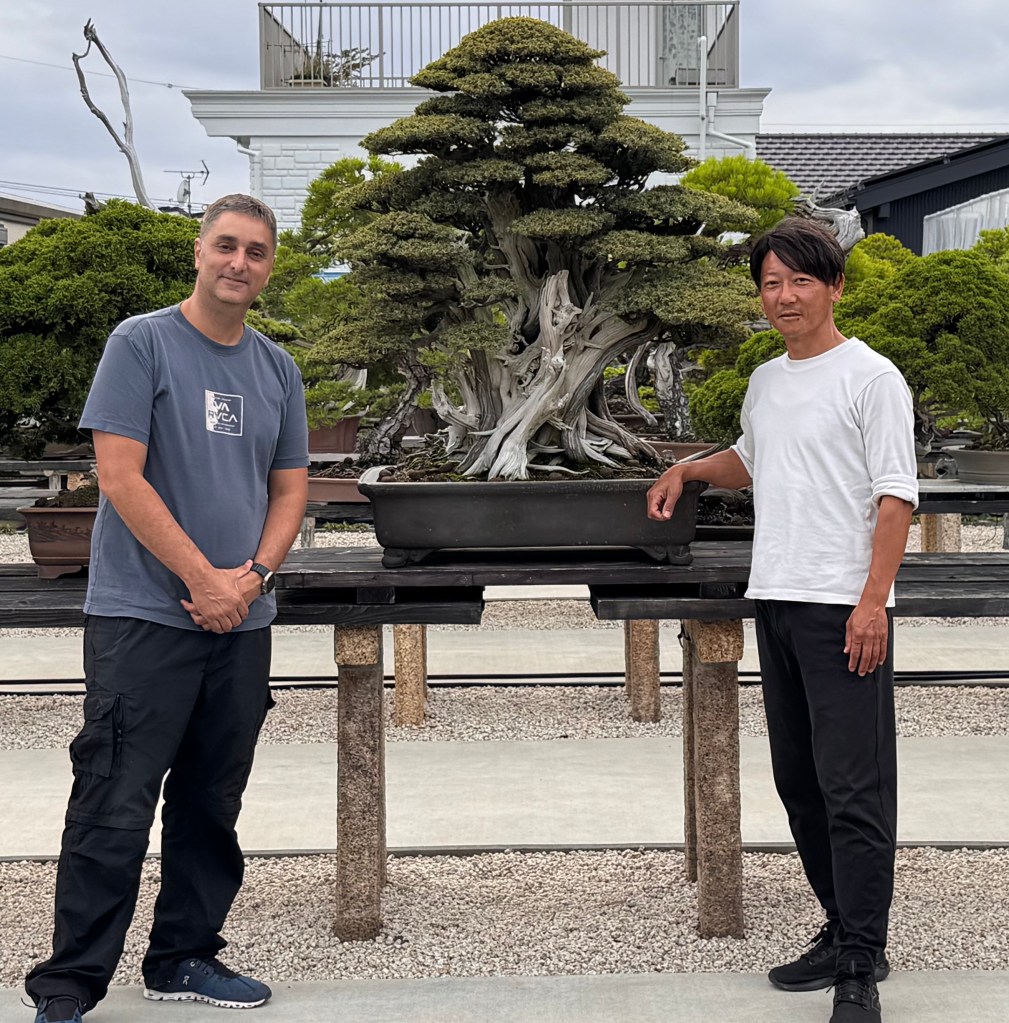
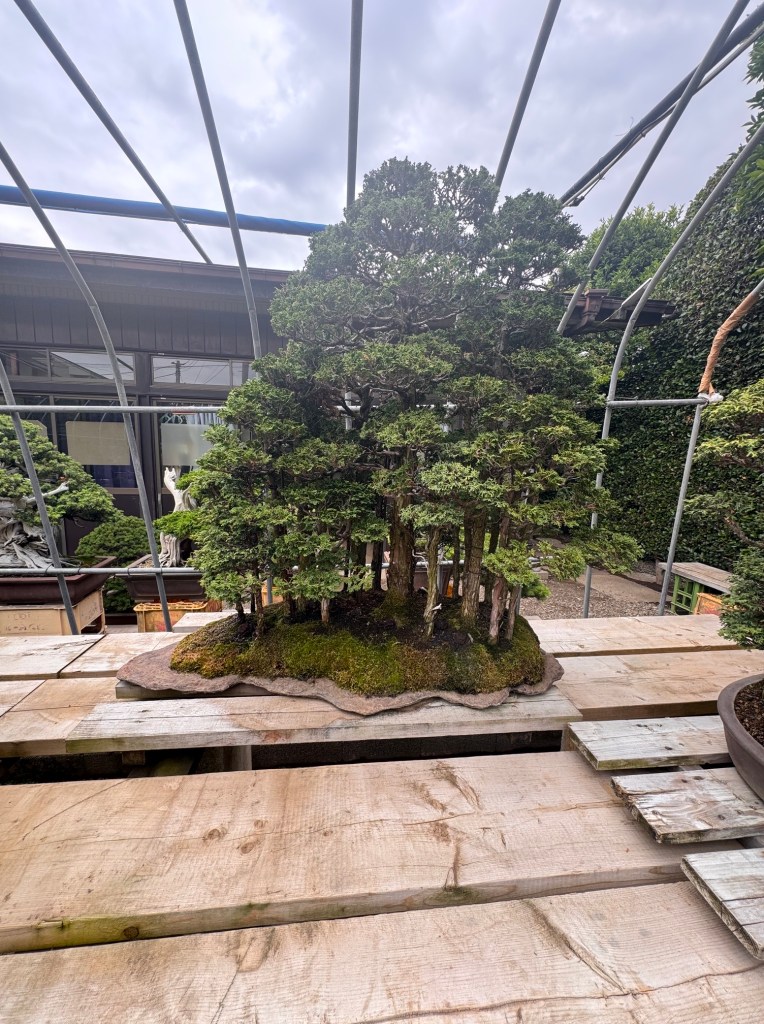
    I left Omiya just as the afternoon light was going golden. Already my mind was full of what was coming next — Shizuoka, the kilns, the workshops ahead. But for a few hours on that train back through the Saitama suburbs, I let myself just sit with what I’d seen. A thousand-year-old tree in a pot. The hands that shaped it. The hands that will shape it next.

    What a way to begin.