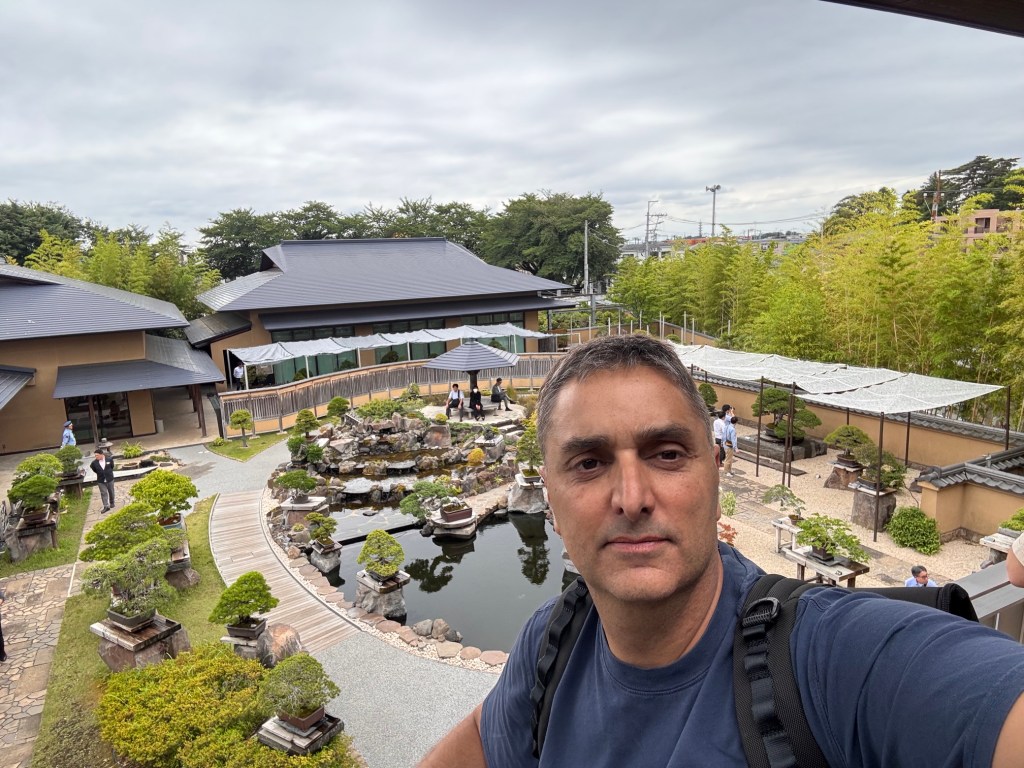
Omiya Bonsai Village, Saitama
June 2026
It started, as so many pilgrimages do, with a red-eye flight and a city still half-asleep. After a hectic week of business in Australia, I boarded a night flight to Tokyo — a deliberate choice, refusing to lose a single day of what was a dream for quite some time. I landed in the early morning, dropped my bags at the hotel in Ginza, and within the hour I was on a train heading north. Destination: Omiya. A Village Born from Catastrophe
The train ride gave me time to think about where I was going. Omiya Bonsai Village — or Ōmiya Bonsaimura — is not a theme park or a curated attraction. It is a living neighbourhood, born from disaster and shaped by a century of devotion.
Omiya is a city in Saitama Prefecture, located 30 kilometres north of Tokyo. A collective of Tokyo’s foremost bonsai artisans identified the area as the perfect location for a village-like community of bonsai gardens. Environmental conditions were favourable — cleaner air, better-quality groundwater, and soil enriched by ancient eruptions of Mt. Fuji, giving it a low mineral content ideal for growing miniaturised trees.
Following the widespread fires and destruction of the Great Kanto Earthquake of 1923, bonsai artisans were even more determined to leave the capital, and in 1925 Omiya Bonsai Village was established where it remains today. Previously underutilised land became a thriving hub of bonsai cultivation, home to as many as 35 nurseries in the years leading up to World War II. In 1942 the local government officially named the district Bonsaicho — literally, “Bonsai Town.”
The founding residents even set special rules for the village: each household had to own at least ten bonsai trees, keep their garden open to the public, and avoid building any two-storey house that might cast shade on a neighbour’s trees. There is something quietly radical about a community organised around the protection of plants.
Today the village’s name is known all over the world, drawing foreign visitors and bonsai enthusiasts who come seeking training, knowledge, and a glimpse of living masterpieces. The first World Bonsai Convention was held here in 1989, attracting visitors from 32 countries, and returned again in 2017 — cementing Omiya’s place as the spiritual home of bonsai culture.
The Museum — A World First
My first stop was the Omiya Bonsai Art Museum — the world’s first museum solely devoted to bonsai, with a collection of over 120 masterpieces alongside woodblock prints and historic artworks centred on bonsai culture.
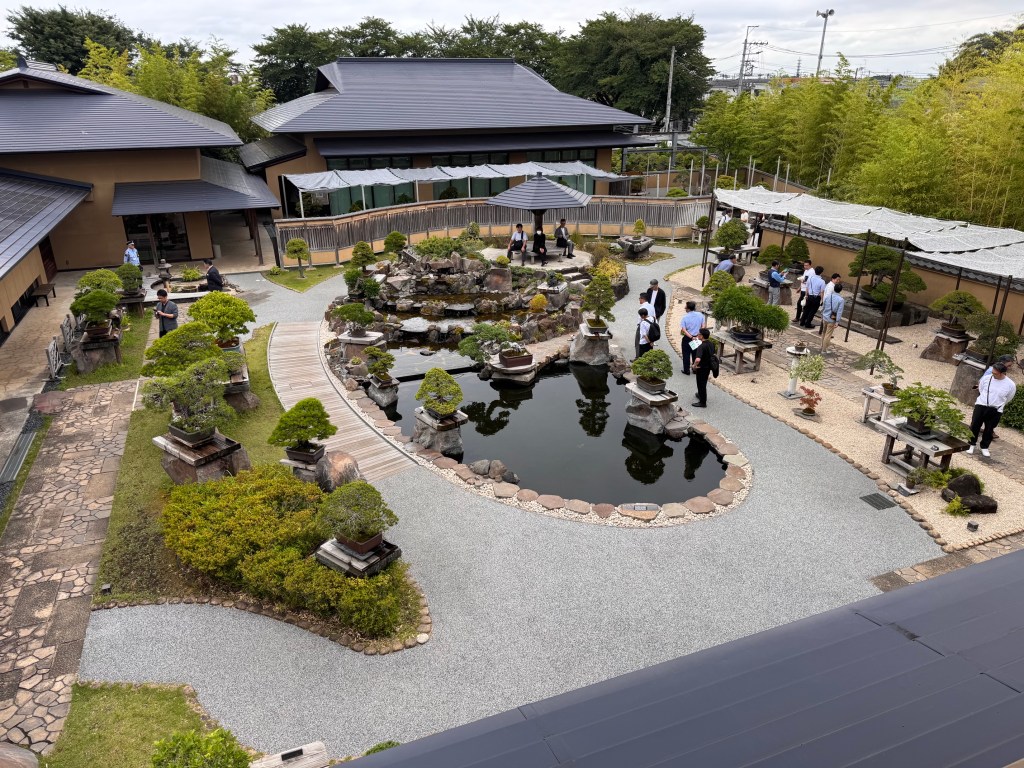
What makes it unlike any other museum is this: the works are never finished. As they grow, they change. Every tree on display is a work in progress — and visitors can learn how each one is shaped and pruned over the course of its living life.
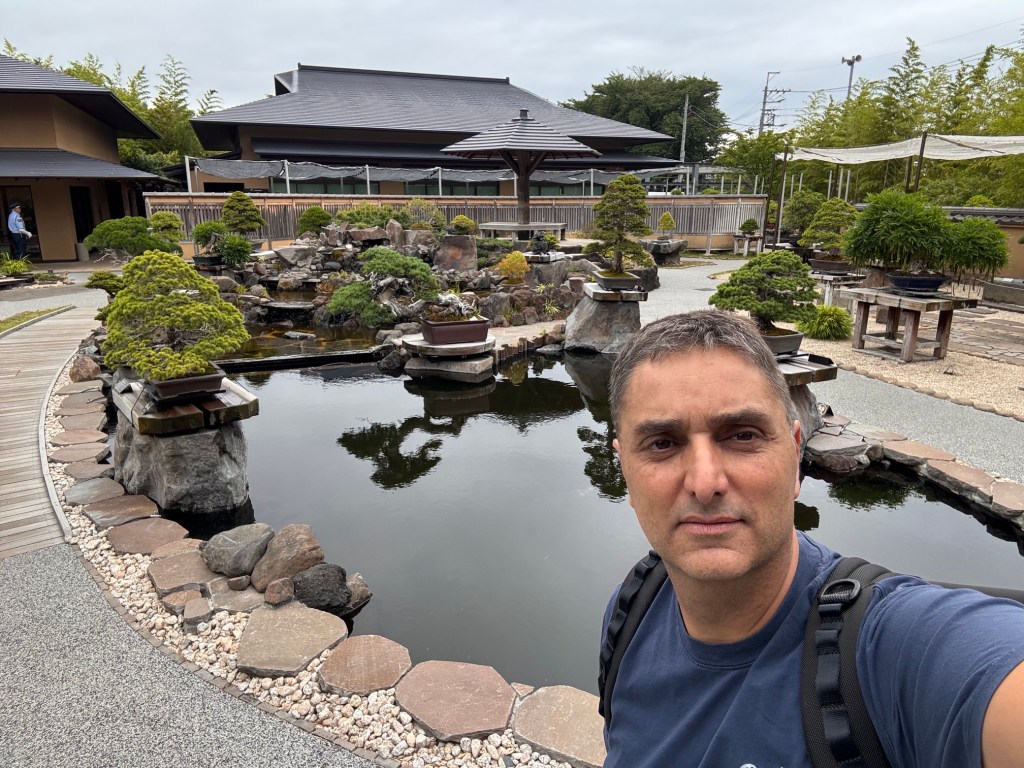
Mind-blowing. All the trees are hundreds of years old. Some over a thousand. Standing in front of them, you feel the weight of time differently.
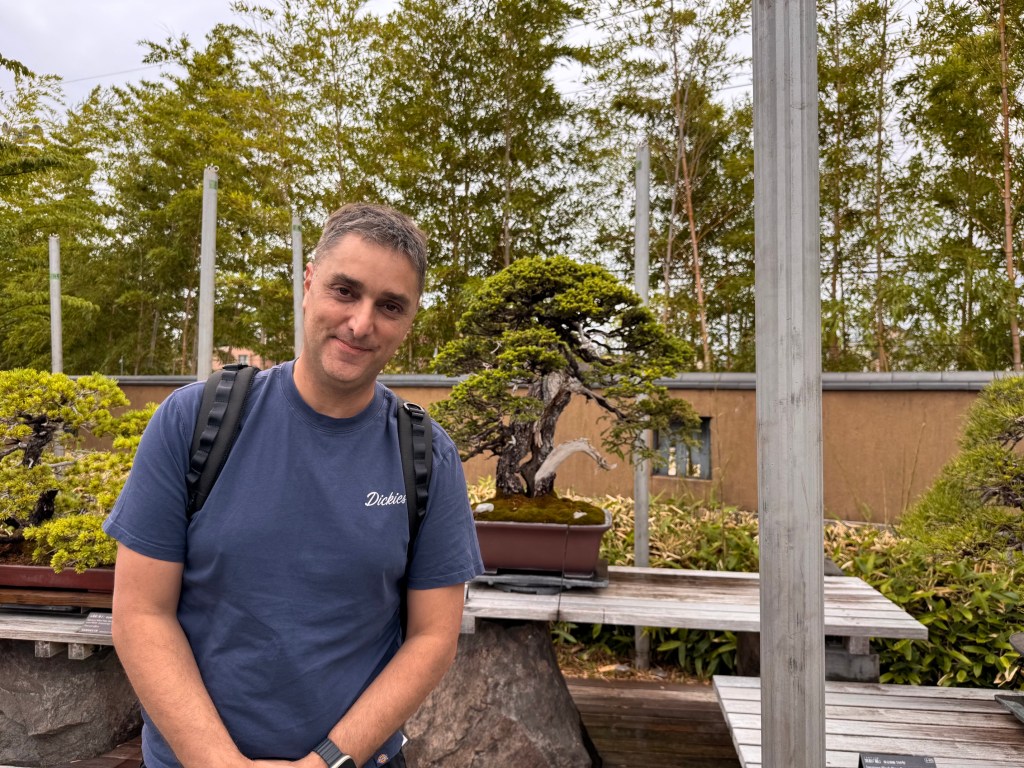
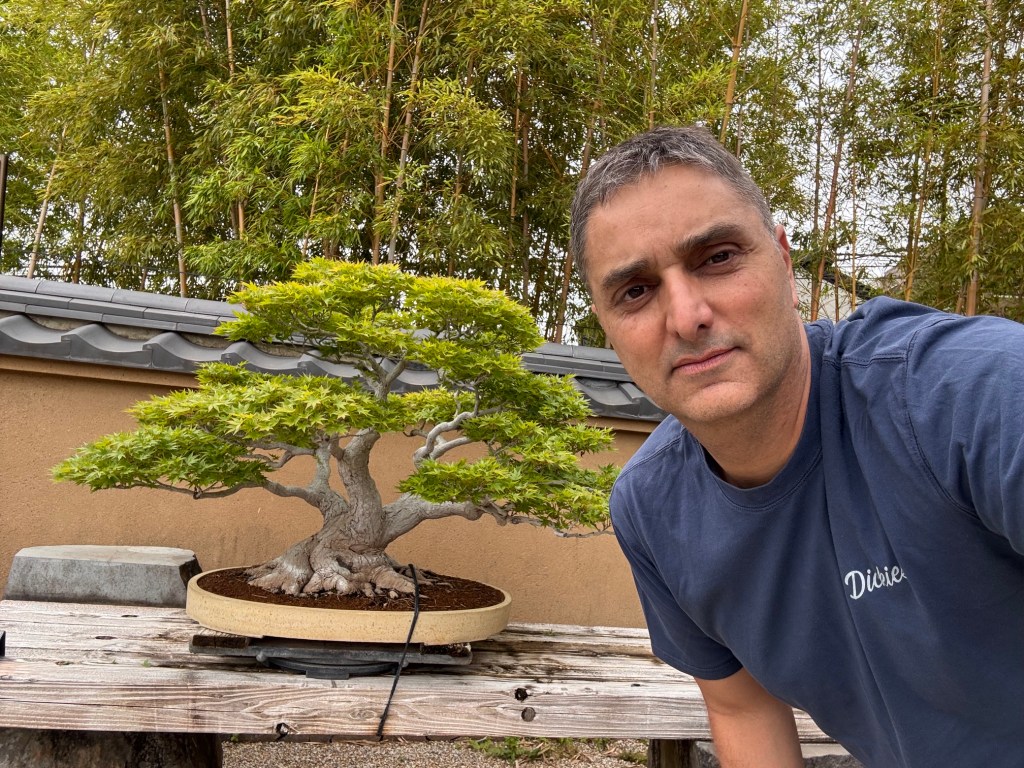
I walked slowly through the exhibition, trying to take it all in. The oldest specimens have been alive longer than most nations. They were saplings when medieval Europe was rebuilding from the plague. They have outlasted dynasties, wars, earthquakes — and through all of it, they have been tended, shaped, and cared for by generations of hands. It is a profoundly humbling thing to stand in front of.
The Six Nurseries
There are six bonsai gardens in Omiya Bonsai Village, each shaped by the personality and aesthetic taste of its owner. Time allowed me to visit three — Mansei-en, Fuyo-en, and Toju-en — which I had been told were among the most compelling.
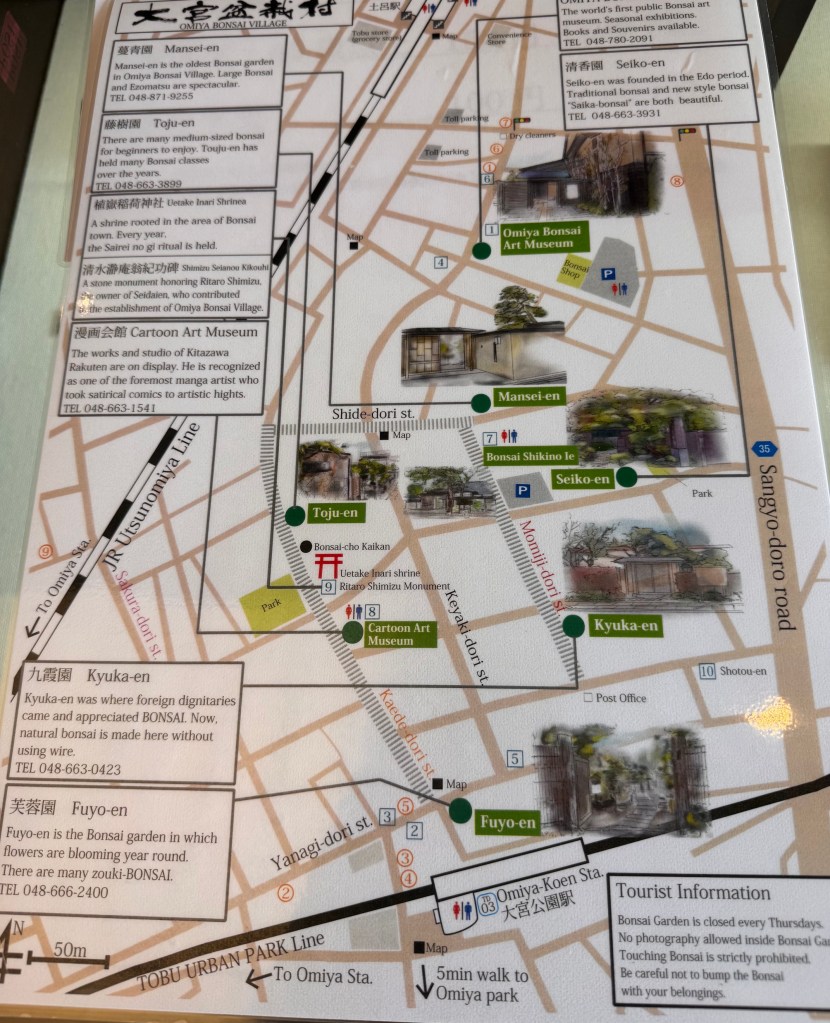
All three were extraordinary — beyond anything I could have imagined before arriving. The most beautiful trees I have ever seen, displayed with the quiet confidence that comes from centuries of refinement. No spotlights, no dramatic staging. Just trees on benches, in silence, speaking for themselves.
I’ll be honest: I felt something complicated walking through those gardens. Pure awe, yes — but also a particular sadness that comes from loving something you cannot have. In Israel, trees of this age and calibre simply don’t exist in bonsai form. Import restrictions make acquiring them impossible. You look at a six-hundred-year-old juniper and you understand, viscerally, that this is something that cannot be rushed or replicated. It must be grown, across generations, by people who accept they will never see it finished.
That thought is both humbling and, strangely, liberating. It clarifies what the practice is really about.
(Photography was not permitted in any of the three nurseries — privacy and protection — so these impressions live only in memory.)
A Conversation with Sam
At the last garden, I got talking with an apprentice — a young man named Sam, from the UK. He had been there six years. We stood in the late afternoon light while he told me about the life.
Six days a week. Often seven. Early mornings and late evenings. The kind of commitment that closes off most other paths — but he spoke about it without complaint, with something closer to quiet satisfaction.
What struck me most was the structure of learning:
Year 1 — Chores. No trees. Cleaning, sweeping, carrying. Learning the rhythms of the garden, the hierarchy, the silence. The apprentice earns trust before earning access.
Year 2 — First contact. Allowed to touch the trees, but only for the most basic maintenance tasks. Observation remains the primary mode of learning.
Year 3 — The art of water. Only in the third year are apprentices taught how to water. This surprised me most. It is explained simply: watering is everything. Too much and the tree grows weakly; too little and development stalls. The water is the message you send the tree about what you want it to become. It takes a full year just to learn to read and respond correctly.
Years 4–6 — Development and art. Only now does the formal teaching of bonsai shaping begin — wiring, timing, aesthetic intention. Everything before this was preparation.
I thought about that for a long time on the train back to Tokyo. We live in an age obsessed with shortcuts and acceleration. And here, in this quiet corner of Saitama, people are voluntarily choosing the opposite — building their lives around the slowest possible version of mastery.
A Final Thought
Before leaving I had one more thought — and I’ll admit it made me smile. Sam’s path demands you start young. But maybe that’s the point. Maybe bonsai, precisely because it cannot be rushed, is the perfect discipline for someone who comes to it as a passion rather than a vocation. You are freed from the pressure of mastery. You can simply grow alongside the trees.
I left Omiya just as the afternoon light was going golden. Already my mind was full of what was coming next — Shizuoka, the kilns, the workshops ahead. But for a few hours on that train back through the Saitama suburbs, I let myself just sit with what I’d seen. A thousand-year-old tree in a pot. The hands that shaped it. The hands that will shape it next.
What a way to begin.

Leave a comment