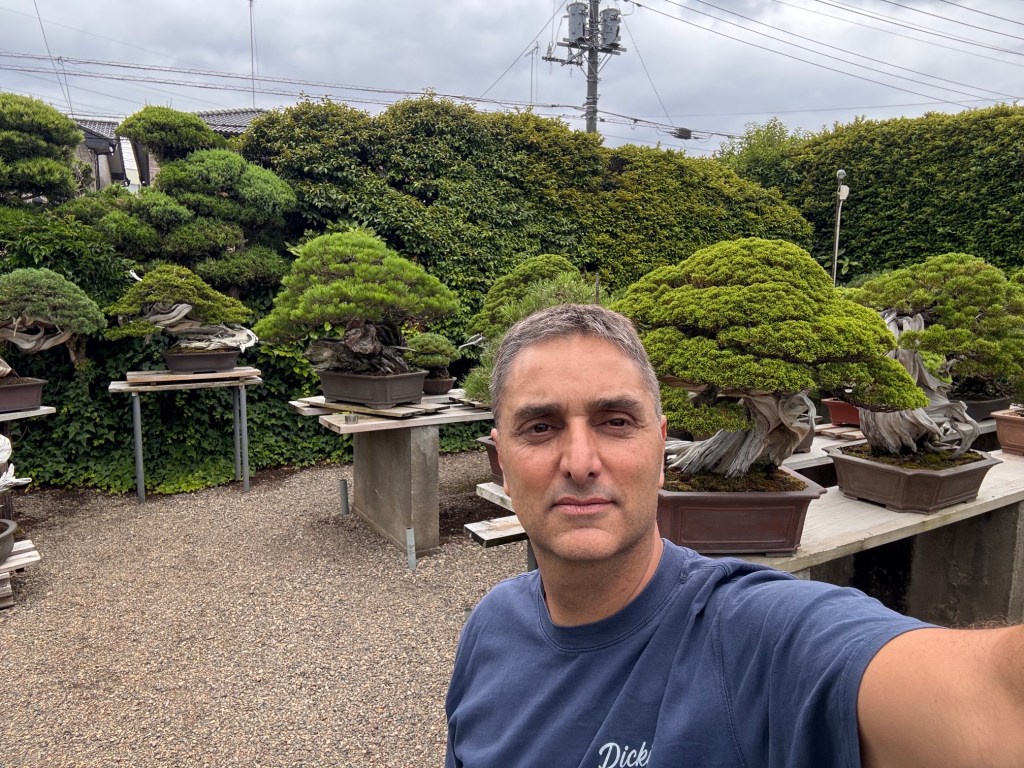
BonsaiNomad | June 2026
There are moments in a journey that you plan for weeks and then, when they finally happen, they exceed everything you imagined. My visit to Masahiko Kimura’s garden was one of those moments.
Let me start with some context for those who don’t know the name — though in the bonsai world, that’s hard to imagine.
Masahiko Kimura didn’t just push bonsai forward — he detonated it into the modern era. Born in Ōmiya, Saitama in 1940, he began his apprenticeship at age 15 under master Motosuke Hamano at Toju-en Bonsai Garden — a training that would last eleven years. But what came after is what defined him. His designs were first seen as controversial because they broke many traditional rules of bonsai — dramatic deadwood, impossible curves, living sculpture that nobody had attempted before. He became known as the “Magical Technician of Kindai Shuppan,” though apparently he never much liked the title. Today, his garden in Saitama remains a pilgrimage site for serious bonsai practitioners.
I had been following his work since I started this hobby — his books, YouTube videos, the junipers that appear again and again in every serious bonsai publication. When I began planning my Japan trip, visiting Kimura’s garden moved quickly to the top of the list. Not a “nice to have.” A must.
The problem: his garden is open to the public only by appointment. And the location? Quite confidential — understandable when you consider that some of his trees are valued at seven figures. I reached out through every connection I had. Doors stayed closed.
And then Bjorn came through.
I won’t say more than that — some doors open through trust and relationships built over years, and I’m grateful for the people in this community who share them. Bjorn arranged the visit and, in true style, equipped me in advance with a message in Japanese to show the apprentices.
When I arrived and walked up the path to the garden, a group of apprentices met me — mostly Japanese, and one who had come all the way from Peru. They asked who I was. I showed them Bjorn’s message. The moment they read it, everything changed — warm smiles, welcoming gestures, an invitation to walk freely through the garden until Mr. Kimura arrived.
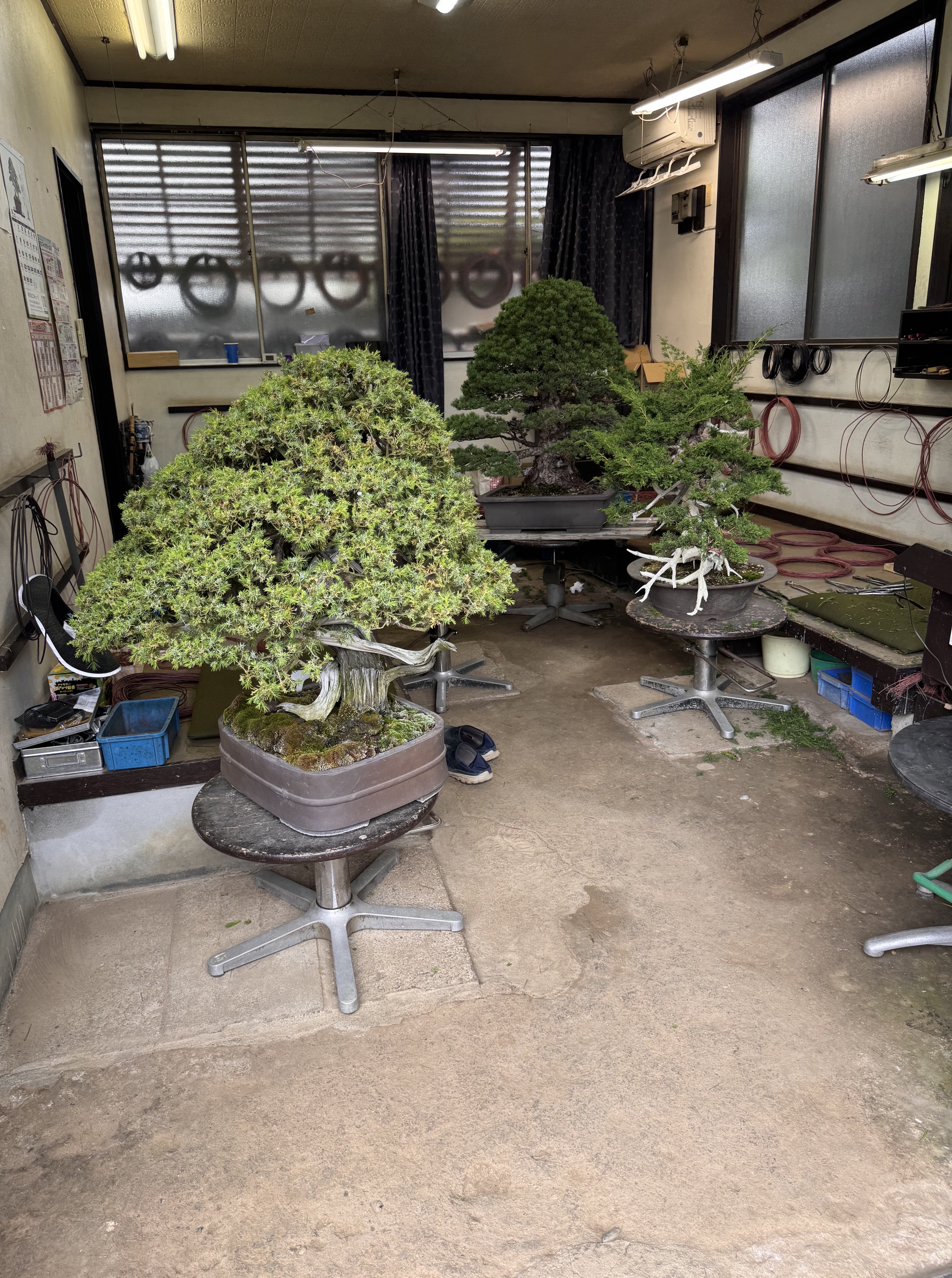
What followed was something I still struggle to put into words.
His garden is like a museum, and anyone interested in Japanese bonsai will recognize at least half the collection from magazines and websites. I found myself walking alone among these trees for a couple of hours. No rush. No crowd. Just me and the most famous bonsai collection in the world. I recognized trees from books I’d studied at home in Israel. Trees I had seen in photographs for months, suddenly right there in front of me — close enough to touch.
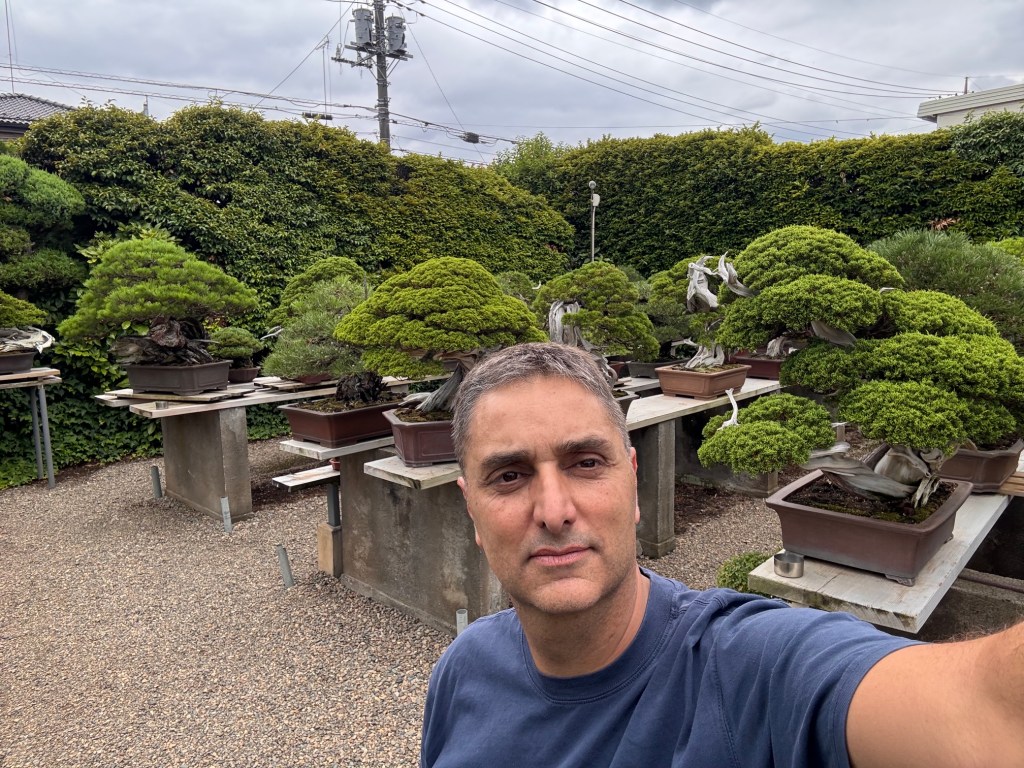
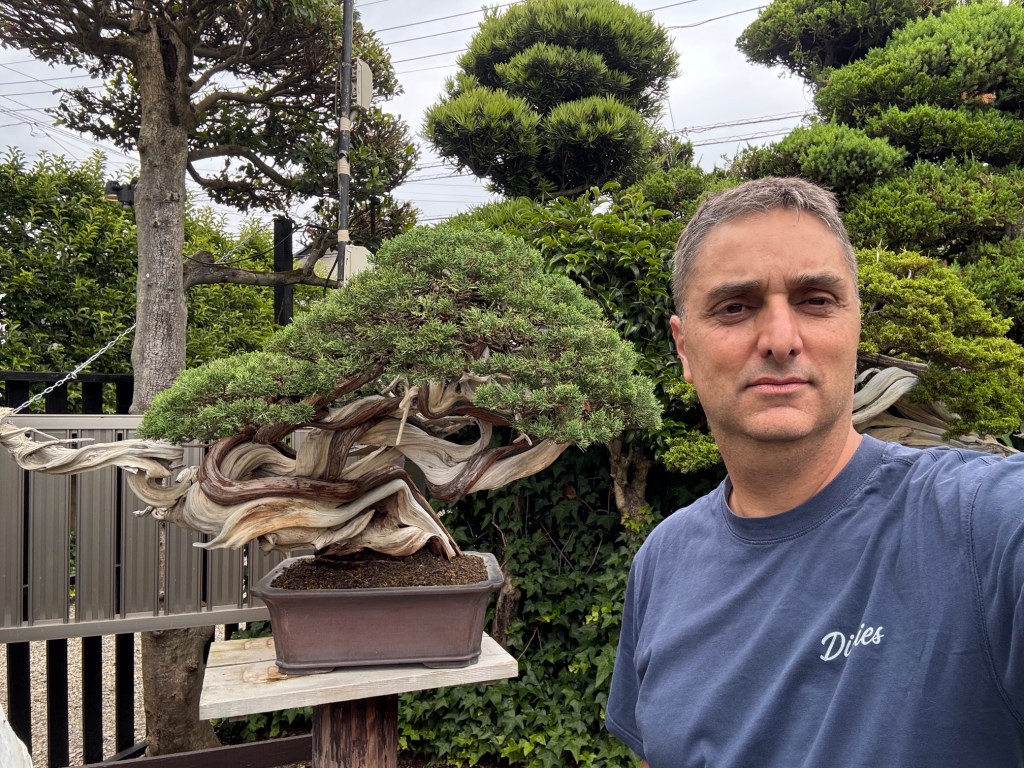
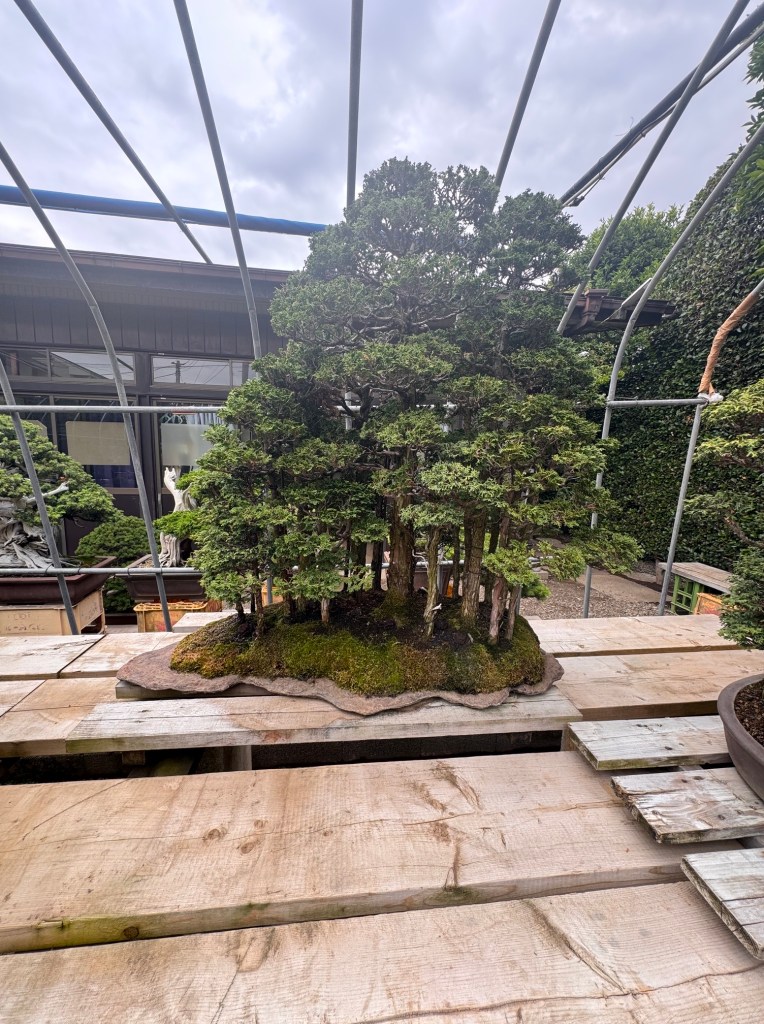
Then Mr. Kimura arrived.
He is 85 now , and his health means he no longer spends the full day at the garden. But he came. I introduced myself in broken Japanese — something I had prepared, though I’m sure my pronunciation did it no favors — and presented the gift I had brought from Israel: a pomegranate-shaped bowl. A symbol of home, of abundance, of the land I come from. He looked at it carefully, seemed genuinely appreciative, and then walked with me through his trees for a few minutes, quietly, the way someone moves through a space they have tended for decades.
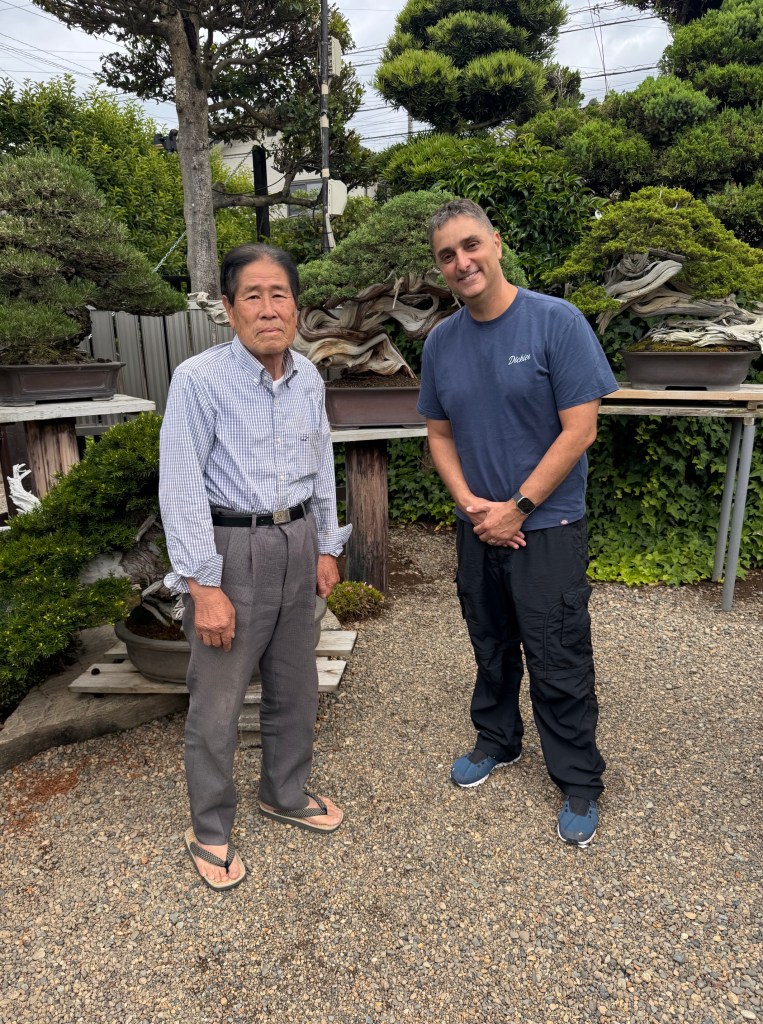
Then he went home to rest.
Those few minutes were enough. More than enough.
I stayed longer, chatting with one of the apprentices — Google Translate doing the heavy lifting. He told me about life as an apprentice: the early mornings, the discipline, the years of commitment it takes to earn a place in a garden like this. Hard work and deep purpose. At some point we stopped talking and just watered some of the trees together. Famous trees. Trees I had read about. And there I was, holding the hose.
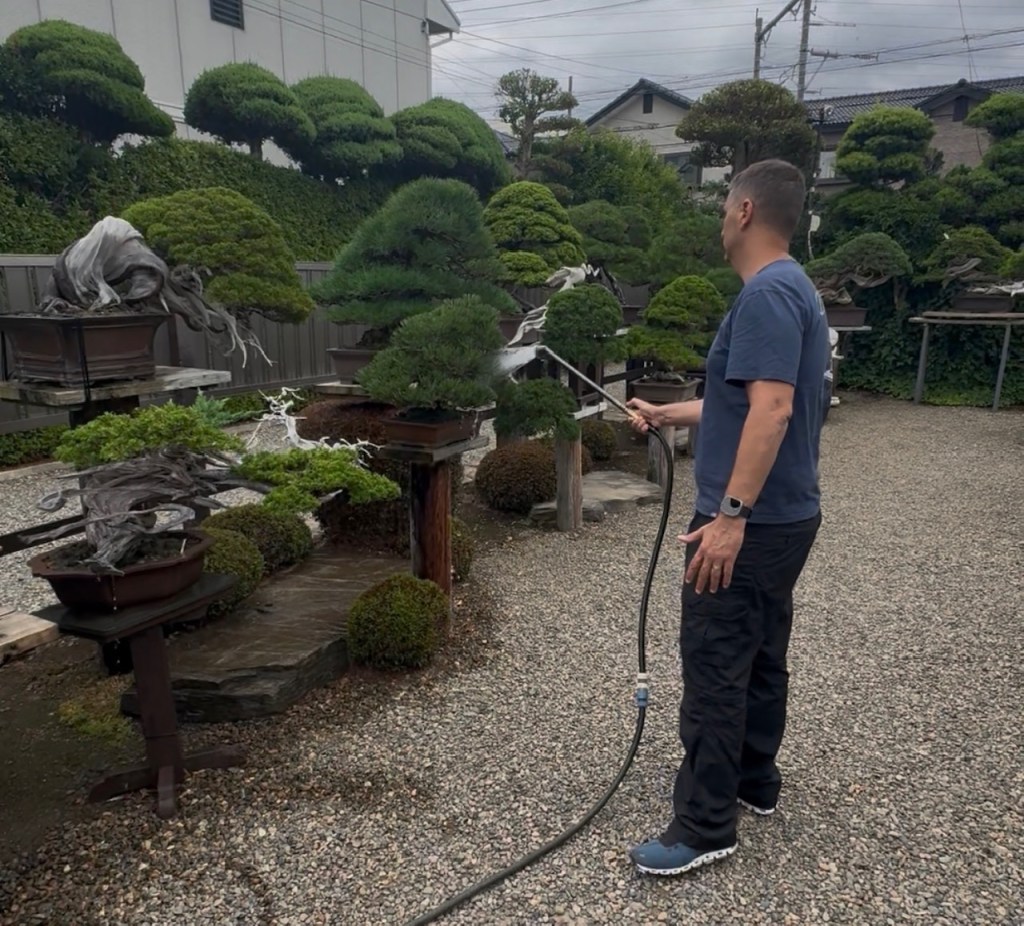
Kimura’s effect runs deeper than the trees themselves — into how people think about line, about drama, about pushing past what they thought was possible. Standing in his garden, I understood that in a new way. His Shimpaku junipers are his most famous and award-winning species , and seeing them in person — the deadwood, the impossible movement, the sheer sculptural force of them — is nothing like a photograph. And the pine forests. Simply beautiful. Quietly monumental.
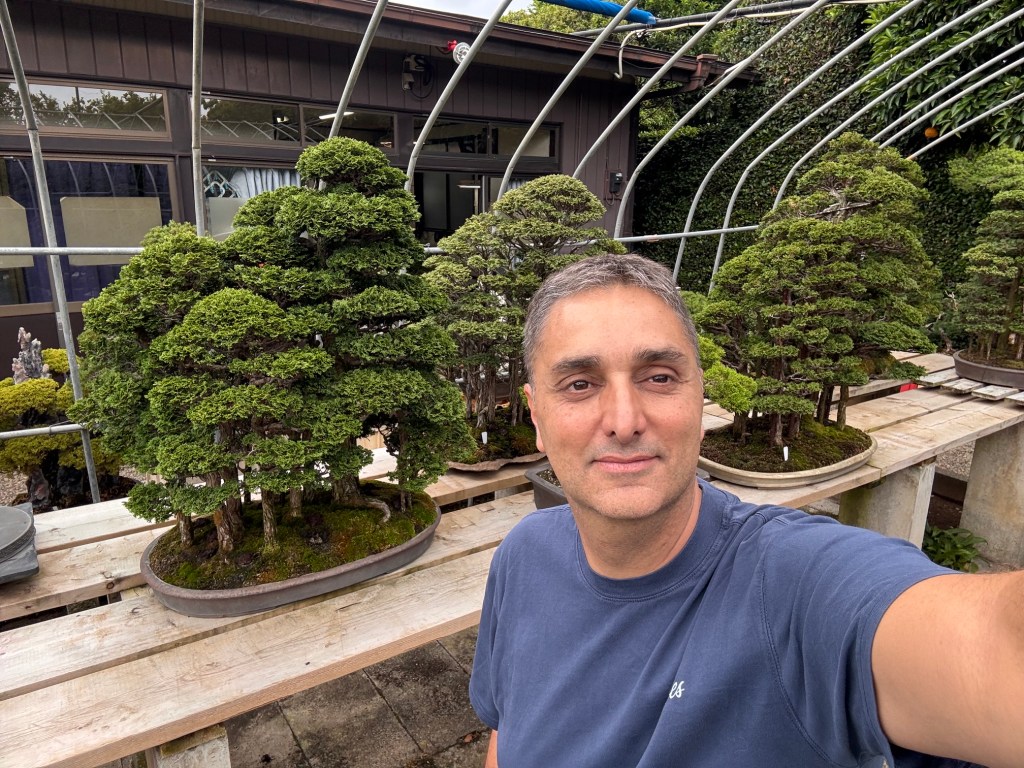
Six months into this hobby, I stood in the garden of the man who redefined it. I arrived as a pilgrim and left as something more — not a master, not even close, but someone who has now seen with his own eyes what this art can become.
The road continues. More gardens, more teachers, more trees.
BonsaiNomad

Leave a comment