Some names you encounter in bonsai before you ever really understand what bonsai is. Kunio Kobayashi is one of them.
Born in Tokyo in 1948 into a family involved in floriculture, Kobayashi came to bonsai later than you might expect – he was 28 years old when he saw a Japanese white pine at an exhibition and something clicked. From that moment, he built a career that placed him in the absolute top tier of the art. A thirty-time recipient of the most prestigious awards in Japanese bonsai, he is sought after both domestically and internationally. If Masahiko Kimura – whom I visited just days earlier – is the rebel genius who bent the rules of bonsai into something wild and sculptural, Kobayashi is the master of classical refinement, elegance, and depth. Two different visions of the same art. Both extraordinary.
I had been following Kobayashi for a while before this trip — his books, his YouTube channel – and his trees had quietly become a reference point for me. The way he handles negative space, the stillness in his compositions. I wanted to see them in person.
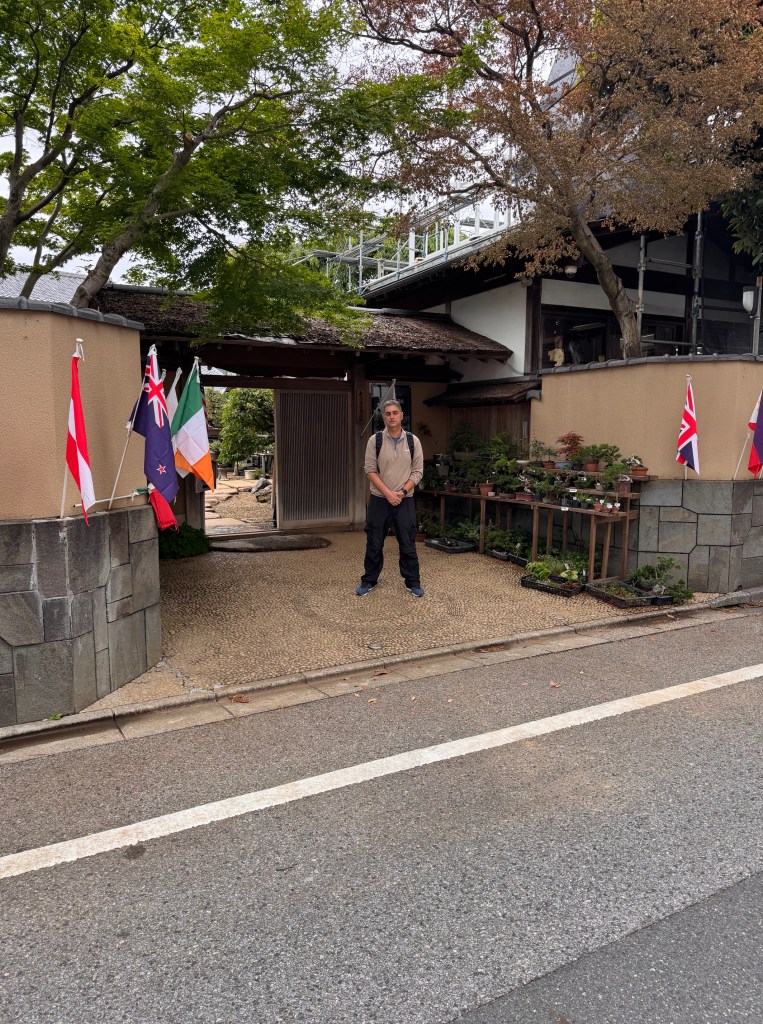
Shunkaen Bonsai Museum sits in Edogawa Ward, Tokyo, founded by Kobayashi in 2002. From my hotel in Ginza it was about an hour by train – a long ride into a quiet residential neighborhood that felt a world away from the city center. When you finally arrive, the transition is immediate. You step through a traditional entrance and the noise drops away.
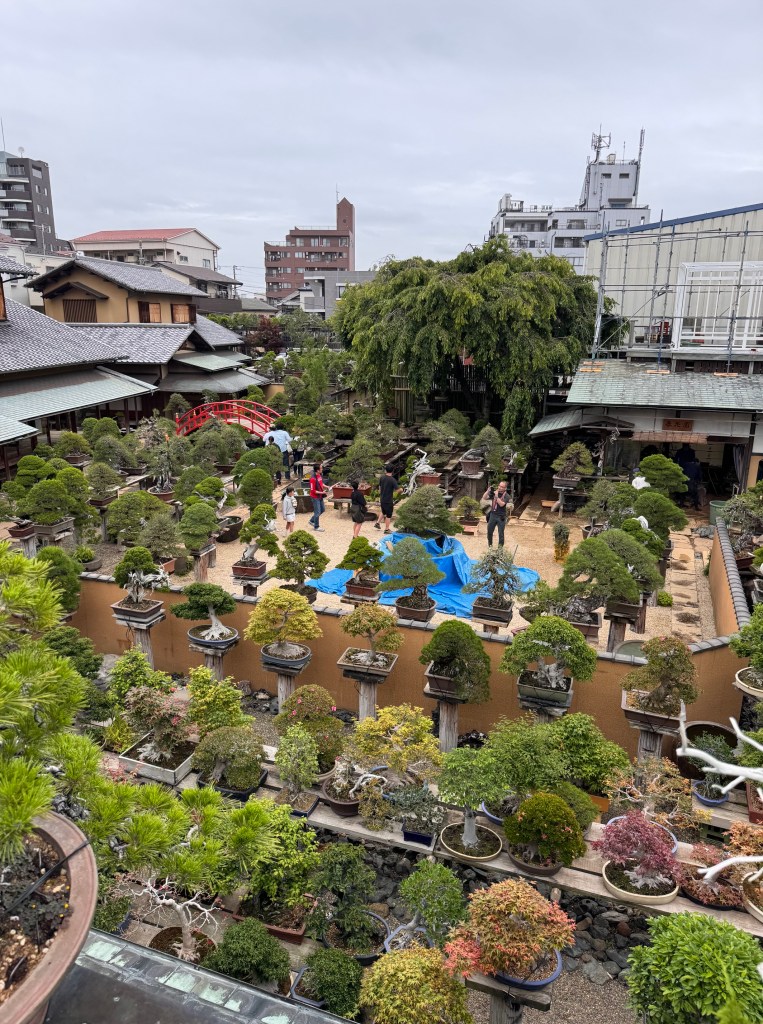
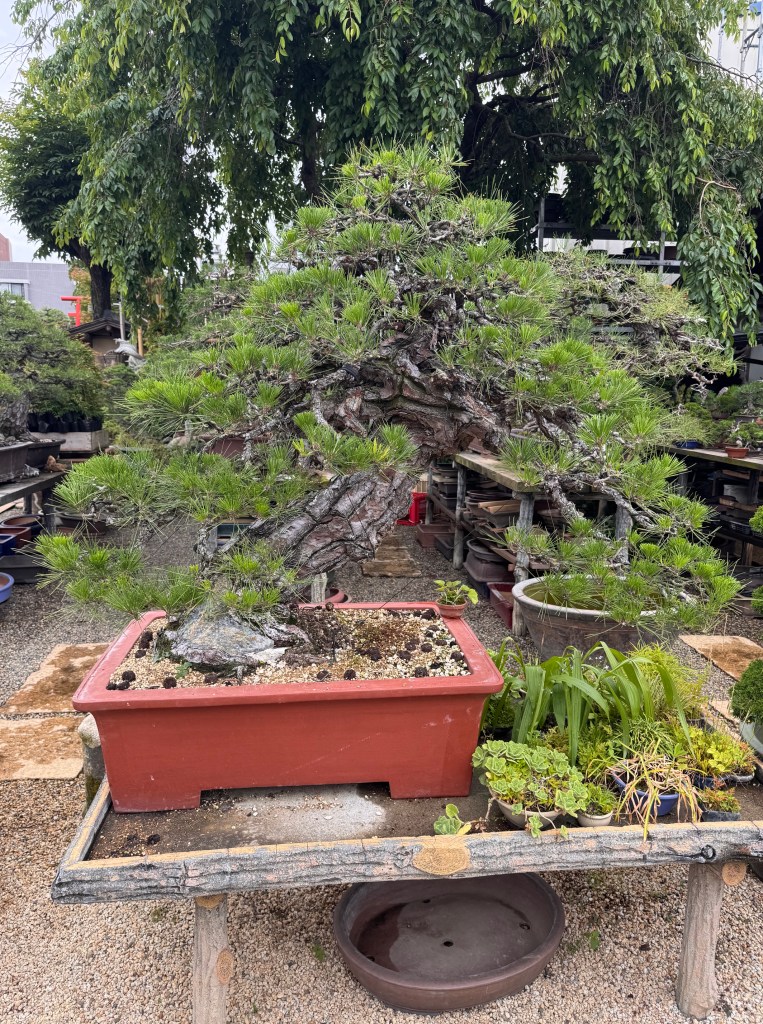
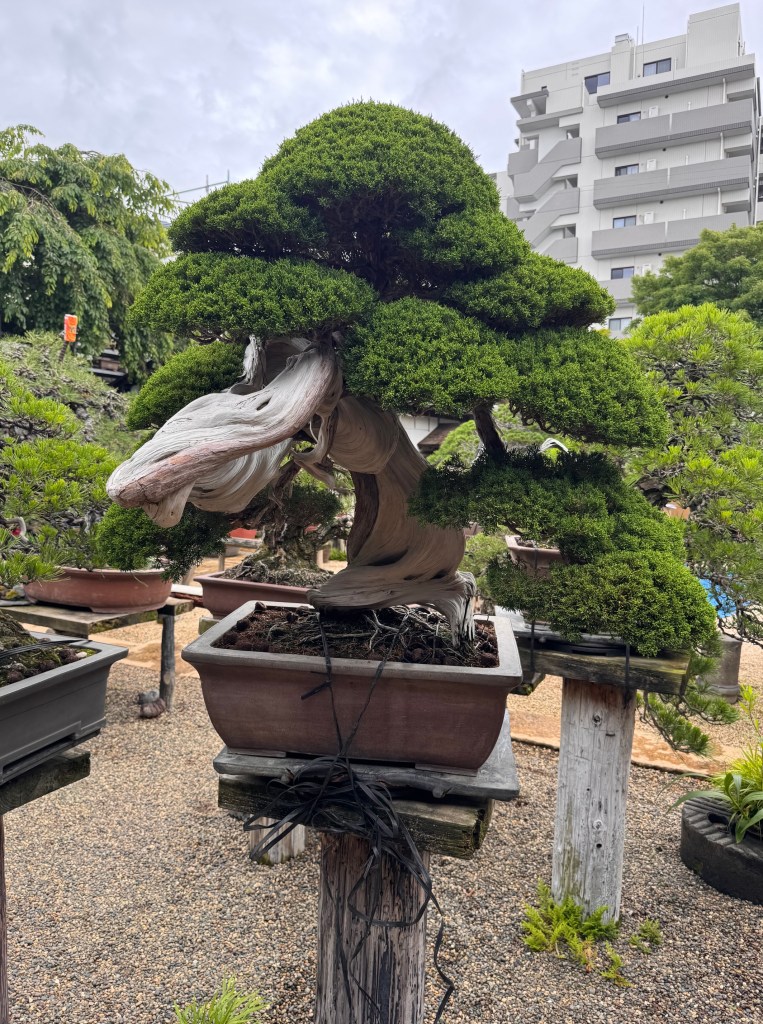
At the center of the main courtyard stands a Japanese black pine estimated to be 1,000 years old. I stood in front of it for a long time. Around it, over a thousand bonsai works are displayed across 2,600 square meters of garden and traditional Sukiya-style structures.
What made the visit especially memorable was the person who showed me around: Abdiel, an apprentice from Puerto Rico who has been training at Shunkaen for four years. Patient, generous, deeply immersed in the work. He walked me through tree after tree, sharing context and history, never rushing. Exactly the kind of guide you hope for.
The Indoor Chambers — A Story in Three Parts
Abdiel took me inside to the museum’s indoor exhibition area — a series of chambers where trees are displayed in rotation, brought in from the garden as needed since bonsai, of course, need proper sun and cannot live permanently indoors. The rotation itself says something about the care and intention behind every detail of this place.
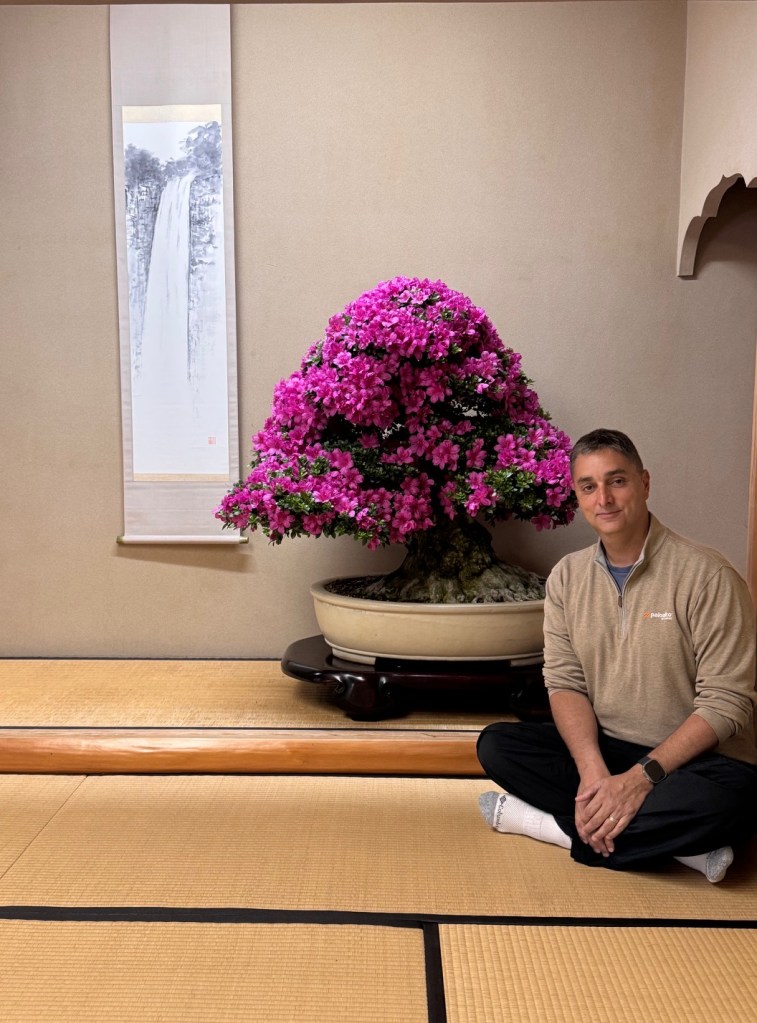
What I encountered there stopped me in my tracks. Each display was not just a bonsai on a table. It was a complete composition: a bonsai on a specially crafted exhibition stand, beside a suiseki stone, beside a hanging scroll painting – each element chosen to speak to the others, all of them together telling a single story about a season, a landscape, a feeling.
A word about Suiseki, because until that moment I honestly didn’t fully grasp what it was. Suiseki are naturally shaped stones, collected and displayed for the landscapes they suggest — a mountain, a cliff, a shoreline. They are not carved or altered; their beauty is found, not made. And standing there in that chamber, it suddenly became clear: the bonsai is a miniature tree. The Suiseki is a miniature mountain. Together they recreate an entire world in a space you could cross in three steps. The bonsai I had understood. The Suiseki I had seen. But seeing them composed together, with the scroll completing the scene above – that was the moment I truly understood what the Japanese bonsai display is trying to do. It’s not decoration. It’s storytelling.
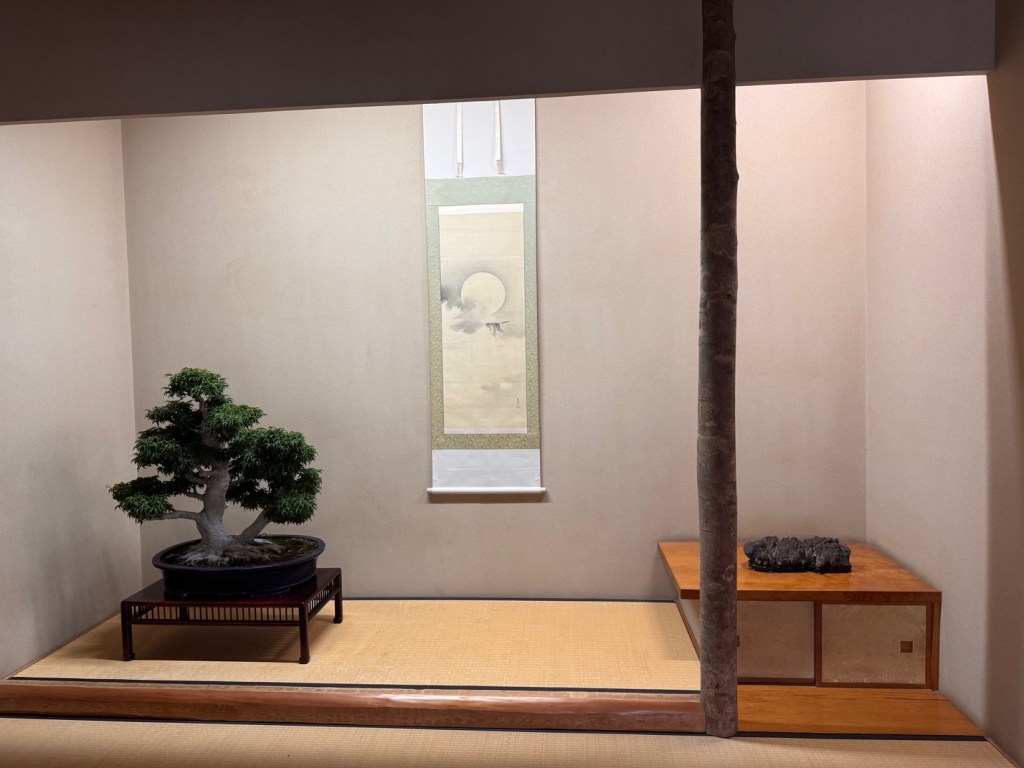
Abdiel noticed I was intrigued. So he took me to see Mr. Kobayashi’s personal suiseki collection. Remarkable pieces – stones that carry entire landscapes within them. A whole new world I hadn’t expected to walk into that day.
Meeting the Master
Then came the moment I had been quietly looking forward to since arriving in Japan.
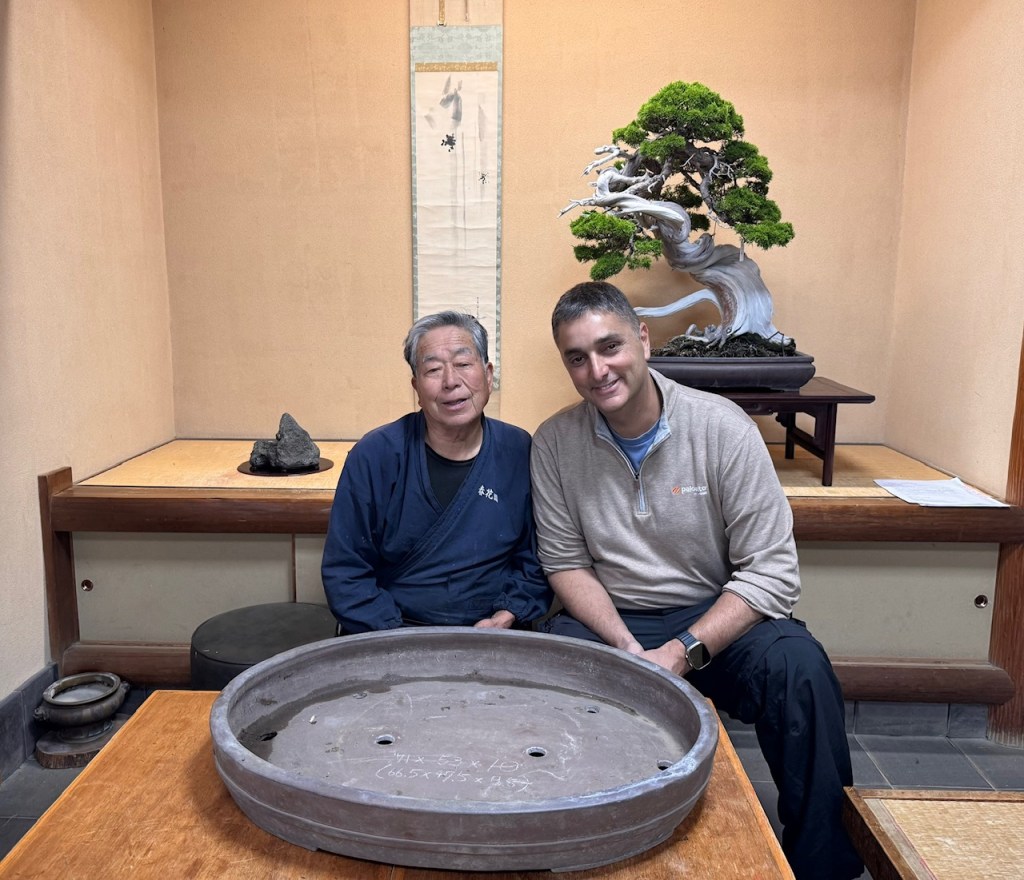
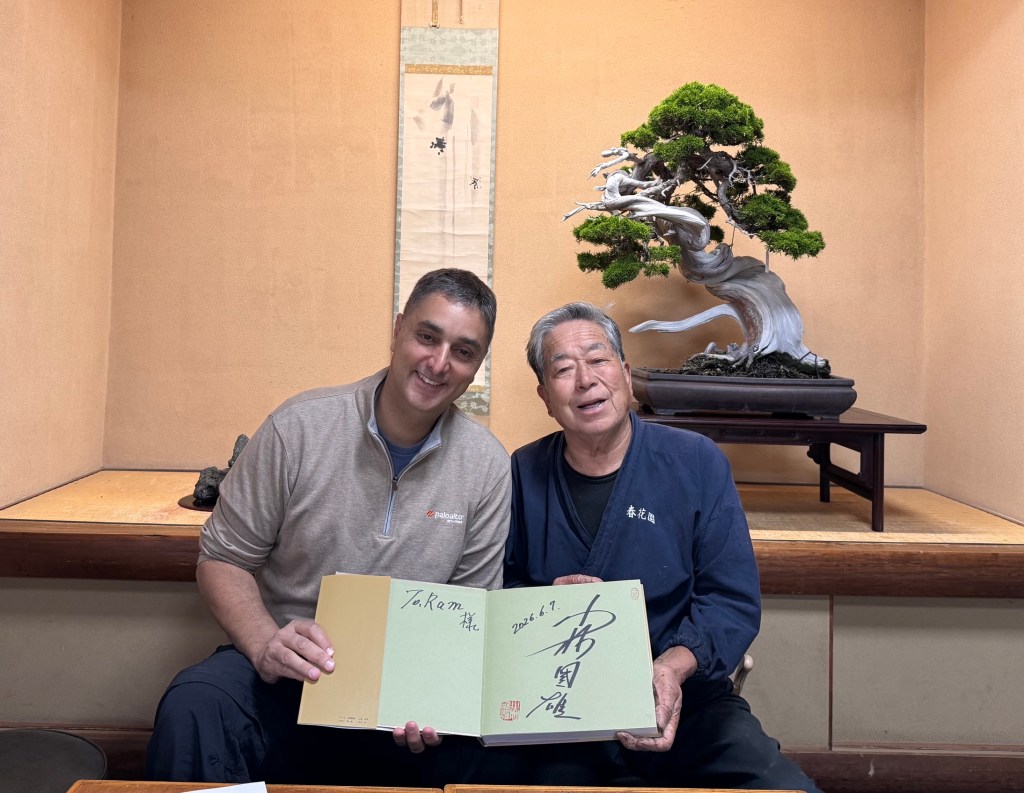
Mr. Kobayashi appeared. Following the guidance of my teacher Shai back home, I had prepared for this – I knew the protocol. I introduced myself properly, and I presented him with a gift I had brought from Israel: a pomegranate-shaped ceramic bowl, a symbol of home. He appreciated it. In return, he gave me two books – one of them dedicated entirely to the art of suiseki. Given what I had just discovered that morning, the timing felt almost too perfect.
Pine Season in the Garden
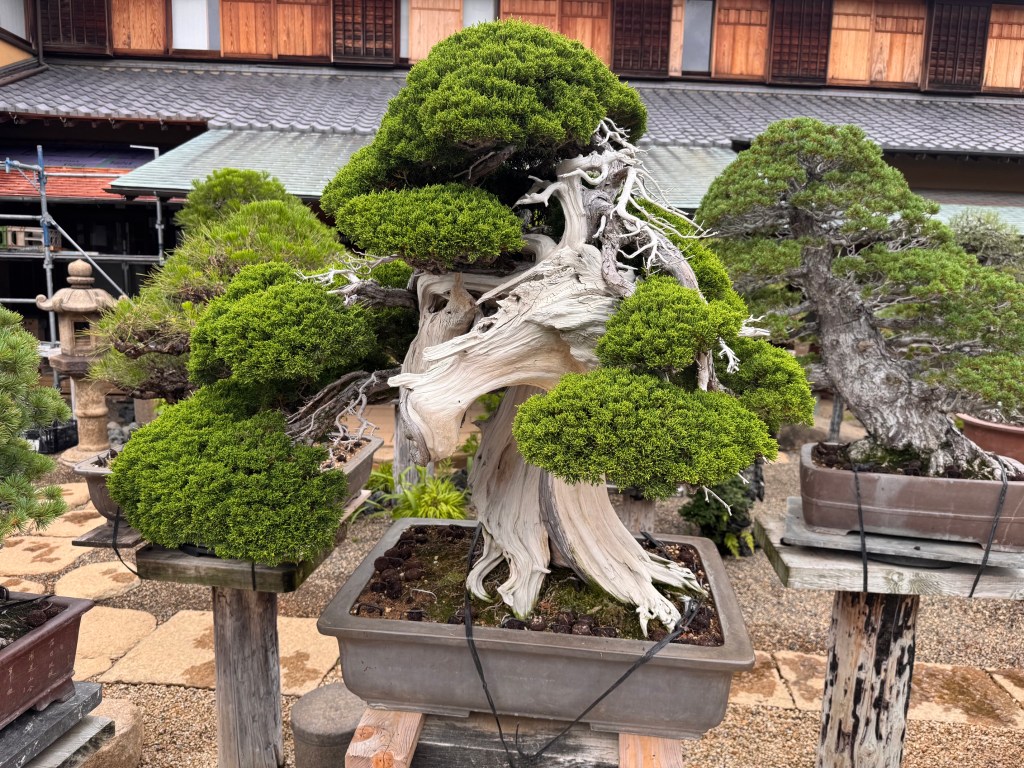
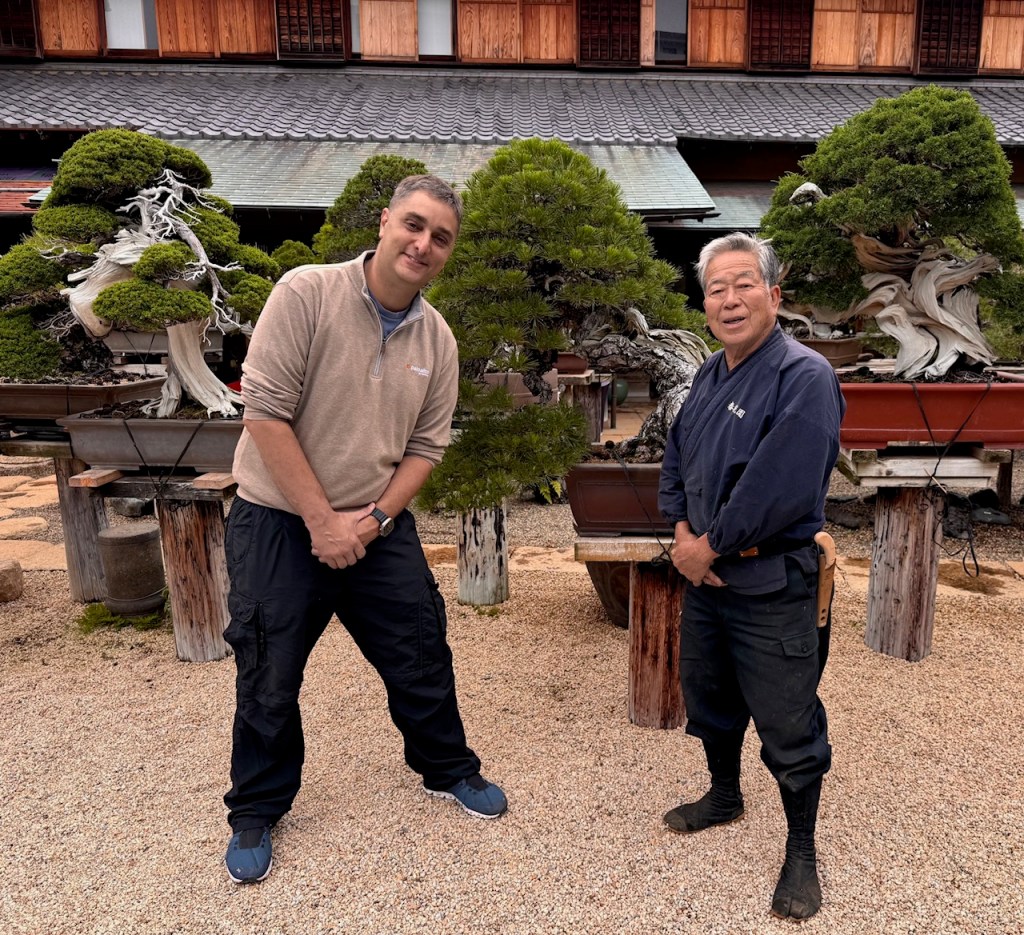
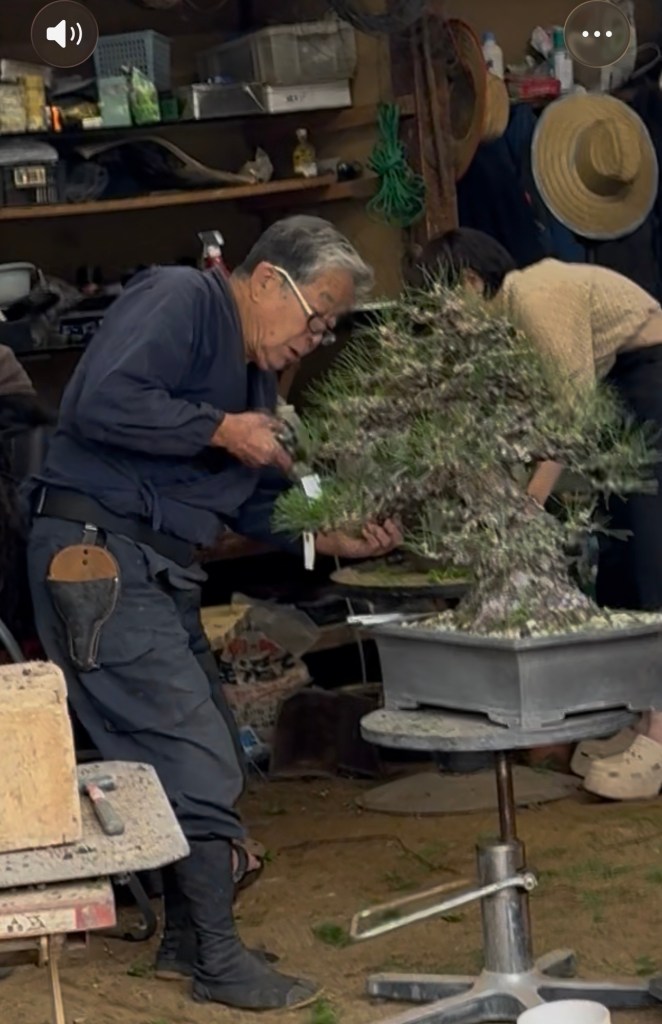
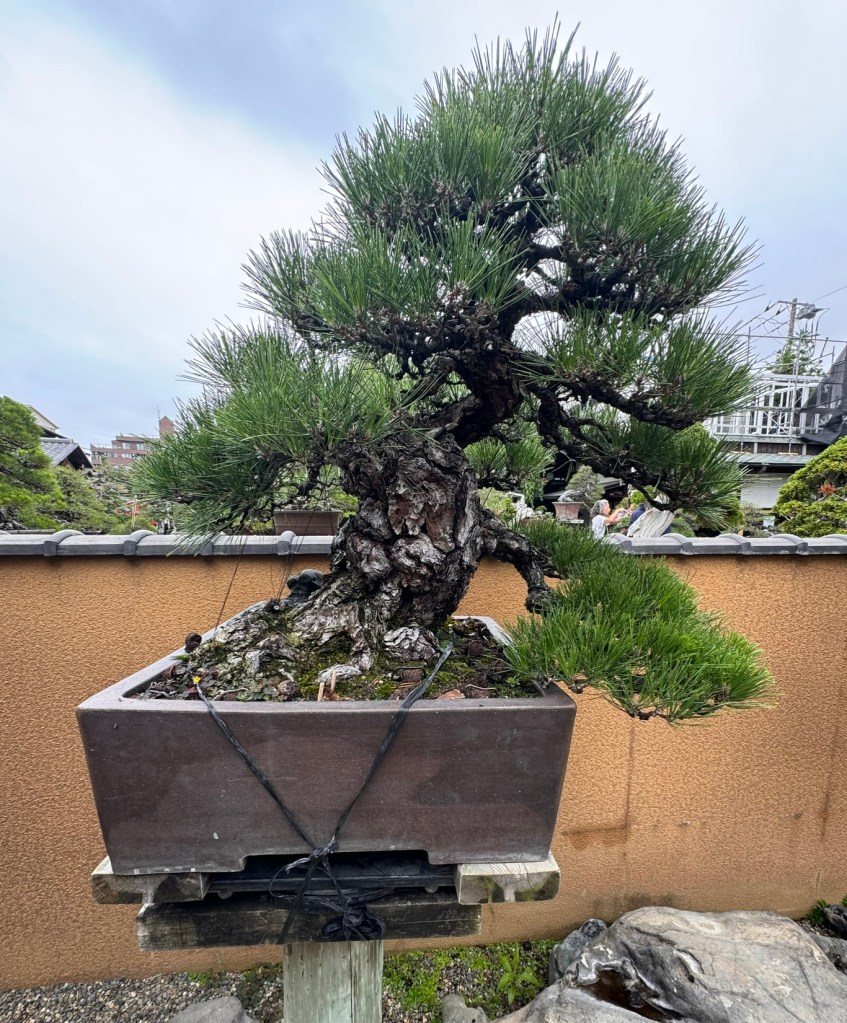
I returned to the garden and continued exploring. It was peaceful – but also very much alive with work. Pine season had arrived, and Mr. Kobayashi himself was out among the trees with his apprentices, removing needles by hand to balance the energy distribution across the branches. Watching a master do the same patient, seasonal work that bonsai growers do everywhere – just on trees of a completely different scale and age – was quietly moving.
And then I saw it.
Tucked under one of the exhibition tables, as if it had been waiting there – a large bonsai pot. I crouched down to look at it more carefully. I had a suspicion. I asked Abdiel. He confirmed it: a Gyouzan pot. One of the most celebrated pot makers from Tokoname. A collector’s piece. And Gyouzan, I learned, had passed away earlier this year. These pots will not be made again.
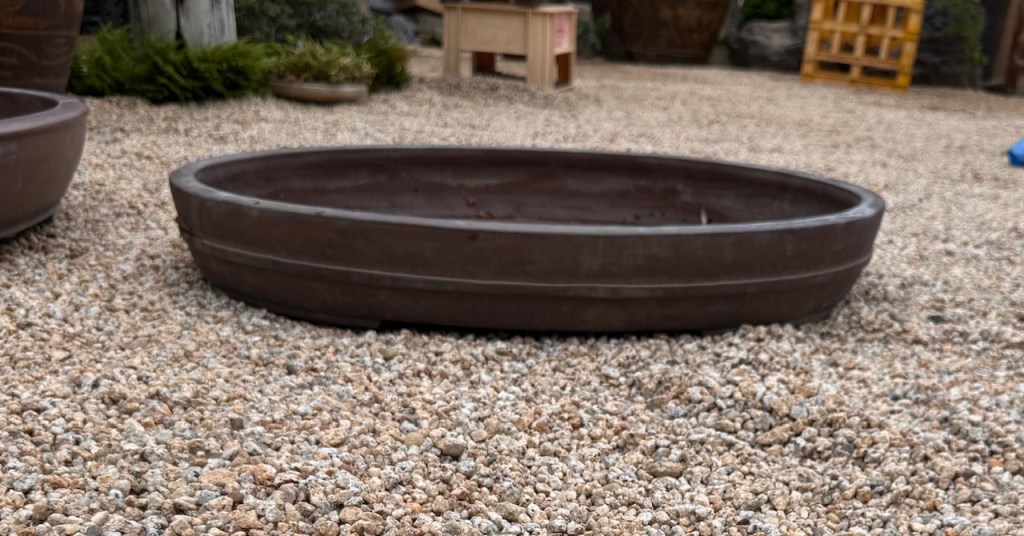
I hesitated for exactly one moment.
Price wasn’t really the question – you can’t put a price on something like that. The question was more practical: the pot was bigger than my suitcase. I was flying back to Israel. I had already transported one large ceramic piece on this trip. But some decisions make themselves, and this was one of them. I purchased it. I still don’t know how I’m getting it home – as I write this, still in my Tokyo hotel, that problem remains unsolved – but we will find a solution. There was no other choice.
The End of a Beautiful Day
I made my way toward the exit. And then – a small moment that I keep coming back to – Mr. Kobayashi came out again, just to say goodbye.
He didn’t have to do that. But he did.
Great artist. Very kind man. I hope one day I’ll have the opportunity to return.
BonsaiNomad

Leave a comment