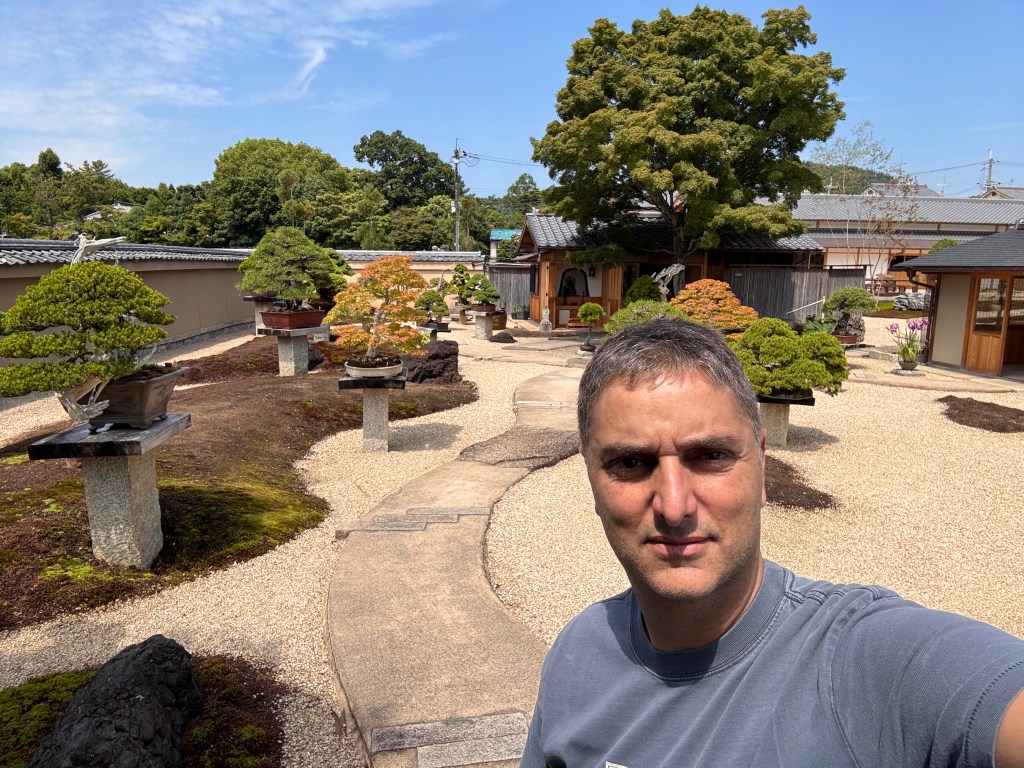
I started my morning at Daitoku-ji, a vast Zen temple complex in northern Kyoto, founded in the 14th century. Among its many temples and gardens, I made my way to Hōshun-in — a famous bonsai garden I had known only from books and countless bonsai videos. I arrived just as the gates opened, and for the entire visit, the garden was mine alone — just me and the trees.
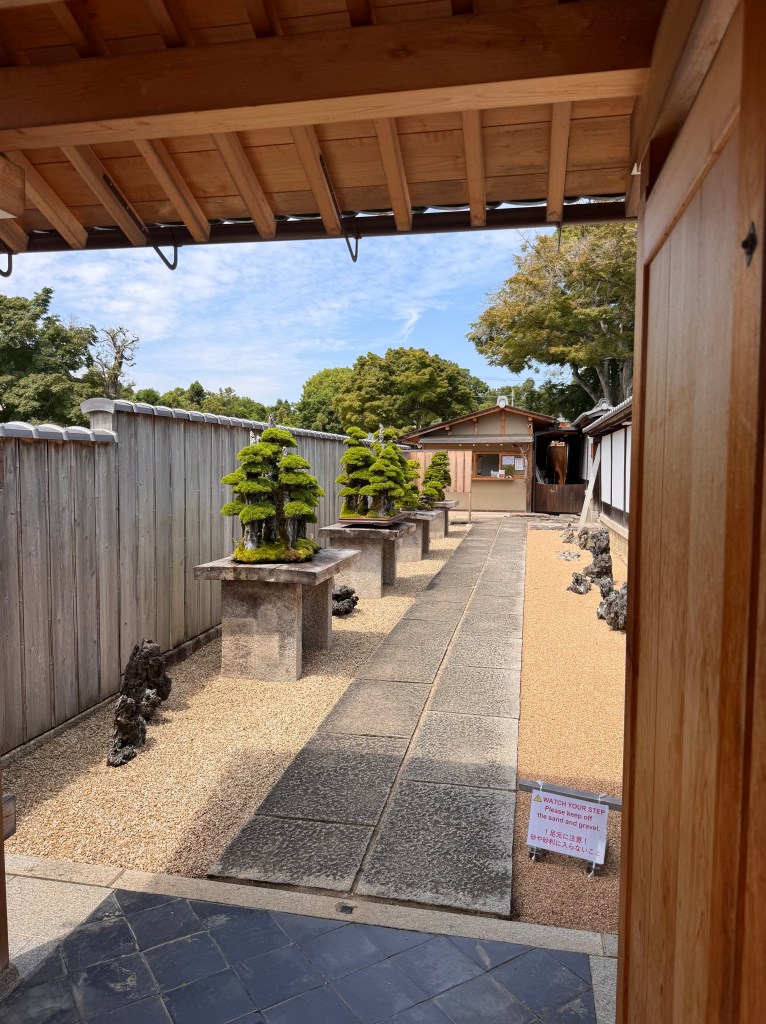
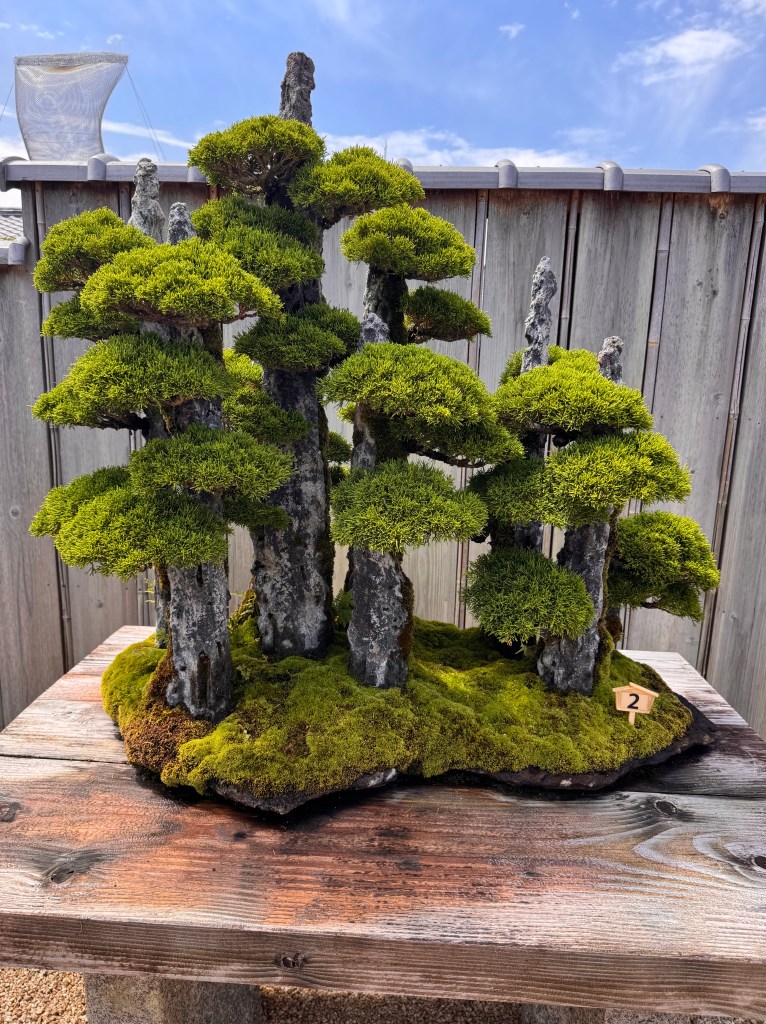
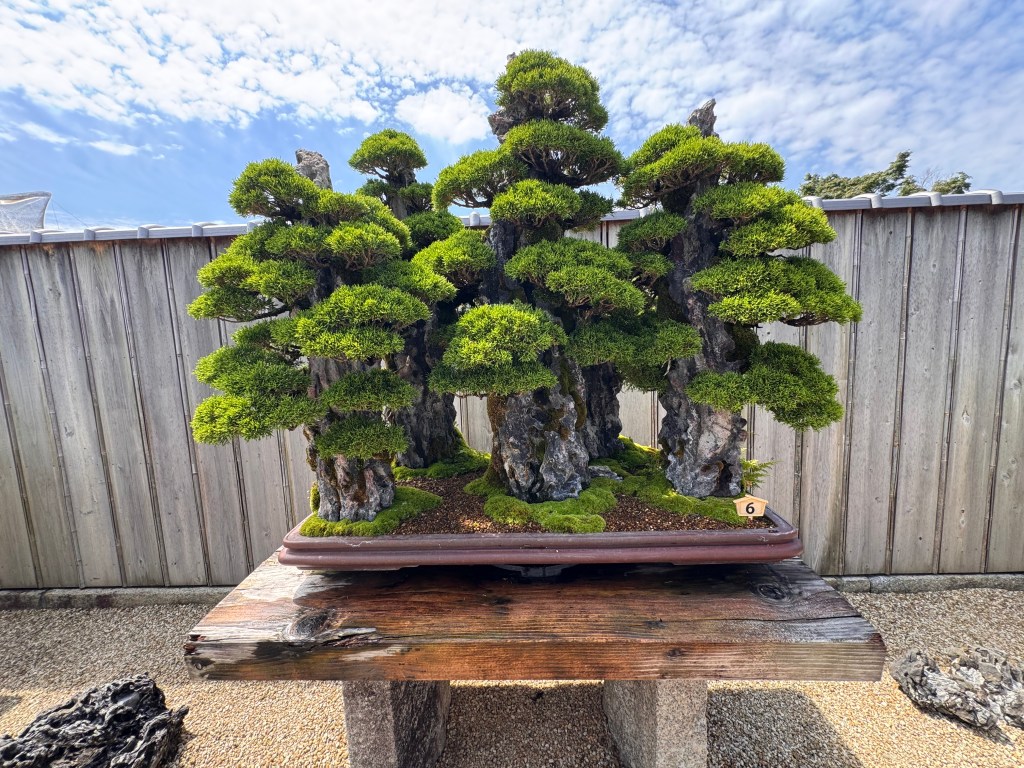
I walked the marked trail and went tree by tree, taking my time with each one. The collection is really impressive — pines, junipers, maples, all displayed outdoors on individual stands, numbered and labeled. If I could have a display like this in my own backyard one day, that would be a dream.
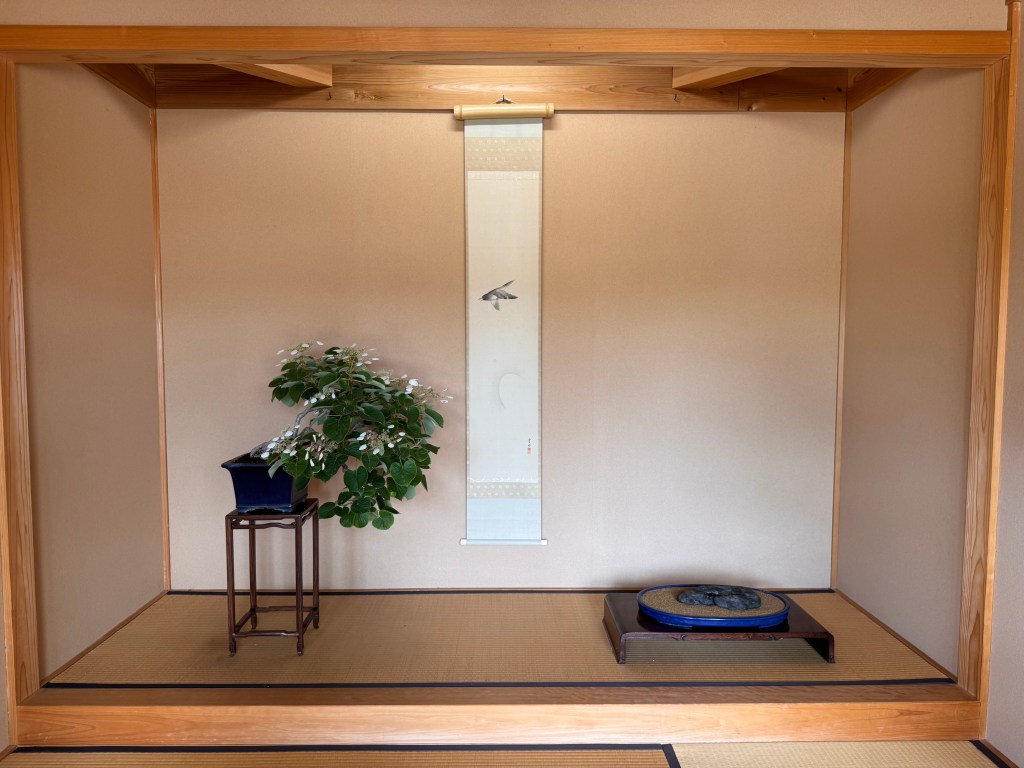
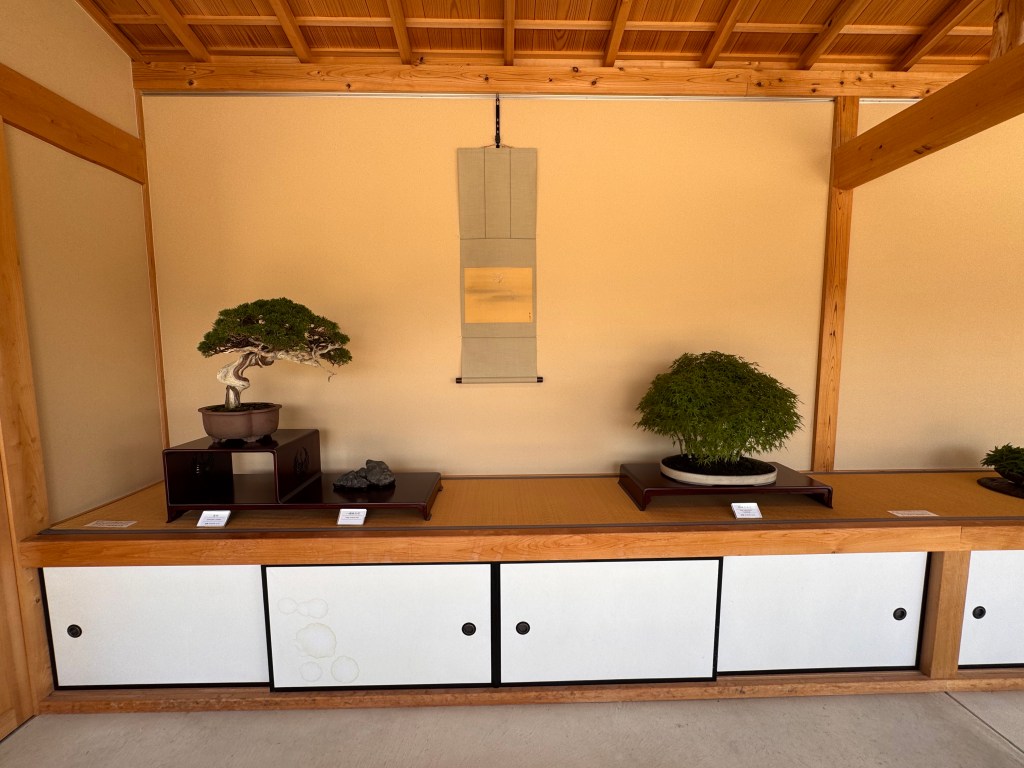
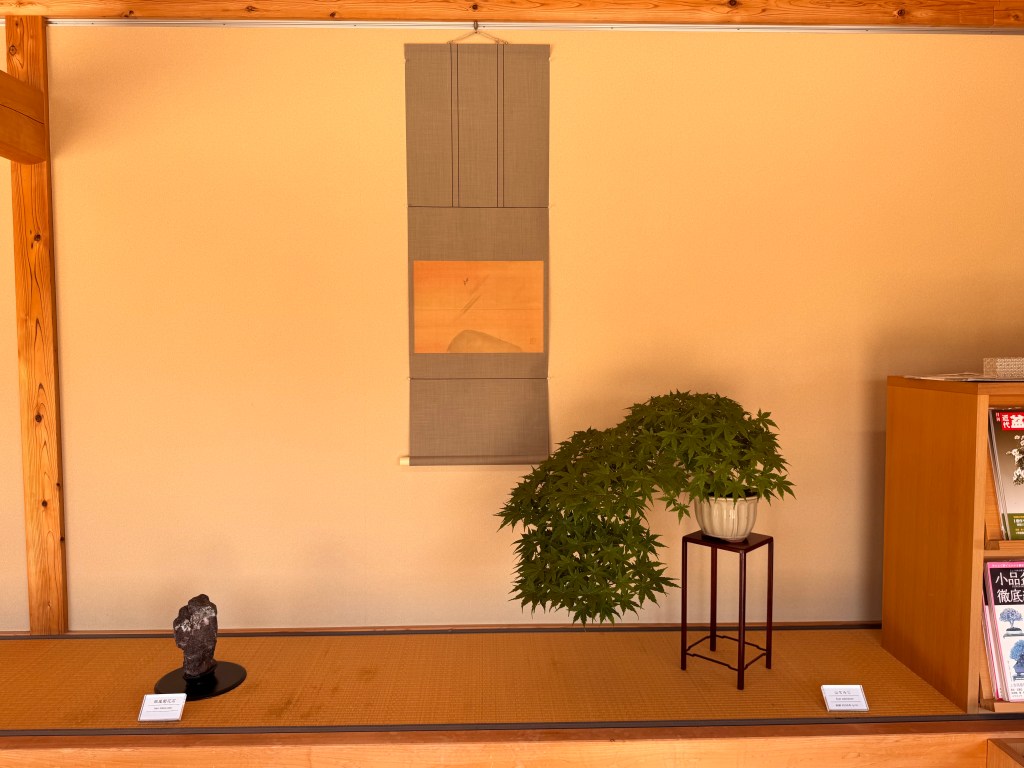
Indoors, the display alcoves – “Tokonoma” – showed me something I hadn’t fully appreciated before — the complete picture. A tree, a hanging scroll, a viewing stone, sometimes a second accent tree, all arranged together to tell one seasonal story. In one alcove, a flowering hydrangea sat beside a scroll of a swallow in flight, with a small stone on a tray beside them — sea, sky, and shore, distilled into three objects on tatami. In another, a juniper and a maple flanked a scroll, with a black stone shaped like a distant mountain resting on its own little stand.
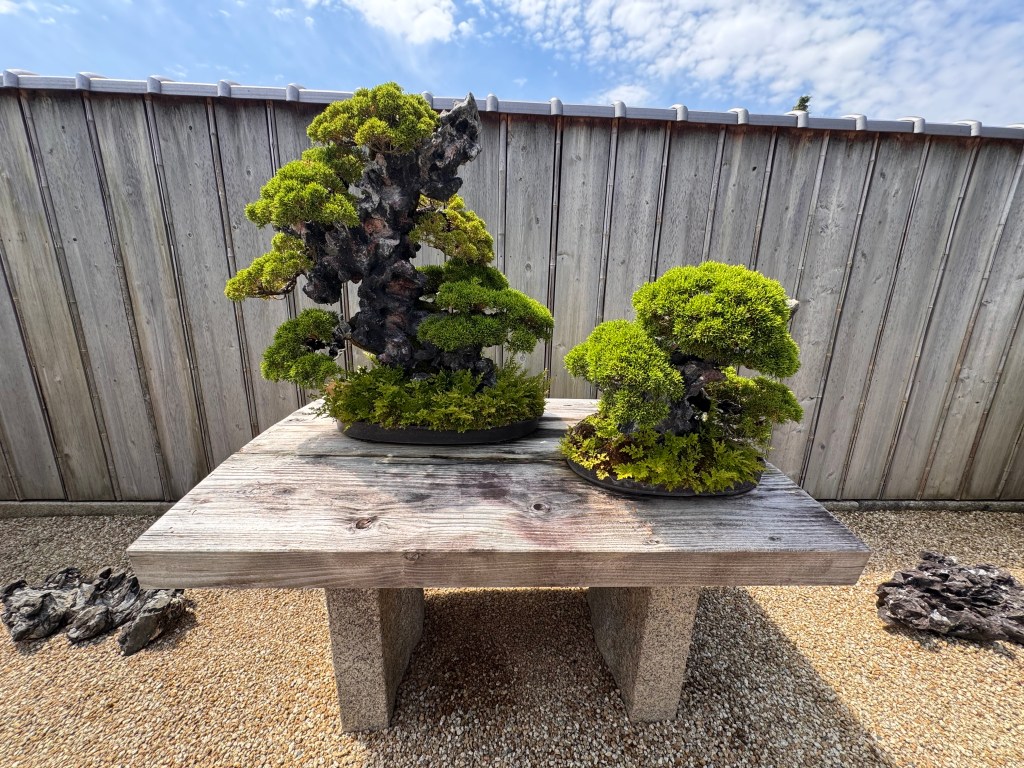
Then there was a rock displayed completely on its own, no plant at all — labeled Yase Sudachi-ishi, a stone from the Yase area, presented with the same reverence as any tree. That’s when something shifted for me.
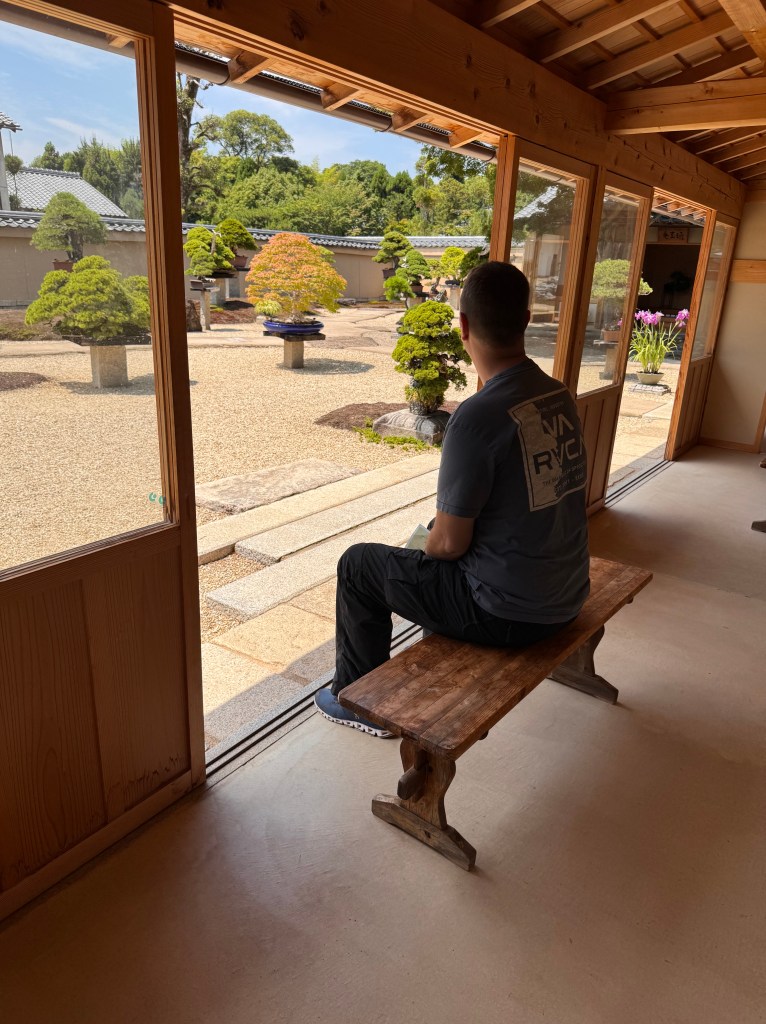
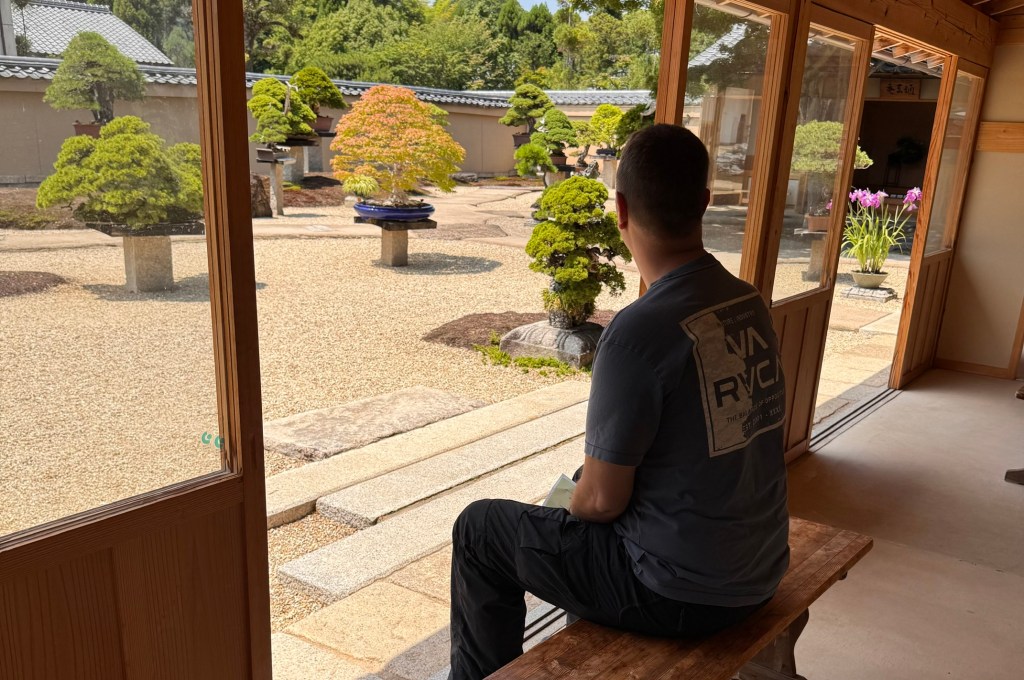
I sat on a bench for what must have been thirty minutes, just looking. Thinking about how six months ago I knew nothing about any of this, and now here I was, alone in a centuries-old temple garden, completely absorbed. What had brought me to this new passion? What does it actually mean to spend this much time and care on something so small, so slow? It led me somewhere bigger — toward what’s really important in life.
When I got up and looked again, I noticed the details I’d usually walk past: the overall garden setting, the moss, and — the rocks. Wow. These rocks. All of a sudden it hit me. This wasn’t just a nice garden with nice stands holding nice trees. It was the entire landscape — the sea, the mountains, the forests — compressed and suggested through stone and moss and form. The individual bonsai stopped being individual specimens and became elements in something much larger, the way a single stone in a Zen garden stands in for an entire mountain range.
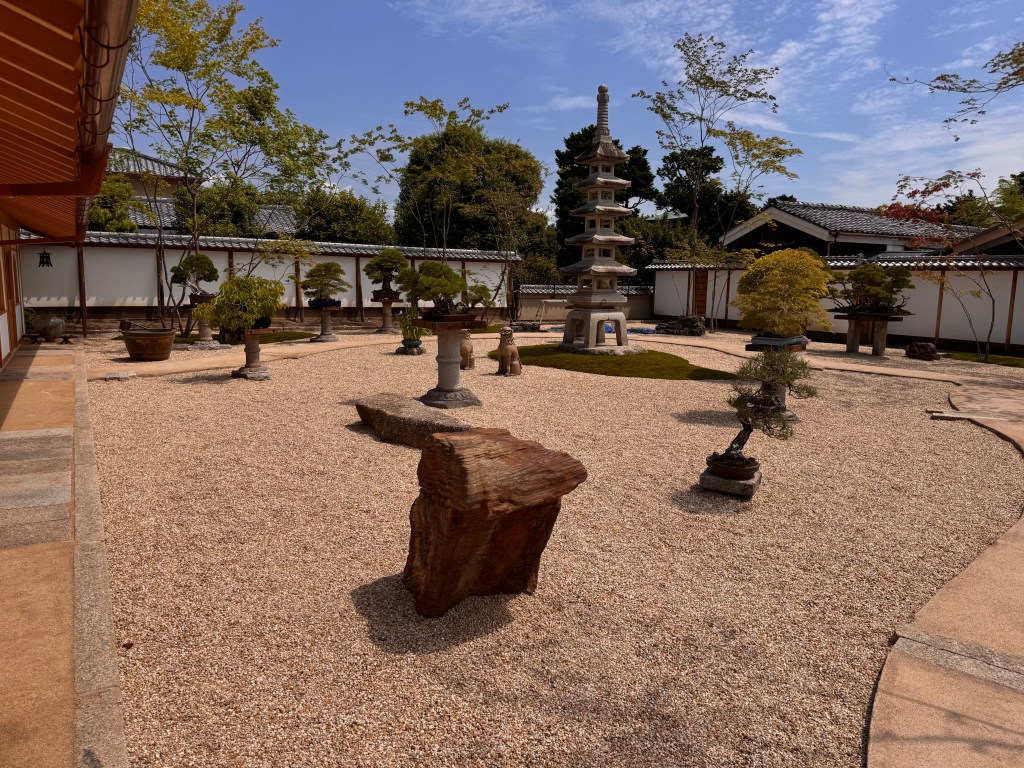
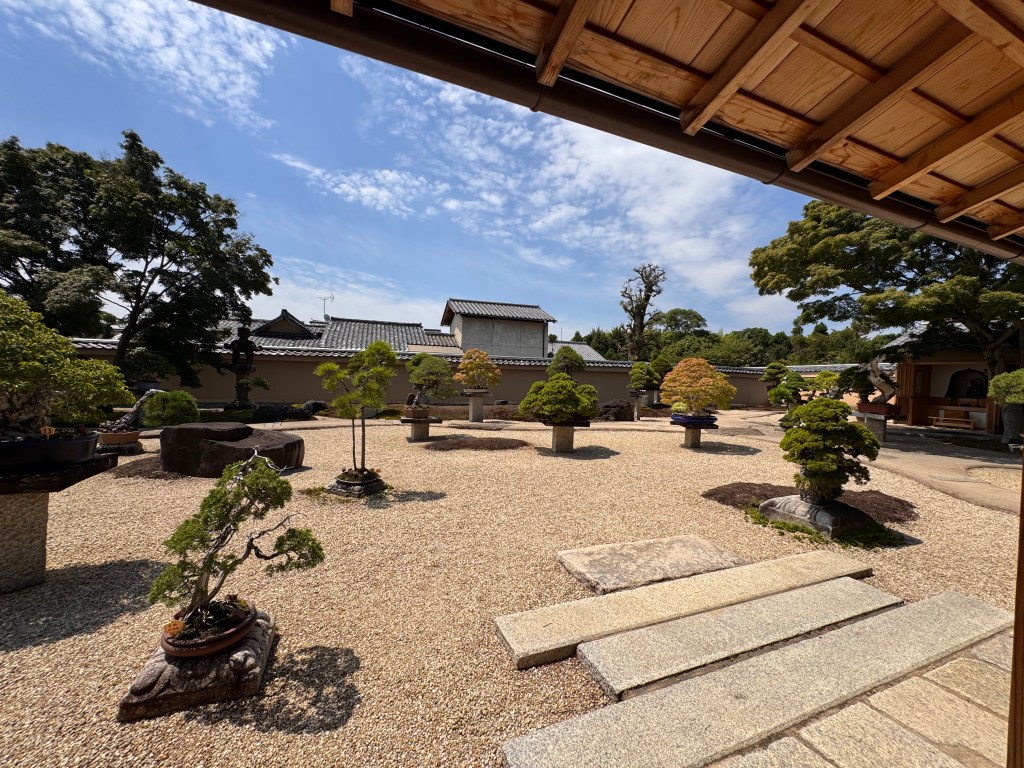
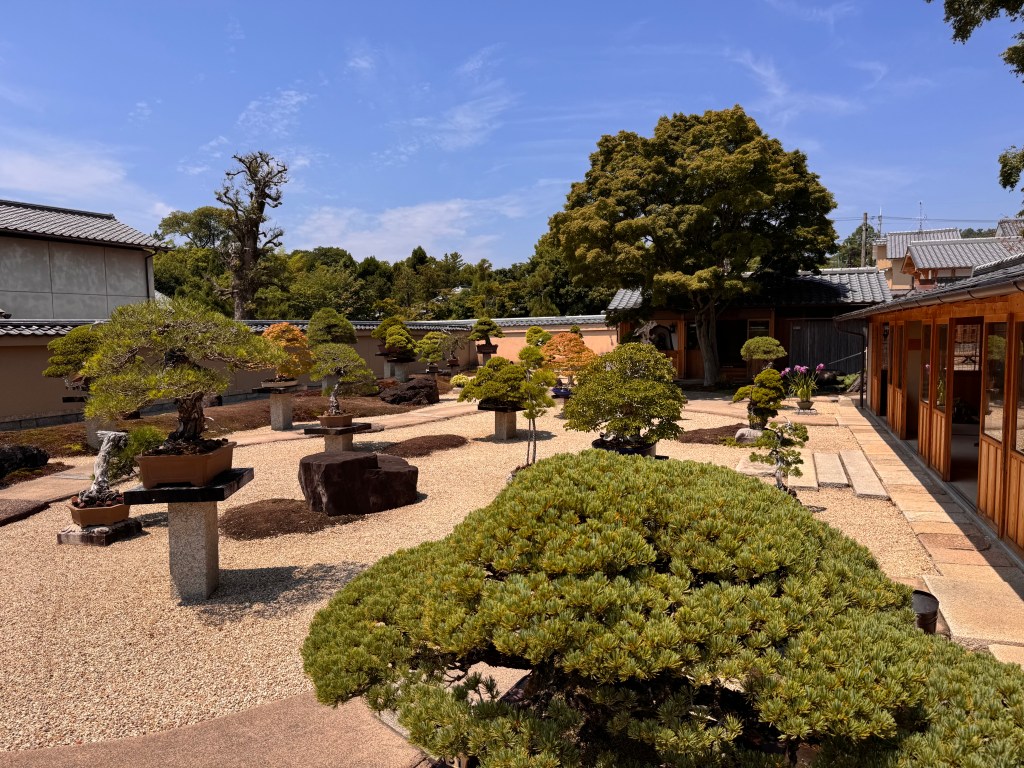
As I walked away, I noticed more stones along the trail leading toward the garden — mountains, on the way in, that I hadn’t seen as mountains the first time. Only the trees, on the way in. The complete picture, on the way out.
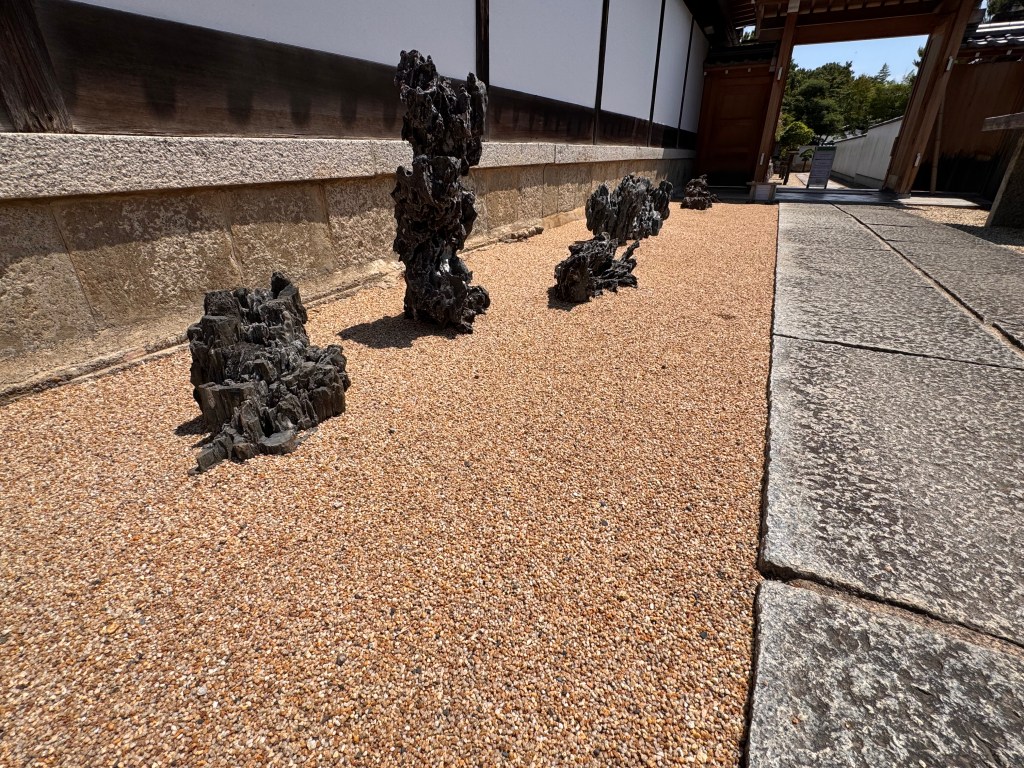
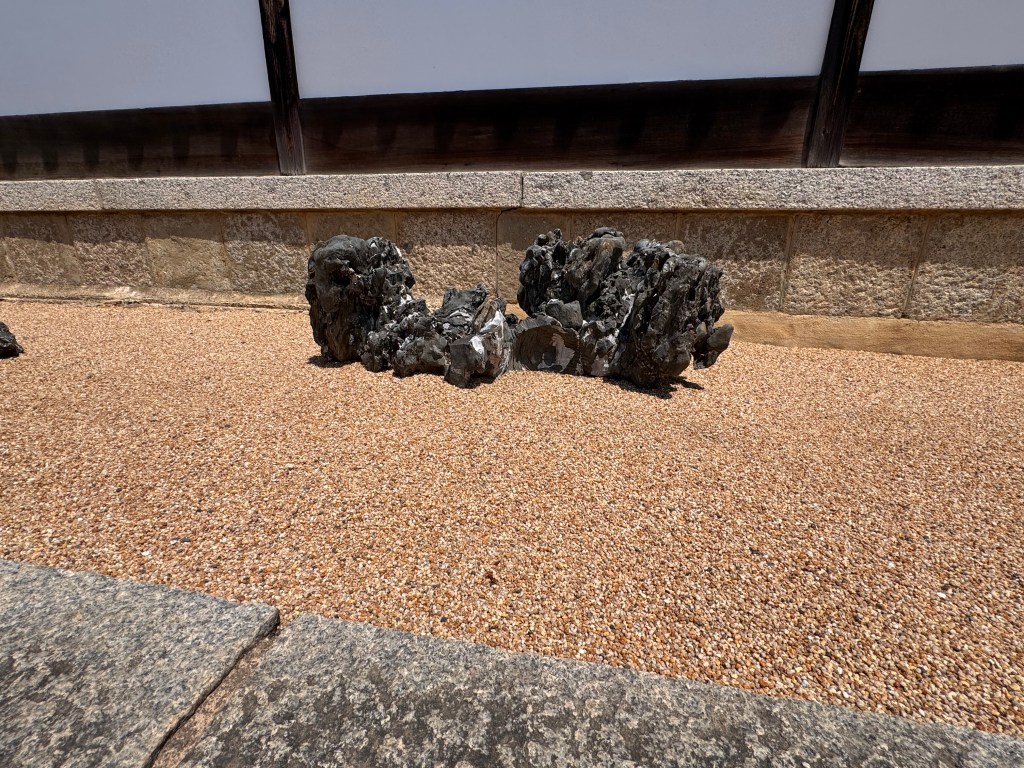
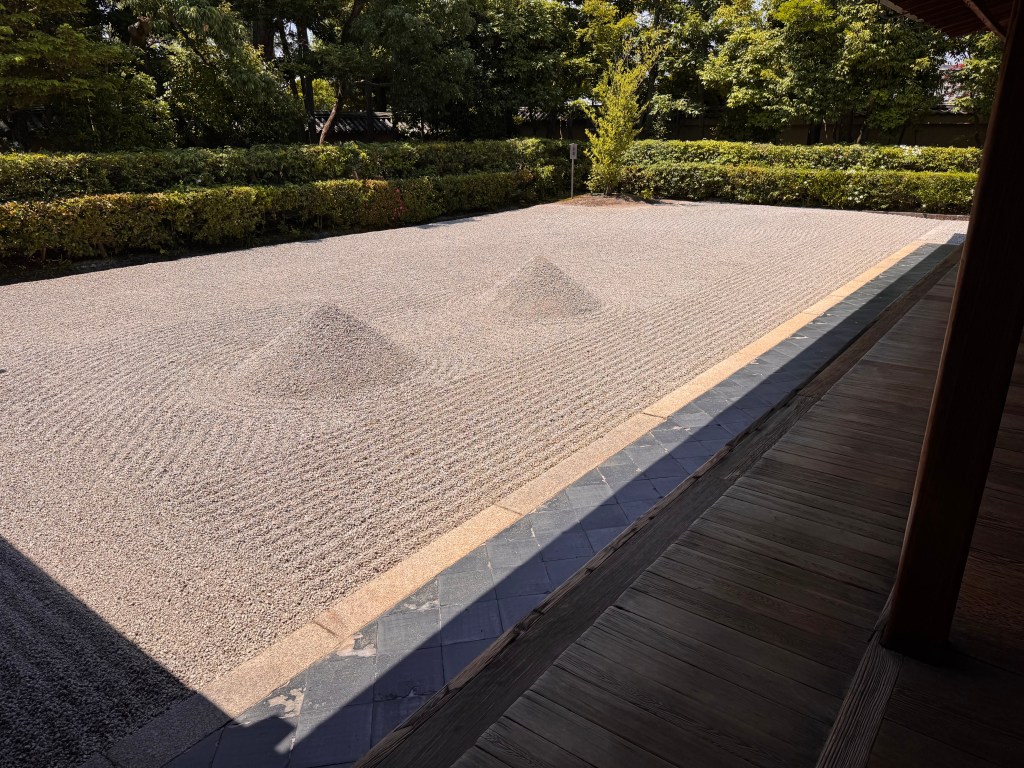
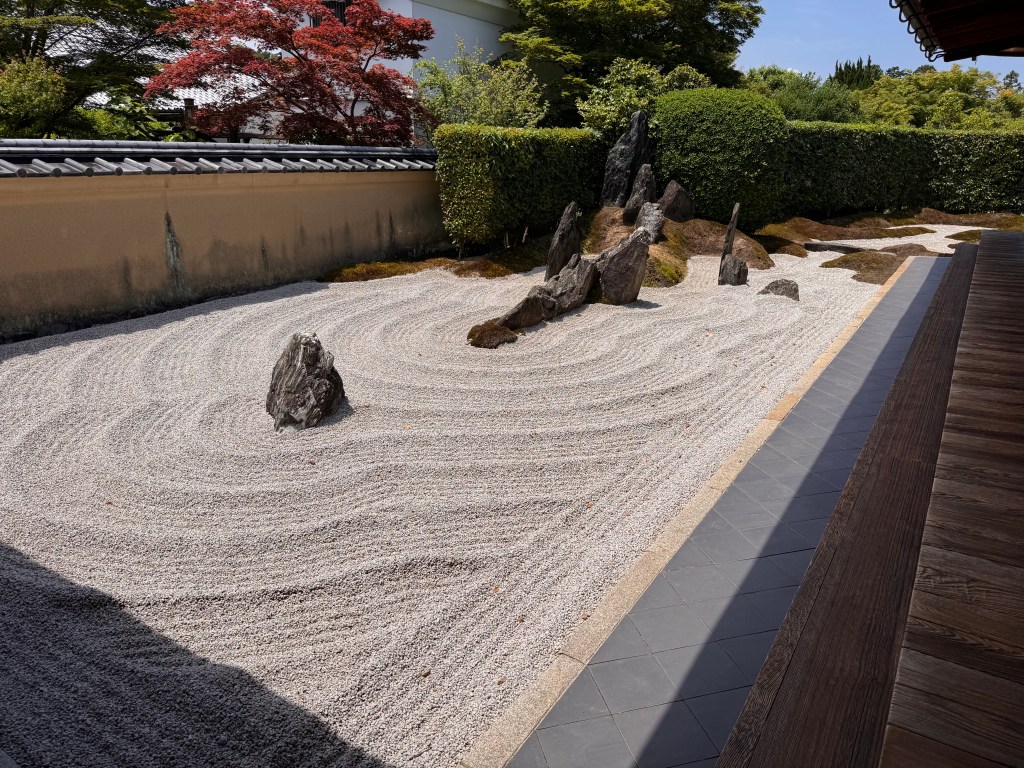
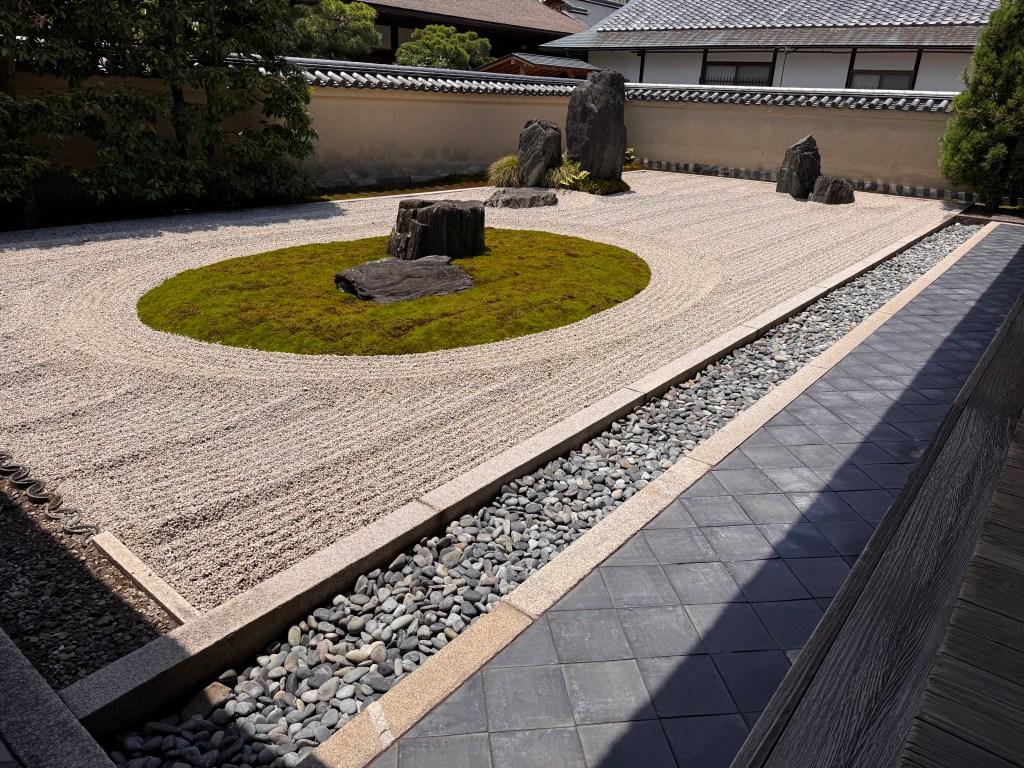
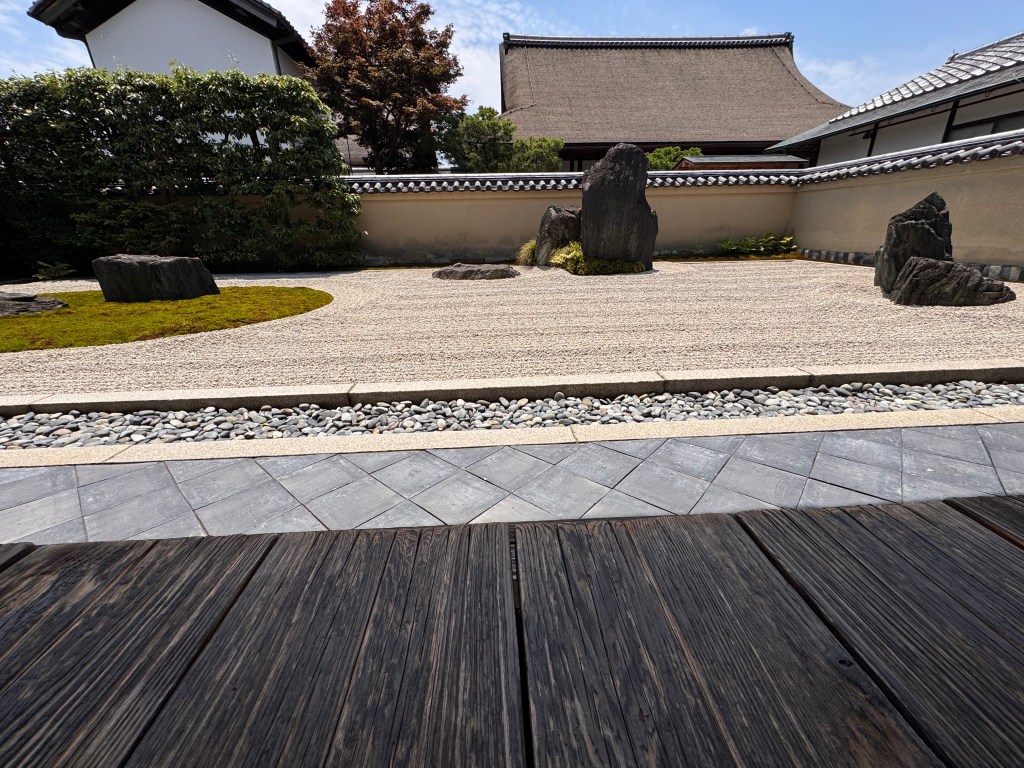
From Hōshun-in I continued into the wider Daitoku-ji complex — a sprawling maze of walled sub-temple compounds connected by stone paths, red-lacquered gates, and centuries-old pines leaning over tiled walls. Daitoku-ji is the headquarters of the Rinzai Zen school founded in the 14th century, and many of its sub-temples hold their own karesansui, dry landscape gardens — where the principle I’d just stumbled onto at Hōshun-in is taken to its purest form.
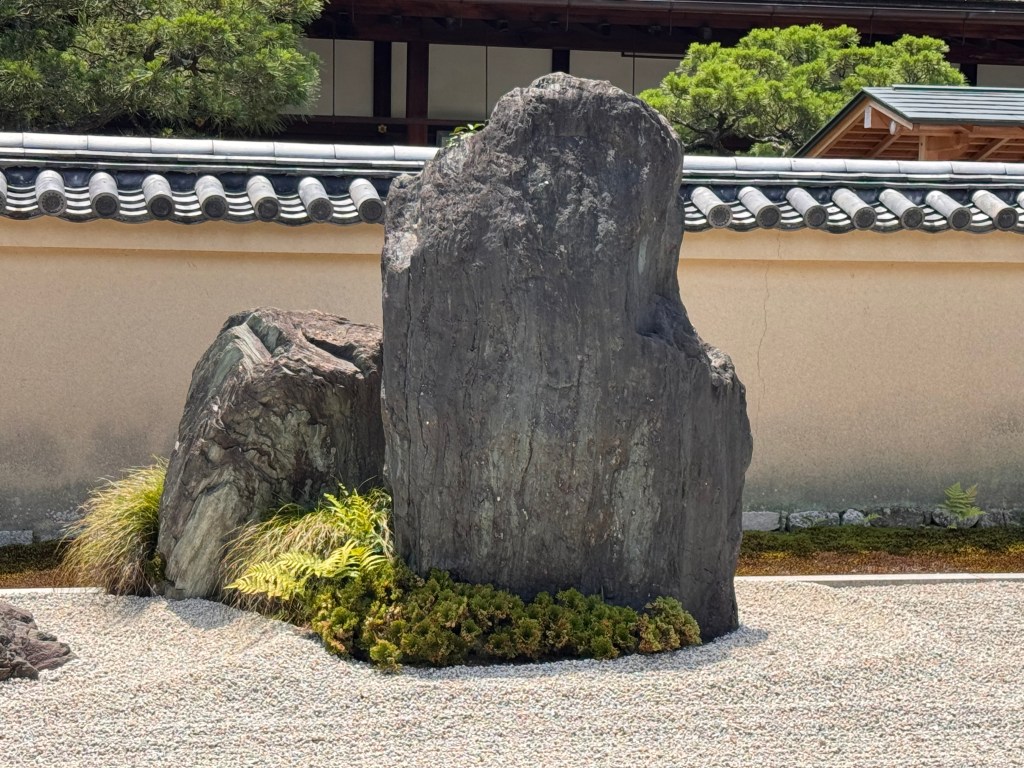
A Zen garden uses rock, raked gravel, and moss instead of water and living plants to create a distilled, abstract landscape meant for contemplation rather than walking through. Raked gravel represents water — rivers, oceans, ripples around obstacles. Large vertical rocks represent mountains, islands, or sometimes a Buddhist triad. Moss suggests forest and the passage of time. And the empty space between elements is as important as the elements themselves — it’s where the mind completes the scene.
Walking these gardens after my morning at Hōshun-in, I couldn’t unsee it. Every rock was a mountain. Every raked line was water. The whole complex was one continuous meditation on landscape, scaled from a single bonsai pot to an entire temple ground.
I left Daitoku-ji slower than I arrived — which is really the whole point, I think. From here – to another part of Kyoto – Visiting Bjorn! something I’ve been looking forward to for a long time. More on that soon.
.

Leave a comment