After a full week in San Francisco — Jonas Dupuich, the Bonsai Garden at Lake Merritt, and more trees than I could properly process in a few days — I packed up and headed south to Santa Monica for another work event. Business trips have a funny way of doing that to me lately: I land somewhere for meetings, and somewhere in the itinerary a bonsai detour quietly writes itself in. This time, though, I got lucky in a different way — the weekend was entirely mine. No meetings, no calls, just two free days in LA. And you already know what that meant.
Where to go? Jonas had the answer.
Before I’d even left San Francisco, I asked Jonas where I should point myself in LA. He didn’t hesitate: The Huntington. And he did more than just point me in the right direction — he introduced me to Daniel Deephouse, the Huntington’s (relatively new) curator of the bonsai collection, who kindly offered to meet me there in person and walk me through the collection, including the parts visitors don’t normally get to see.
A high-level word on the Huntington itself: The Huntington Library, Art Museum, and Botanical Gardens is a sprawling estate in San Marino, just outside Pasadena — originally the private estate of railroad magnate Henry Huntington, and now home to a world-class art collection, a research library holding treasures like a Gutenberg Bible, and more than a dozen distinct botanical gardens spread across some 120 acres.
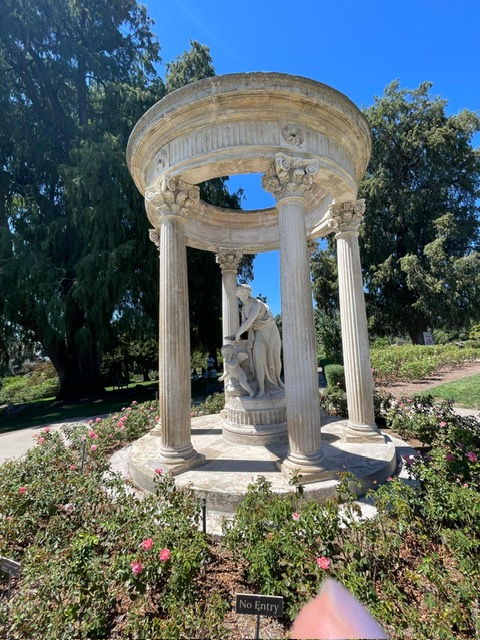
You could spend days there and still not see it all: a desert garden, a rose garden, a Chinese garden, a Japanese garden, and more. I had exactly one focus in mind, so I made a beeline for the two gardens that matter most to a bonsai obsessive — the bonsai courts and the penjing collection in the Chinese Garden.
Getting in before the world wakes up
Having a special pass arranged by Daniel meant I could get into the gardens well before the general public — and that made all the difference. There’s something almost meditative about walking through a world-class garden completely alone, before the crowds, before the noise, with just the light and the quiet and the trees. I wandered slowly, in no rush to be anywhere, which is exactly the right pace for looking at bonsai properly.
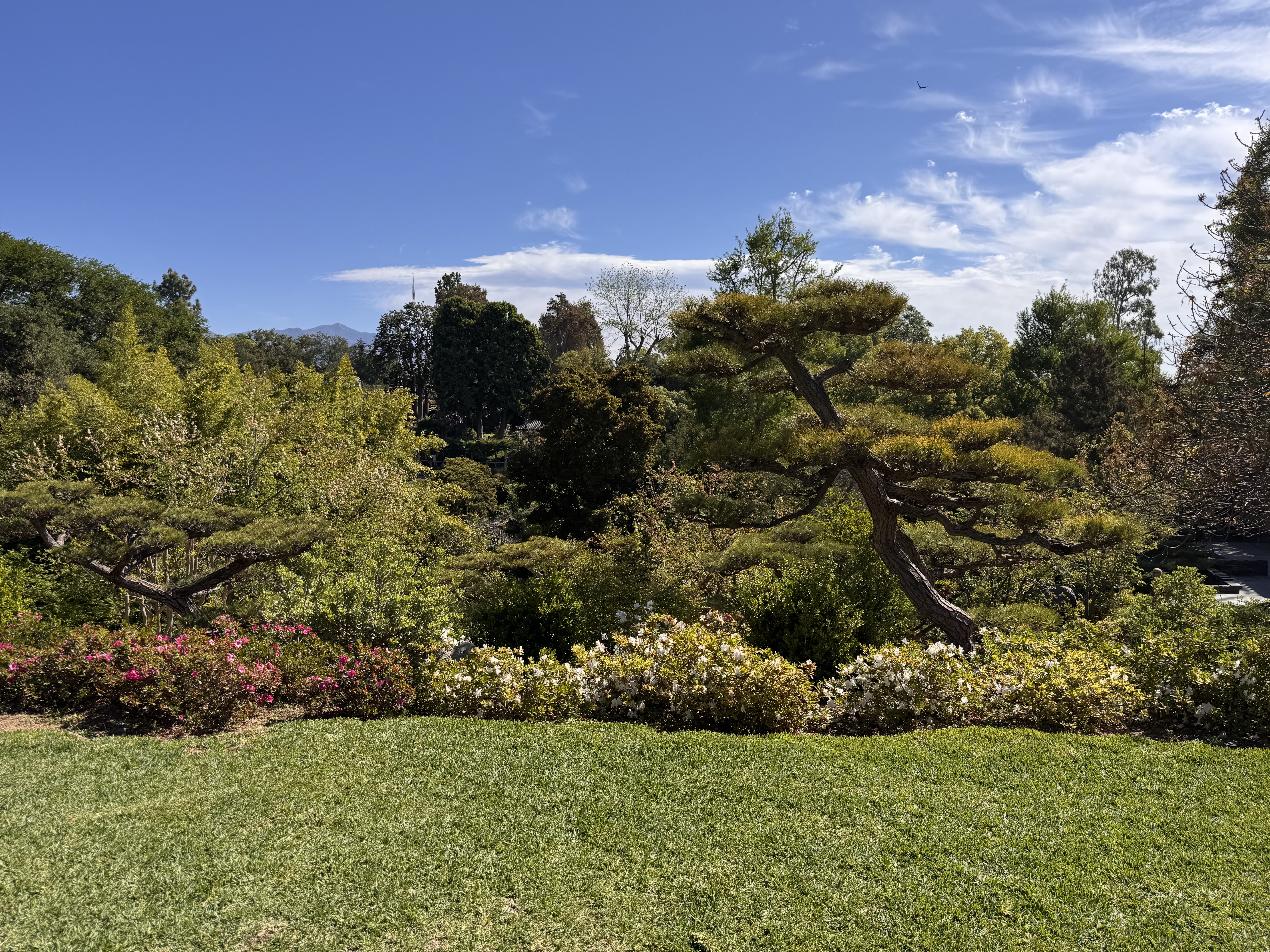
Penjing vs. Bonsai — a quick primer
Before I describe what I saw, it’s worth pausing on a distinction that isn’t always obvious to newcomers (it wasn’t to me, a year ago). Both traditions revolve around cultivating miniature trees to evoke a larger landscape, but they come from different roots and carry a different spirit.
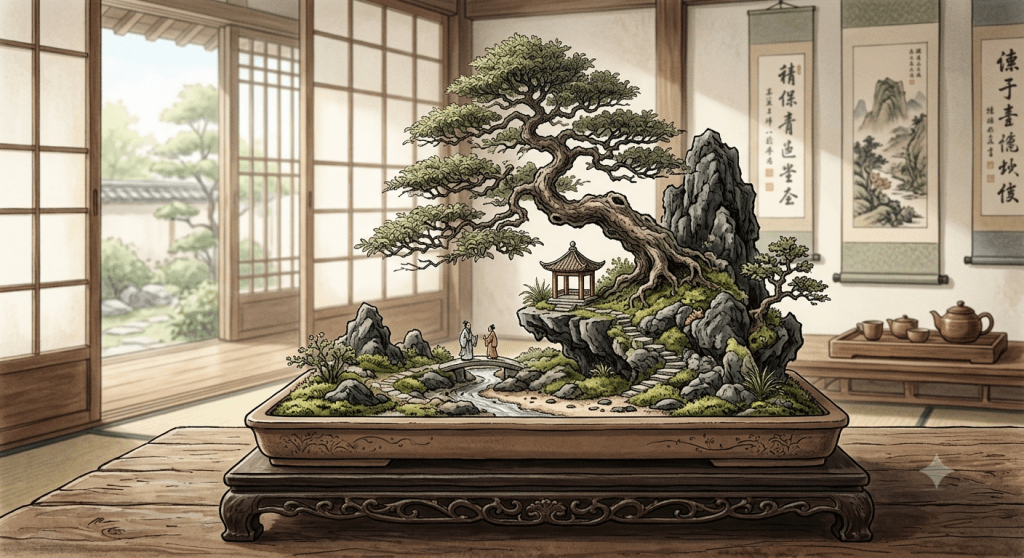
Penjing is the older, Chinese tradition — it’s thought to have originated roughly two thousand years ago and later traveled to Japan with Buddhist monks, where over the centuries it evolved into what we now call bonsai. Penjing displays often go beyond a single tree: rocks, water, and even small figurines can be part of the composition, and the aesthetic tends to be more dramatic and wild, chasing the untamed shapes trees take in nature. Bonsai, by contrast, is generally more restrained — a single tree, a single pot, a more internal and contemplative feel. As one Huntington curator put it, penjing can be extreme where bonsai is subtle. Standing between the two collections that morning, the difference was immediately visible, not just theoretical.
The Penjing Court
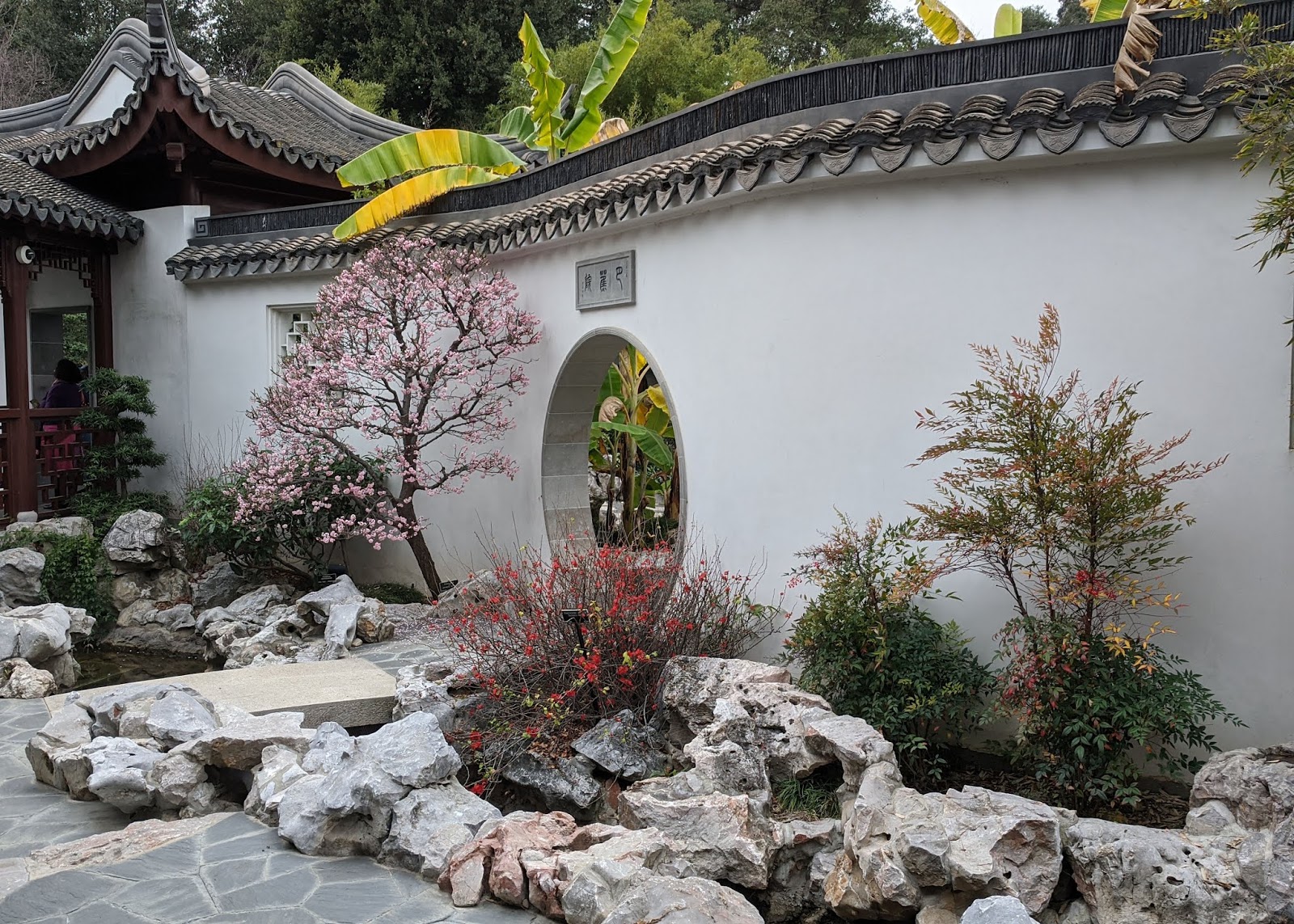
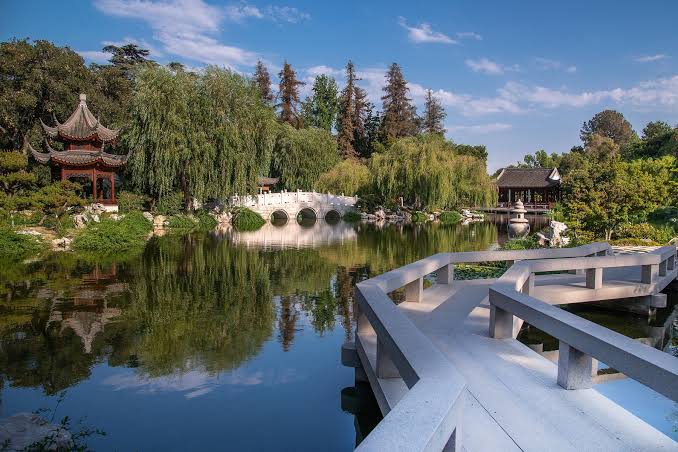
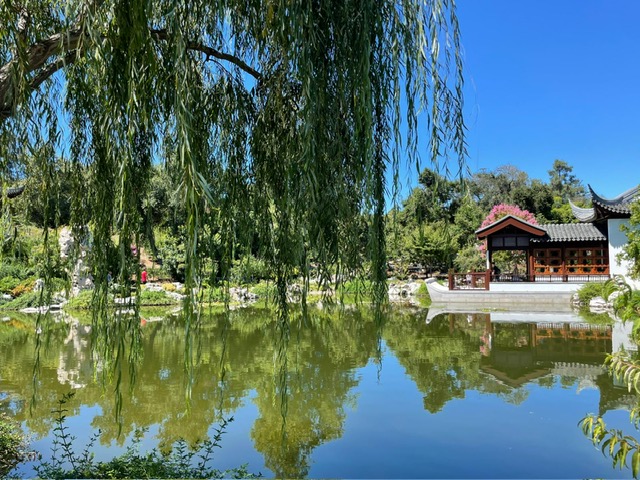
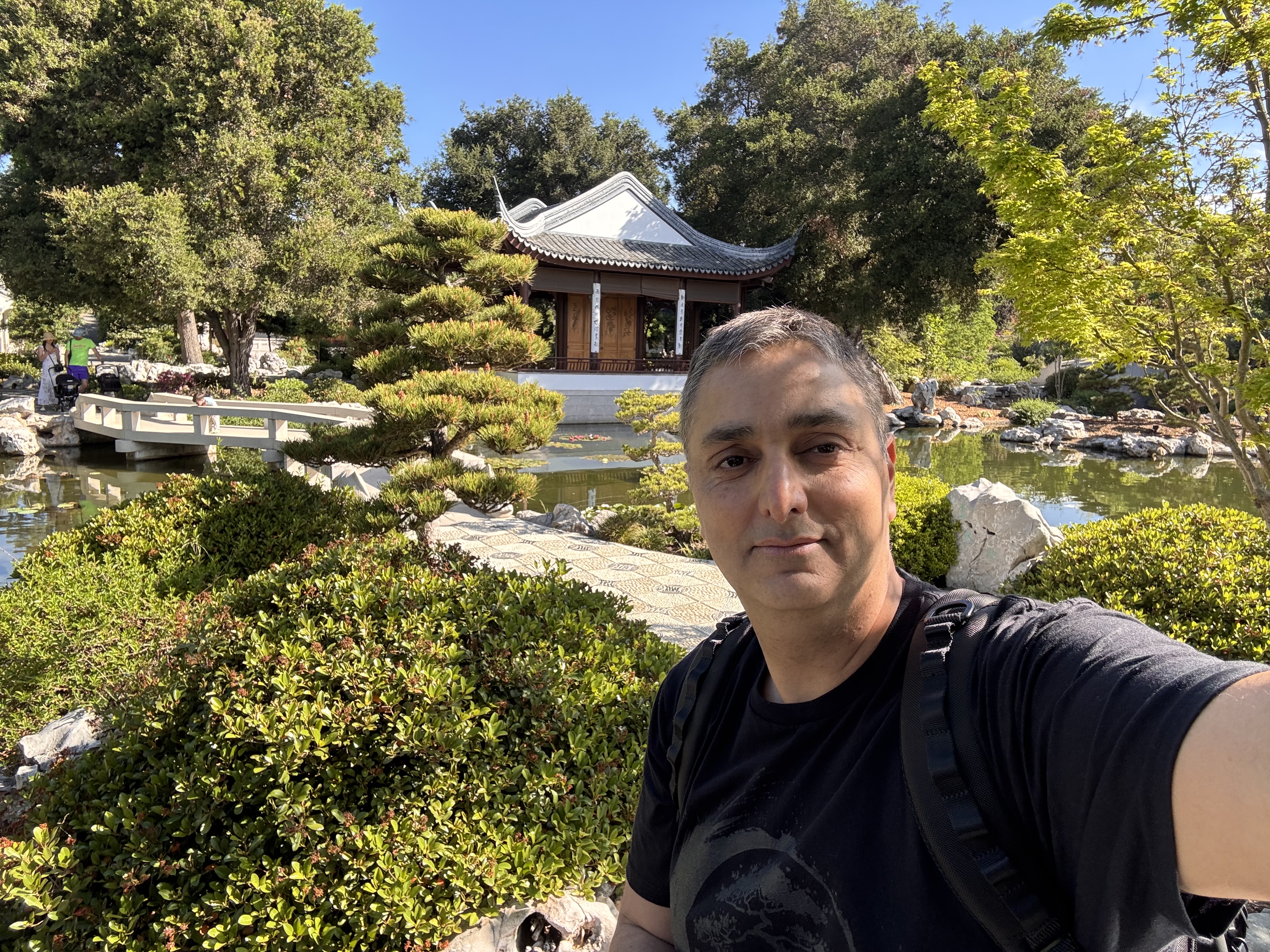
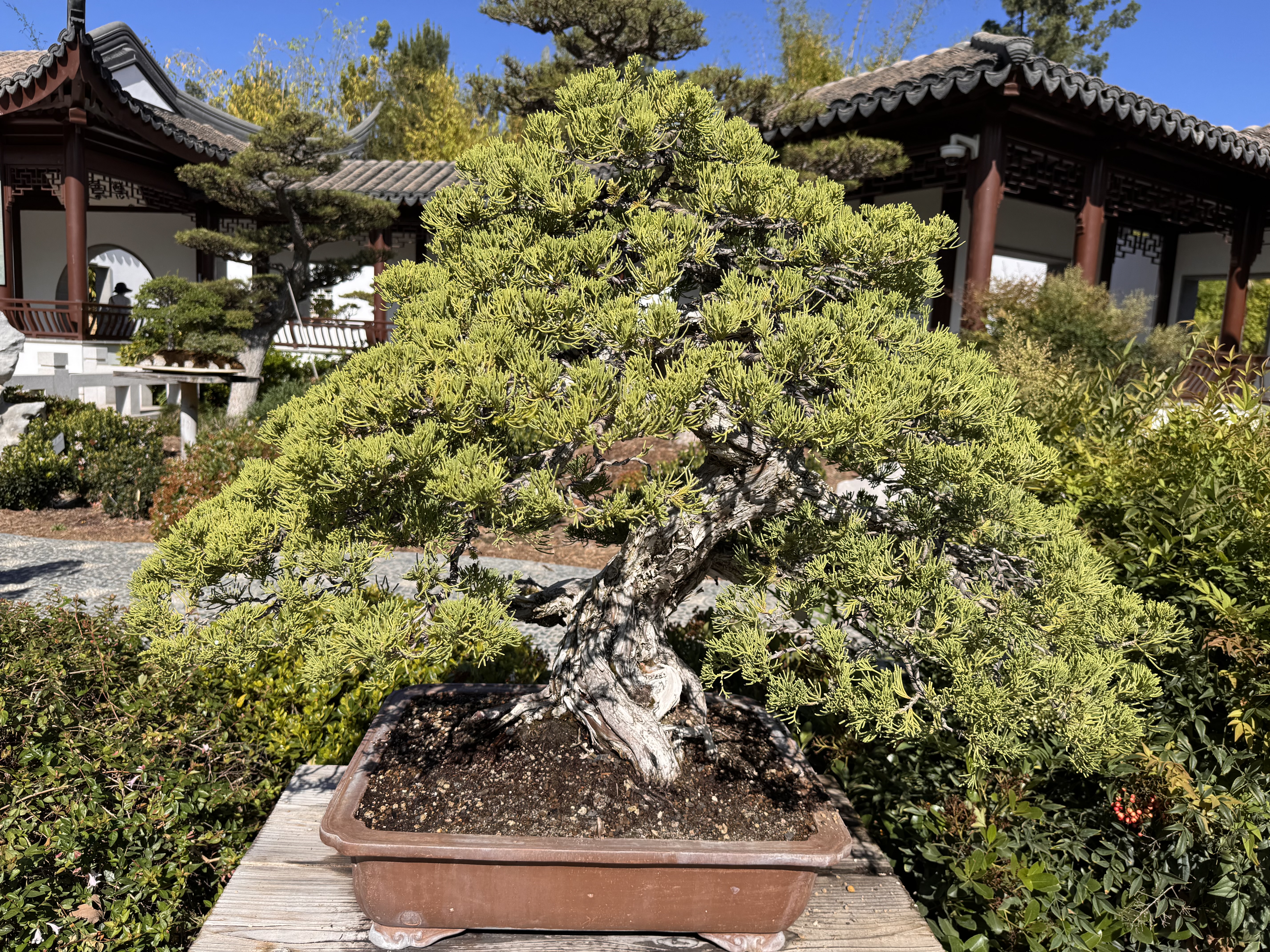
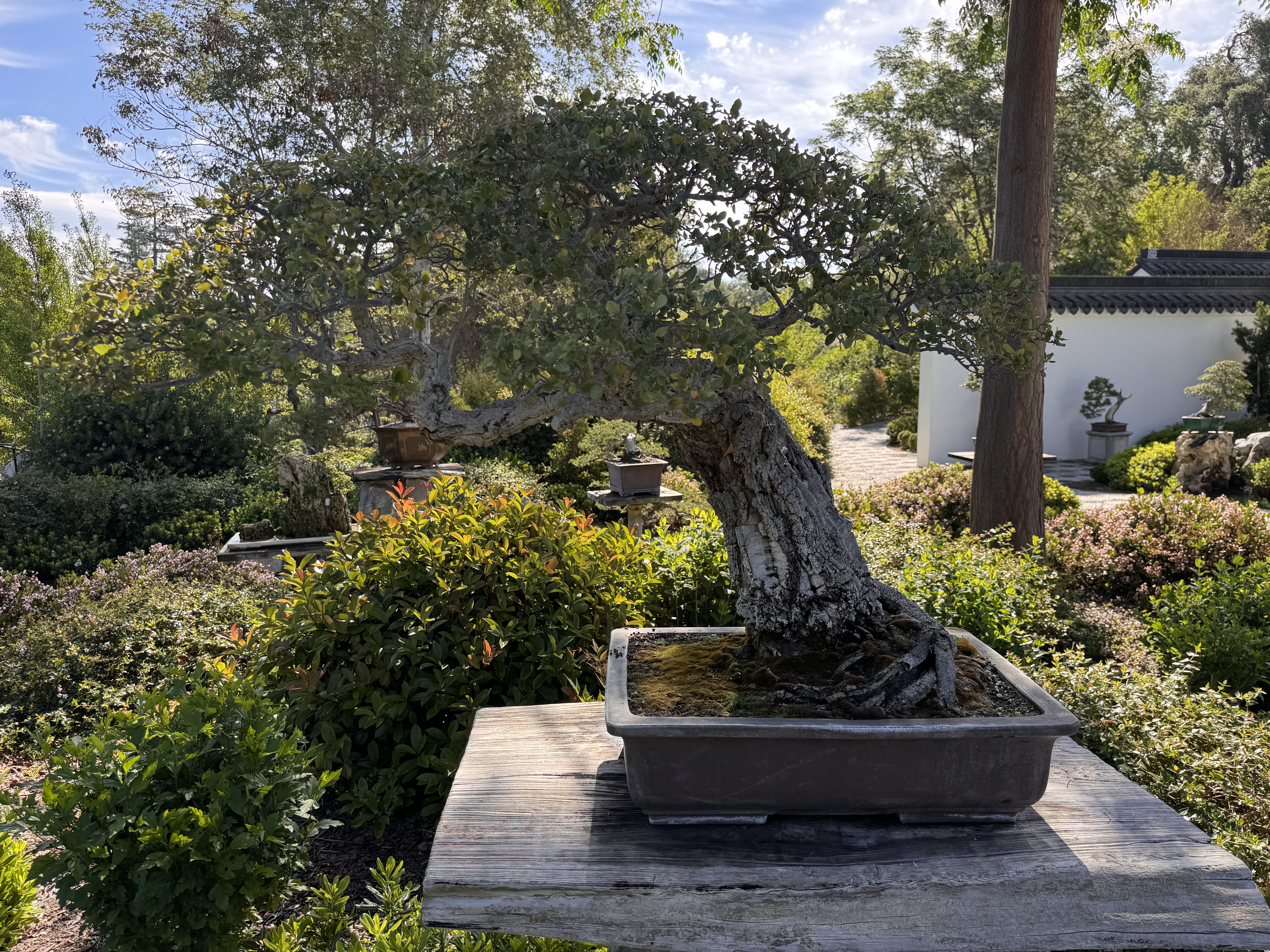
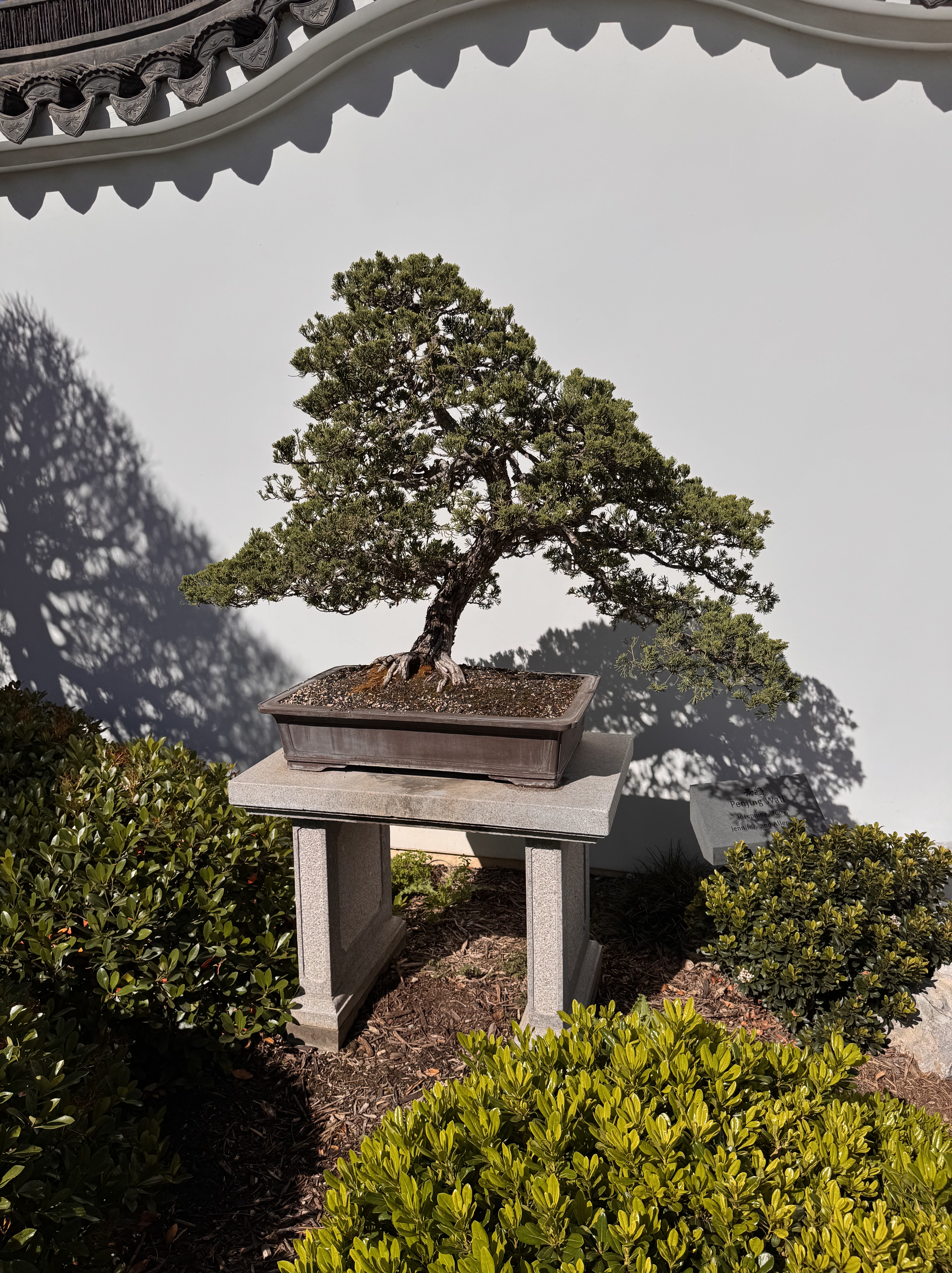
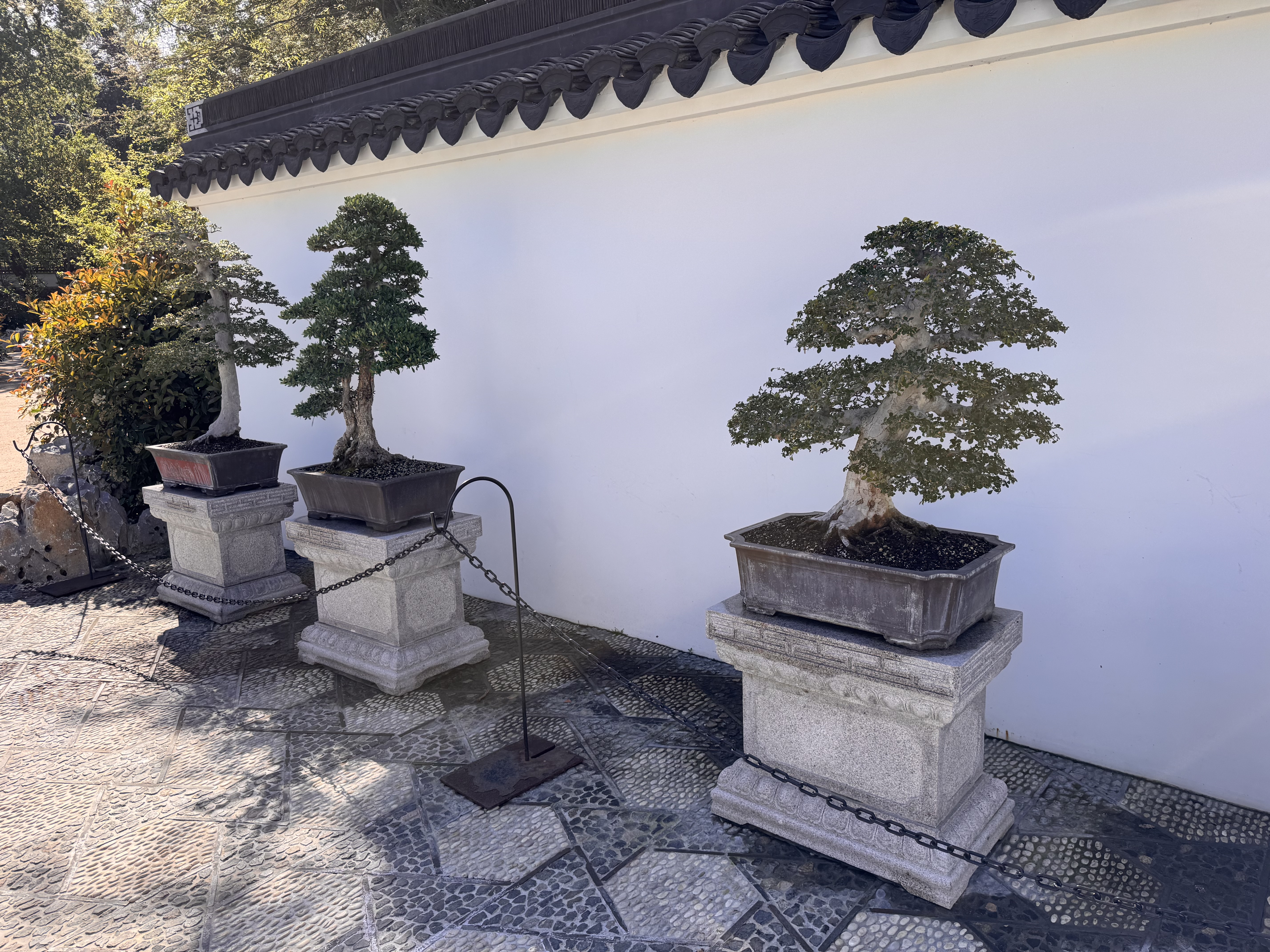
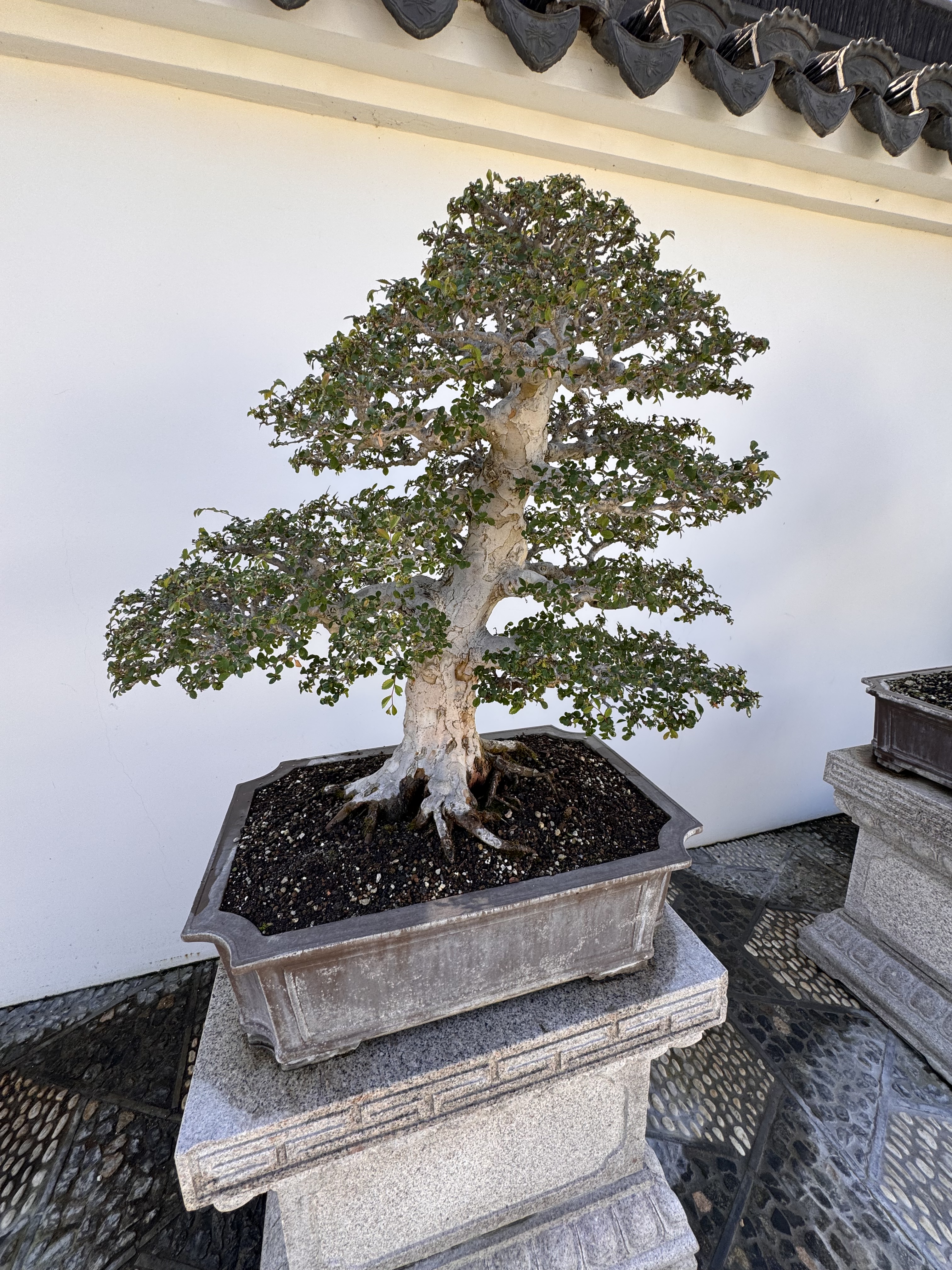
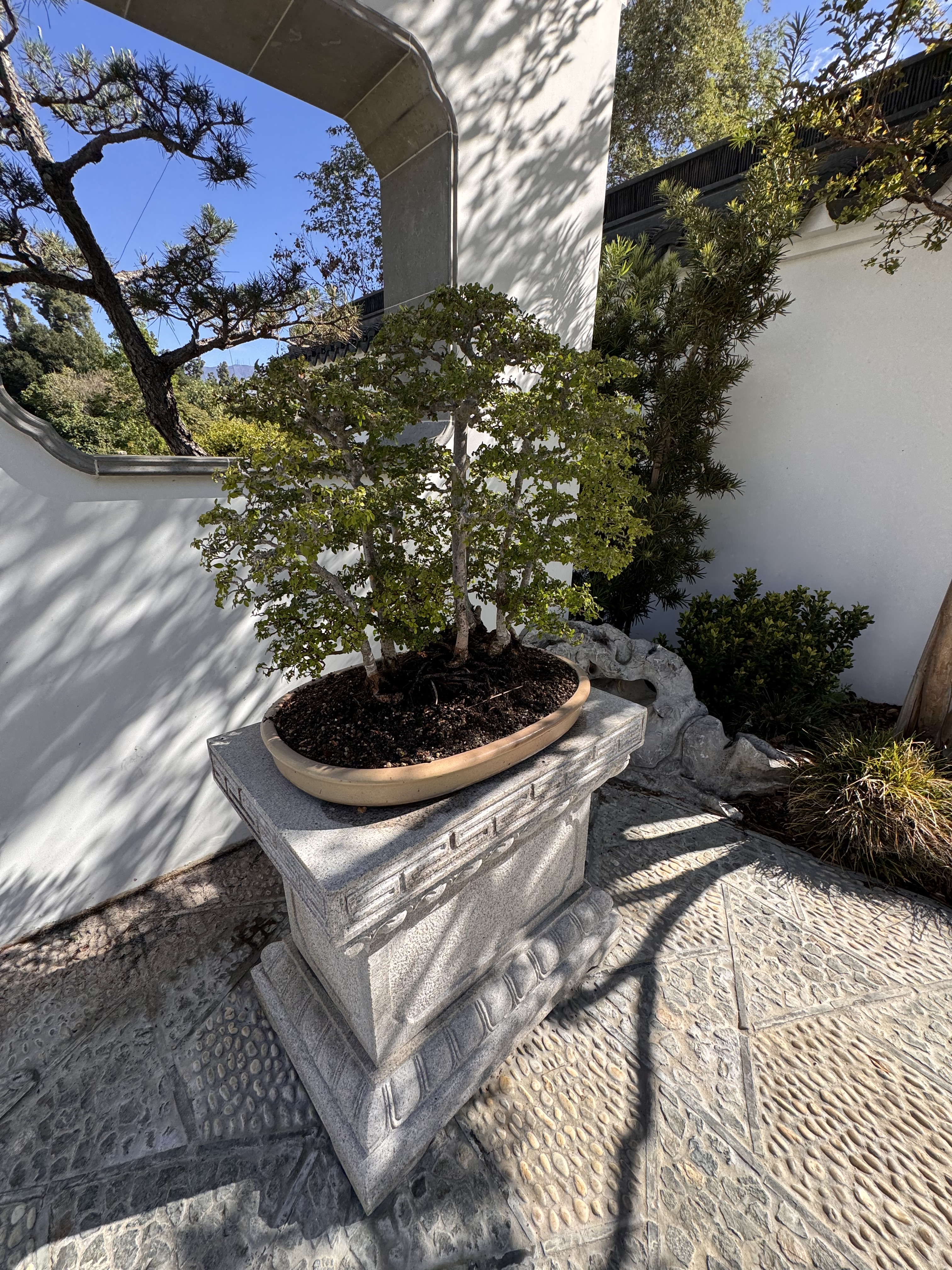
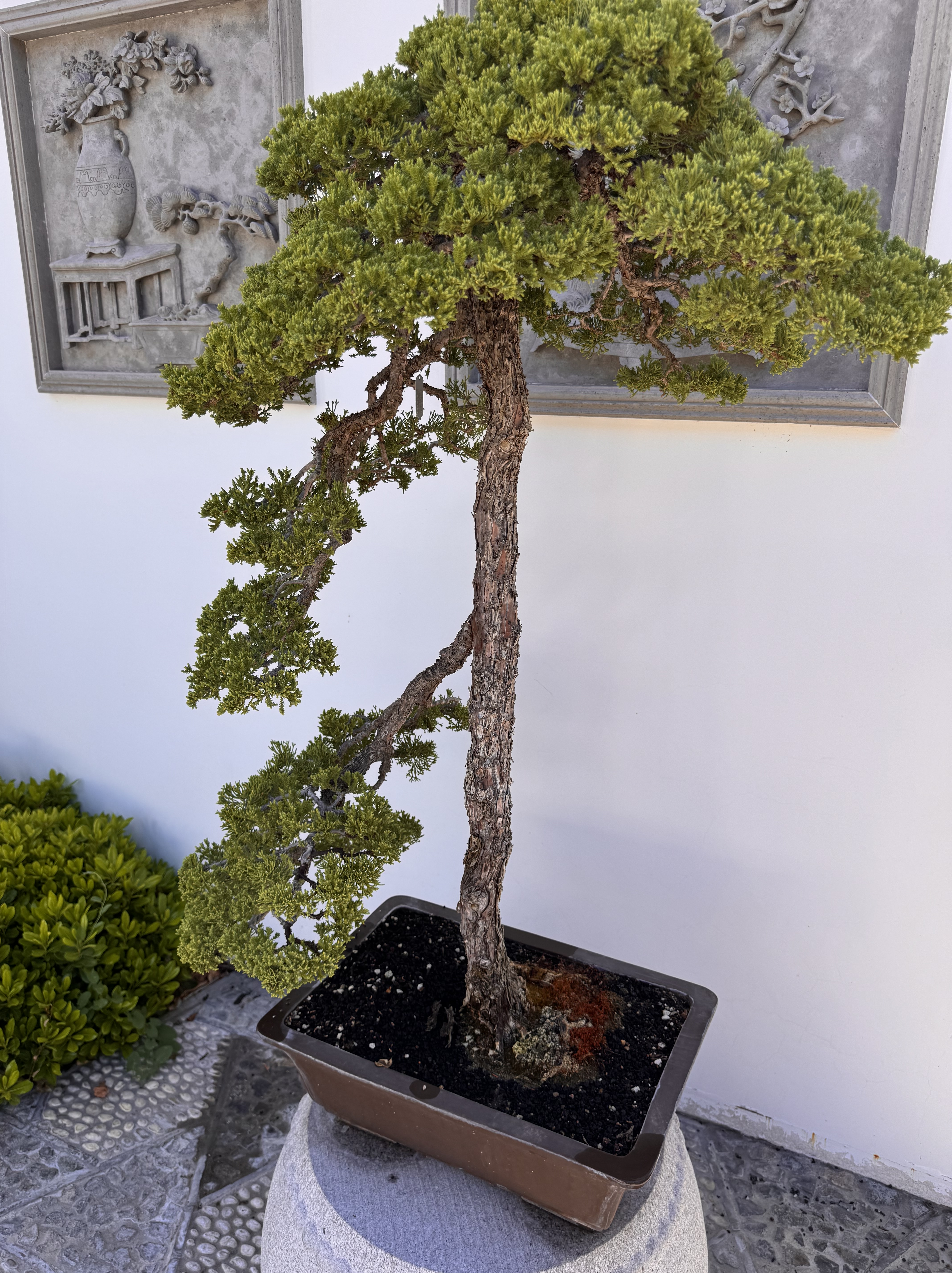
I started in the penjing collection, and it stopped me in my tracks. Unlike bonsai, several of these magnificent pines weren’t even in pots — planted directly into the ground, shaped over what must have been decades into forms of pure sculptural perfection. Combined with the surrounding lake and landscaping, the whole scene was simply breathtaking, more like walking into a classical Chinese painting than a garden.
Into the Japanese Bonsai Garden
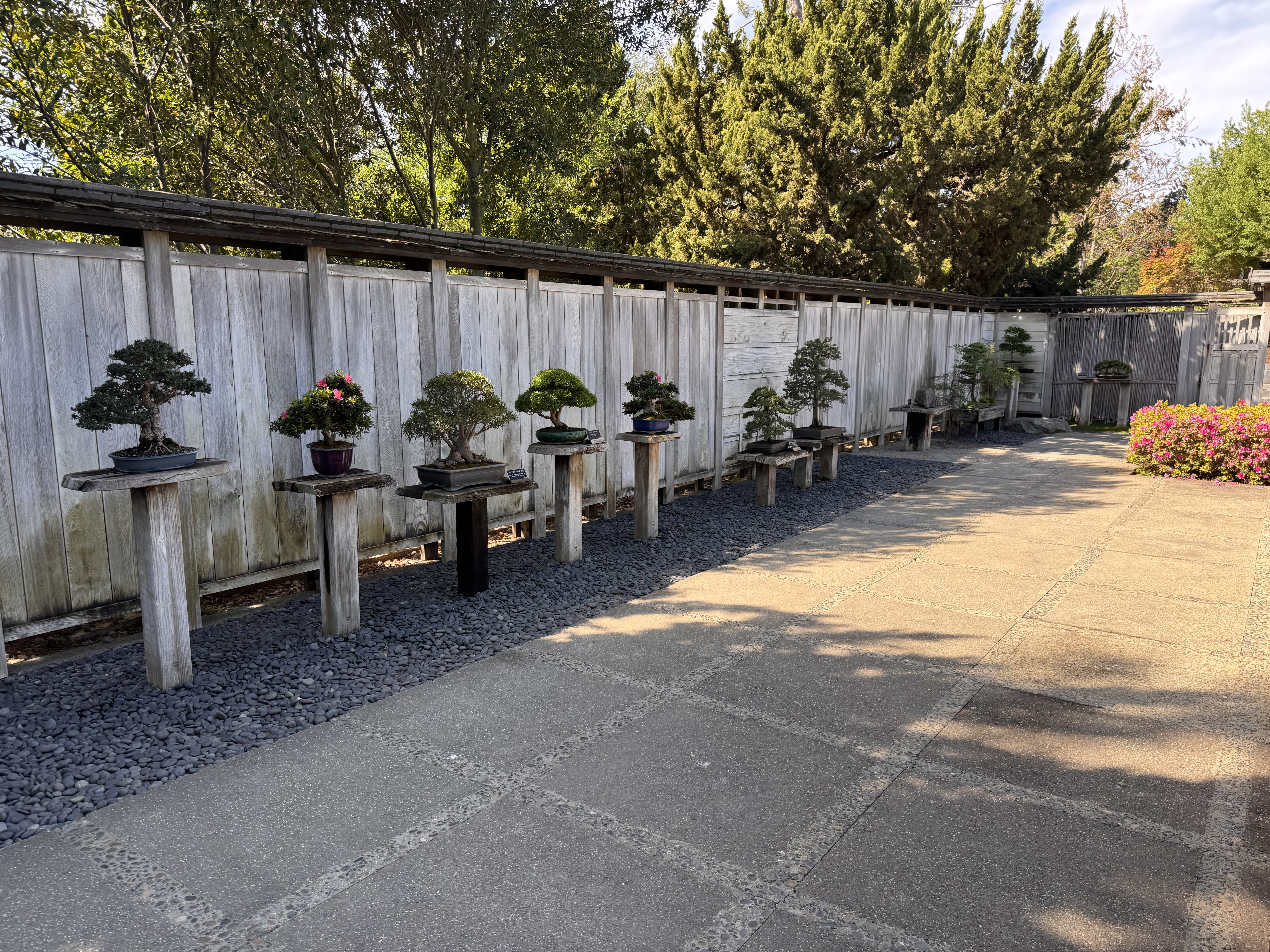
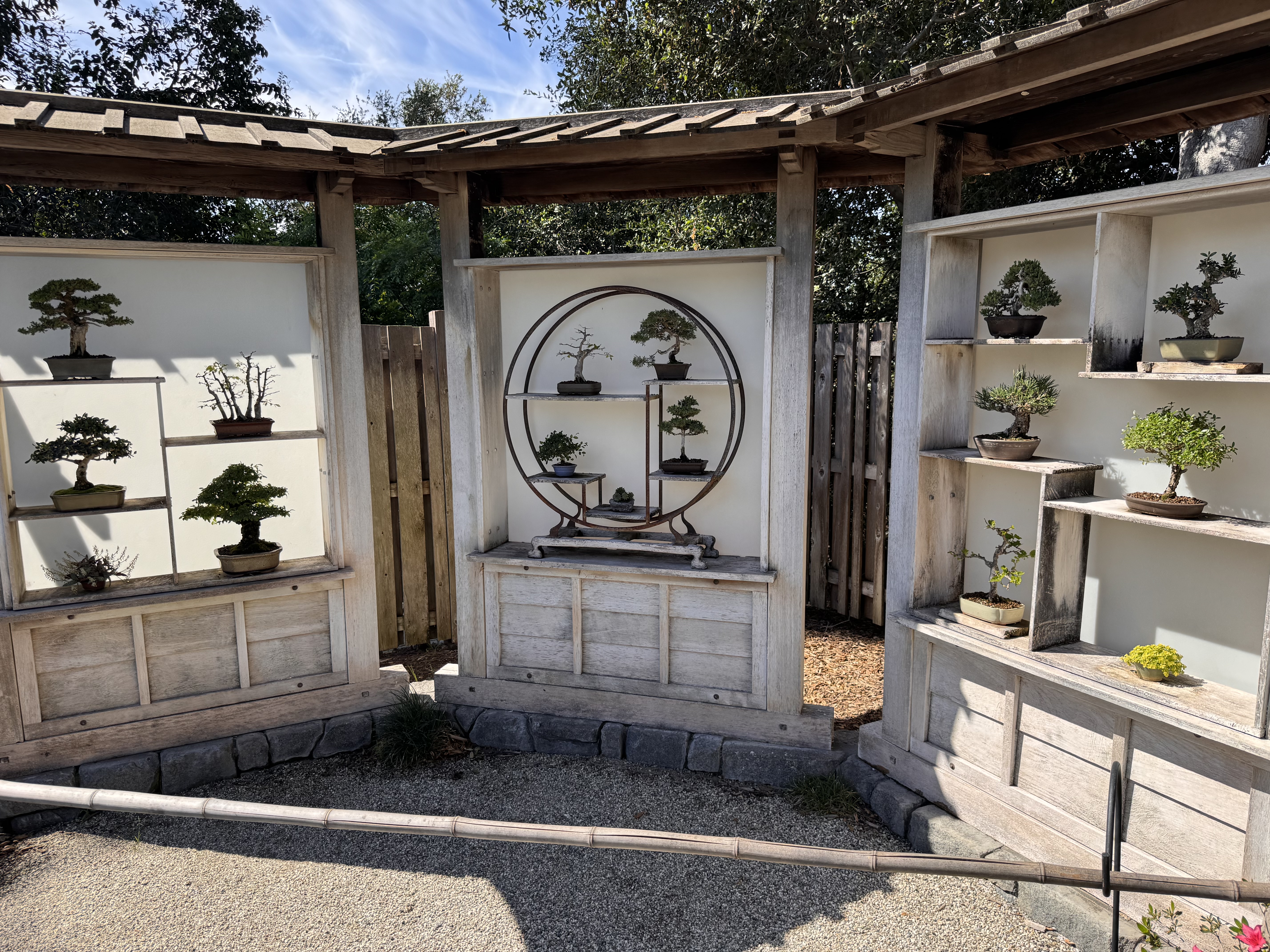
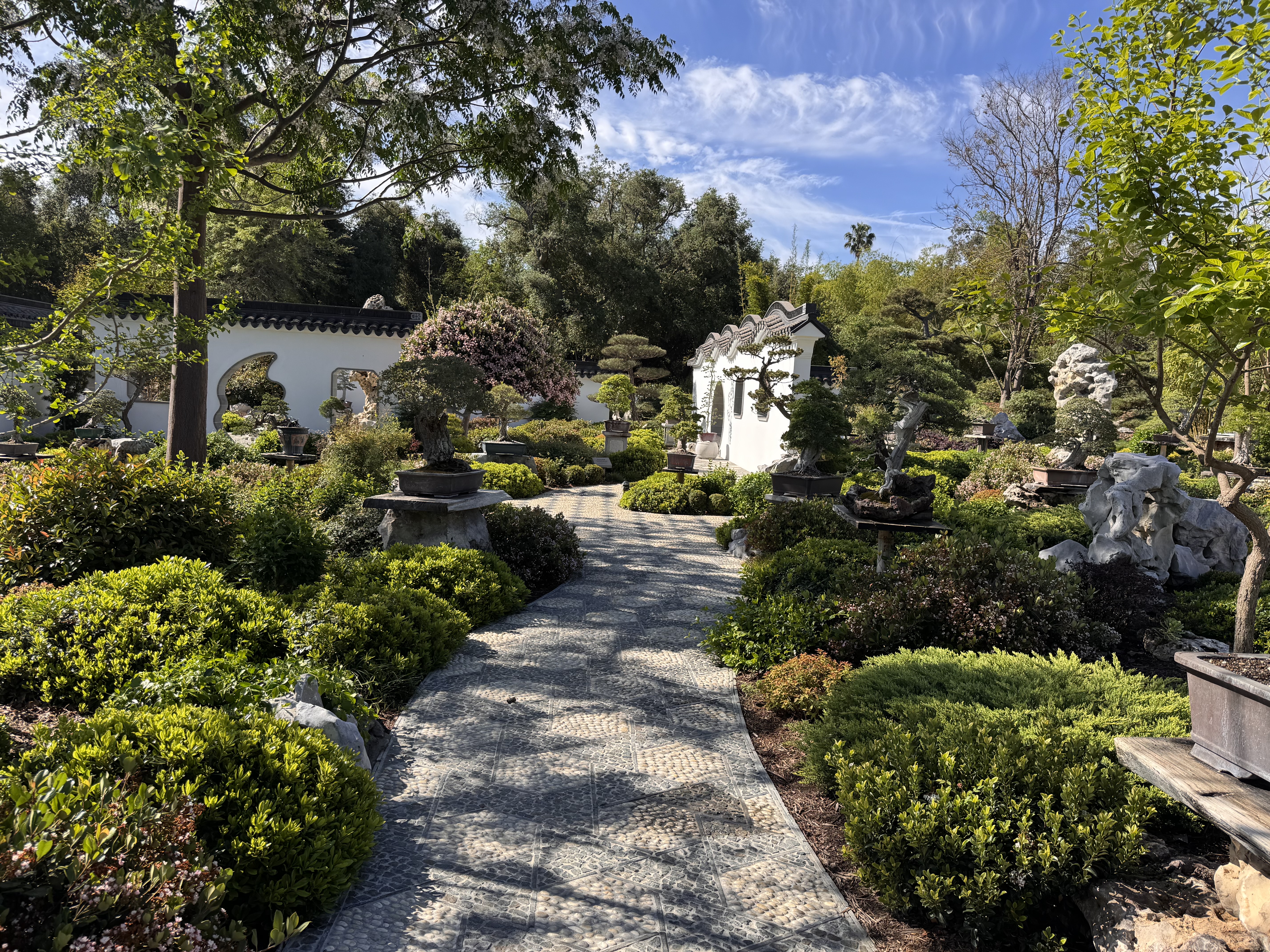
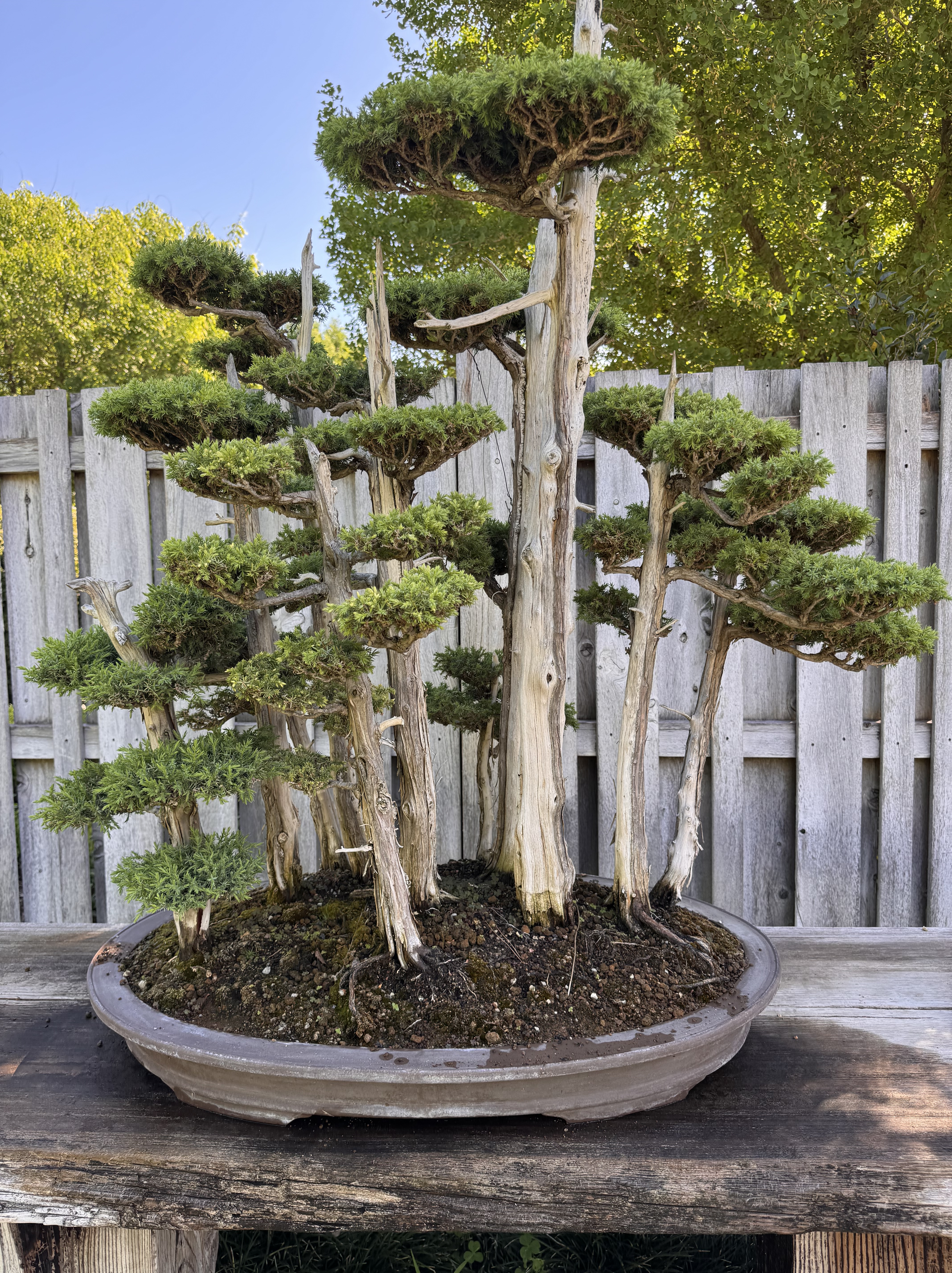
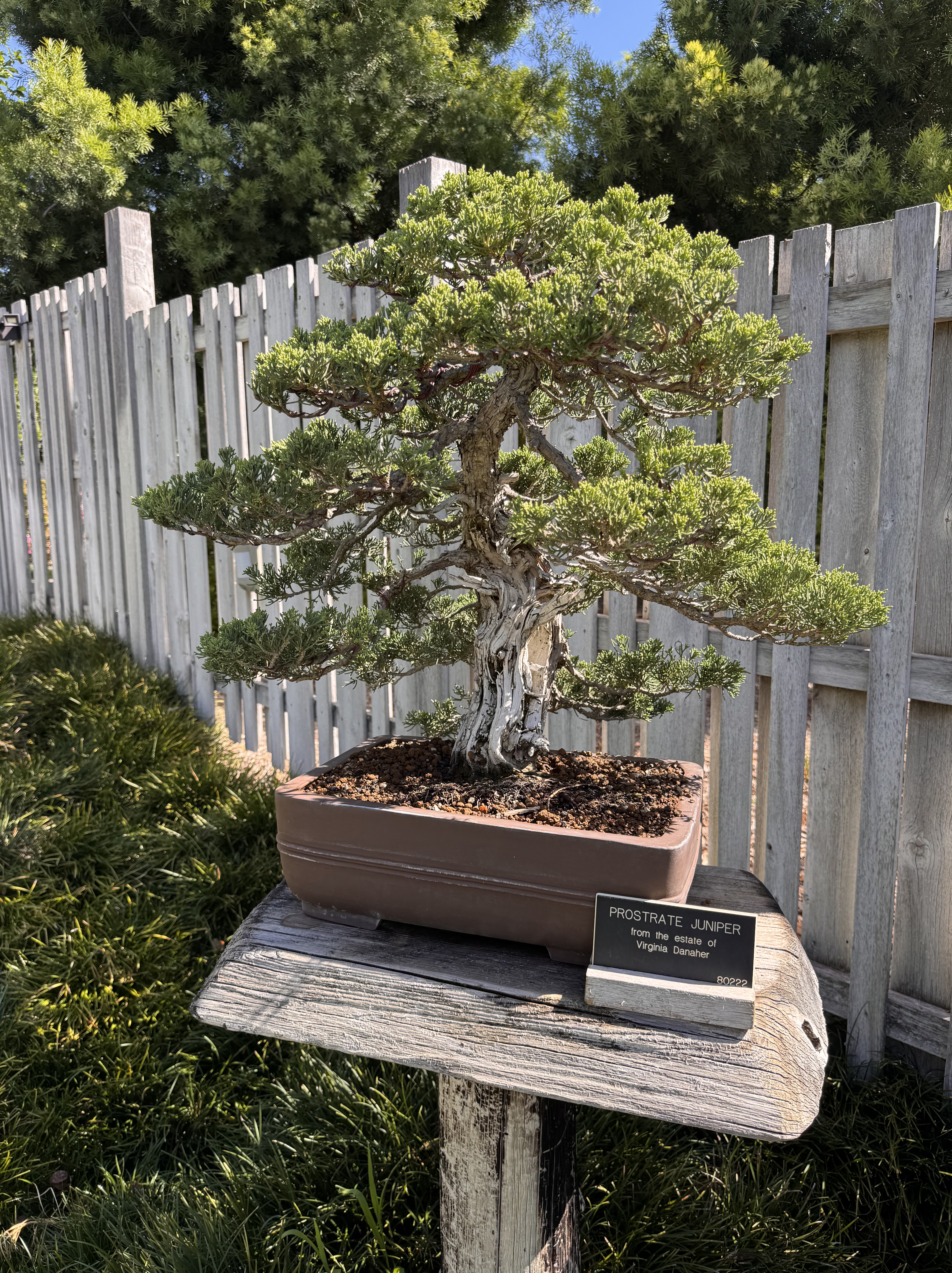
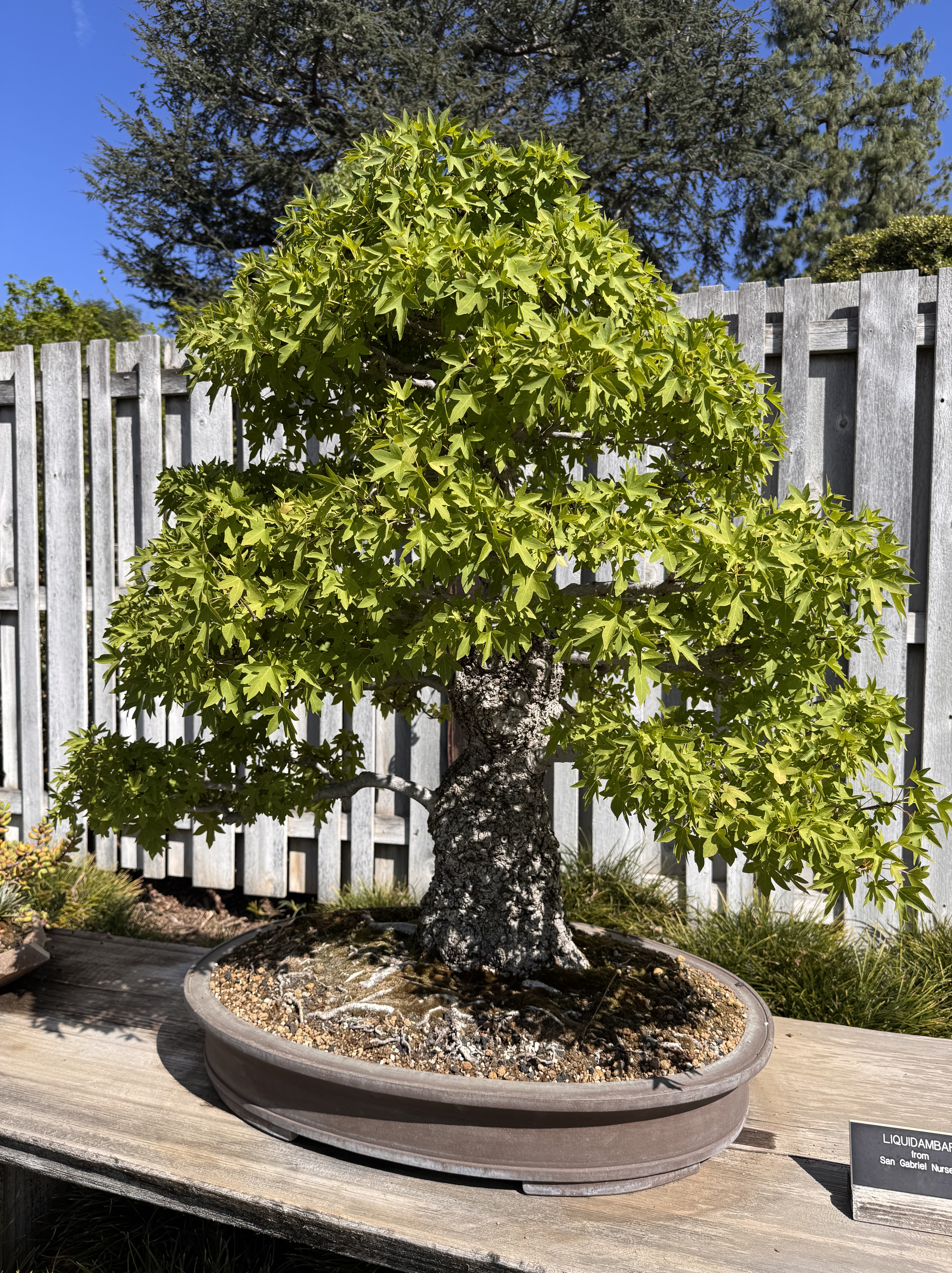
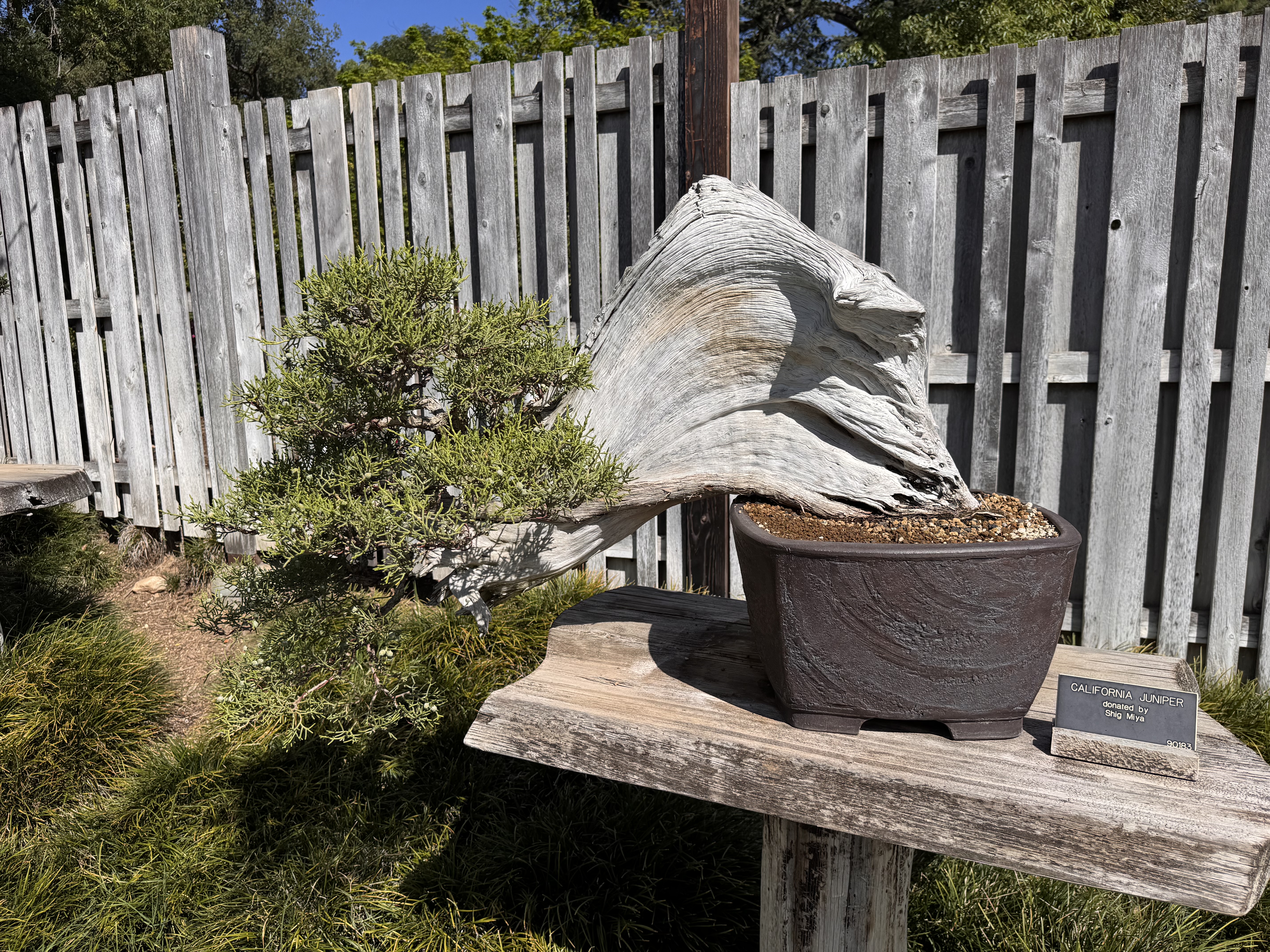
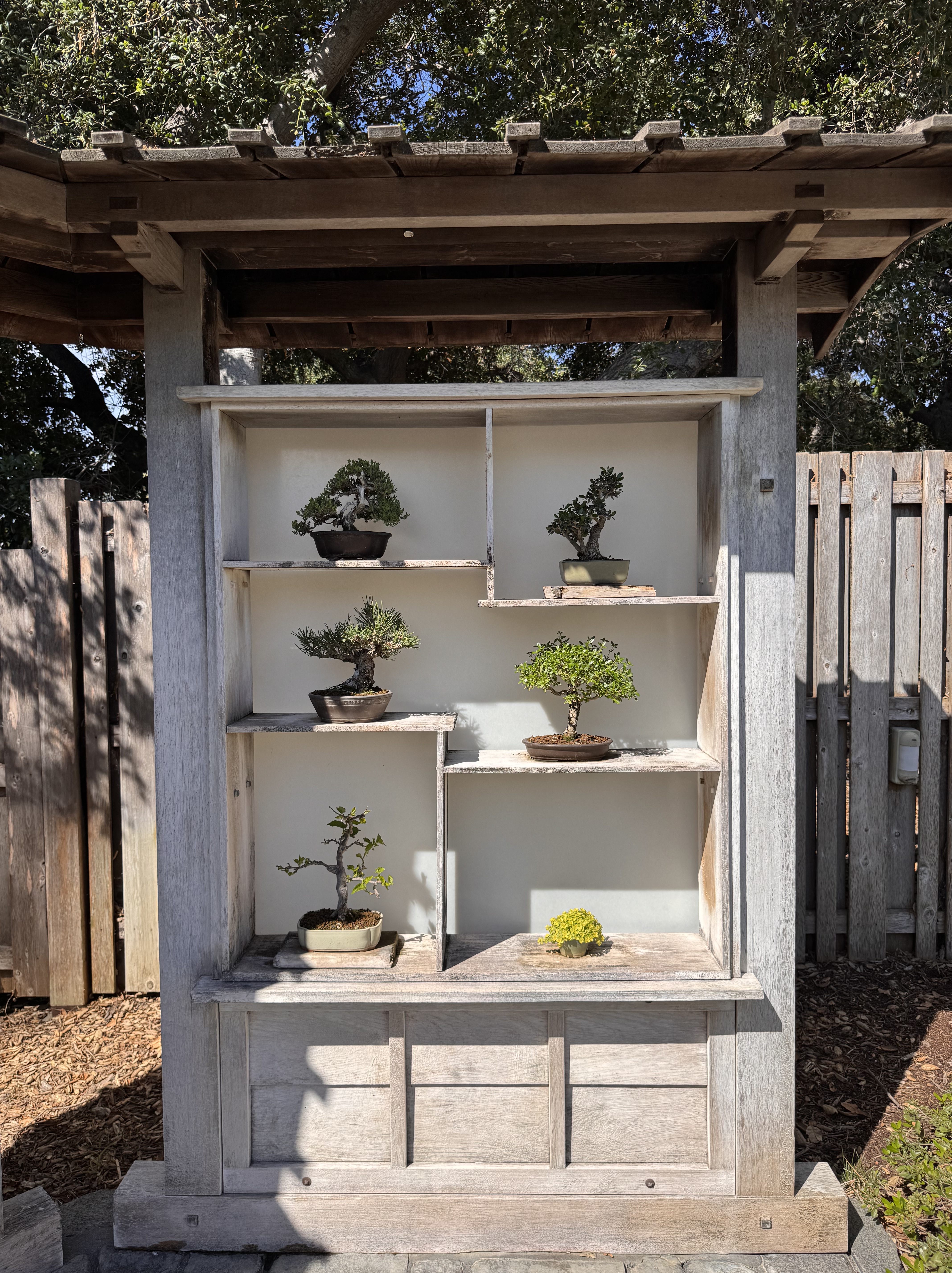
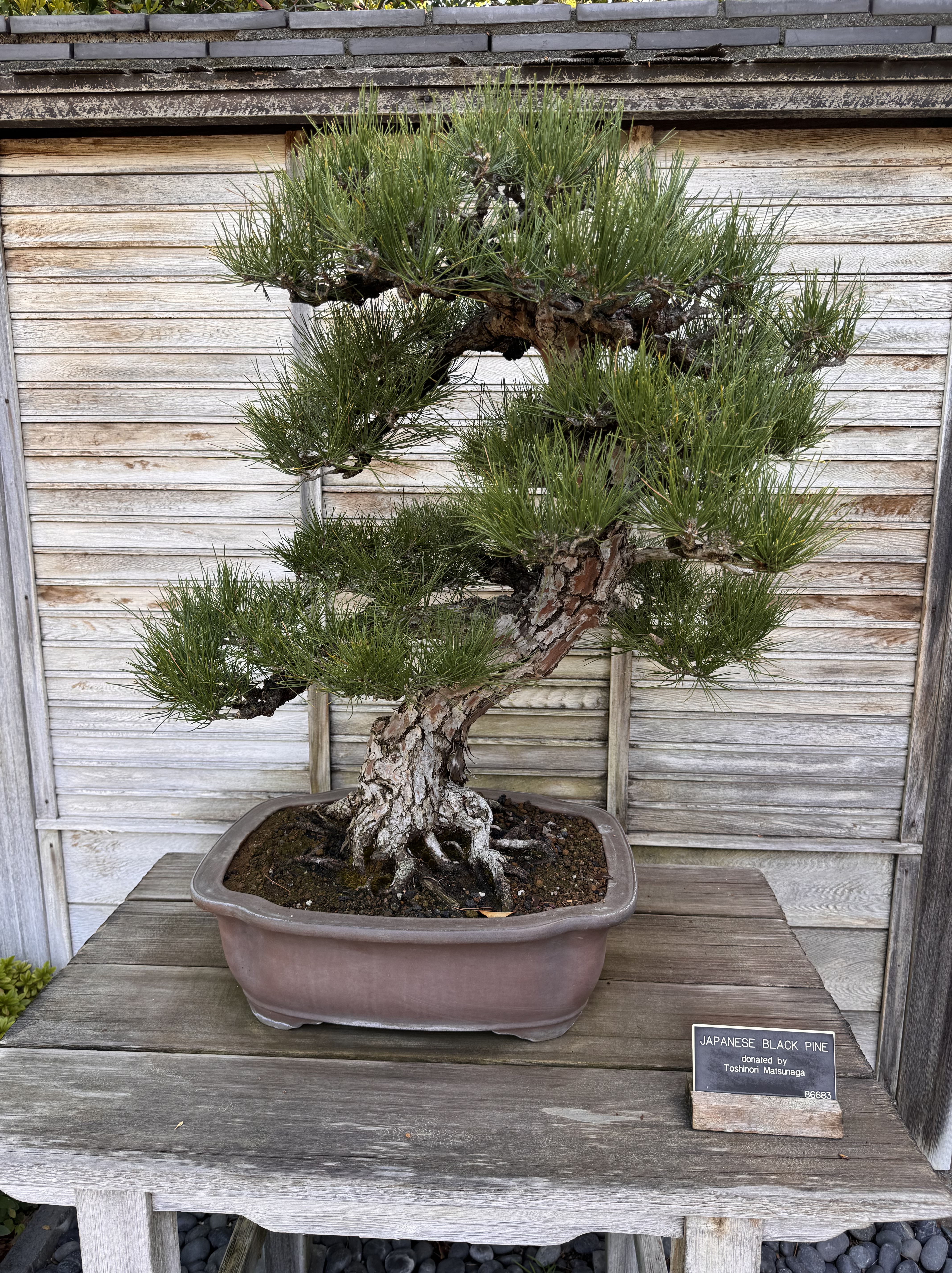
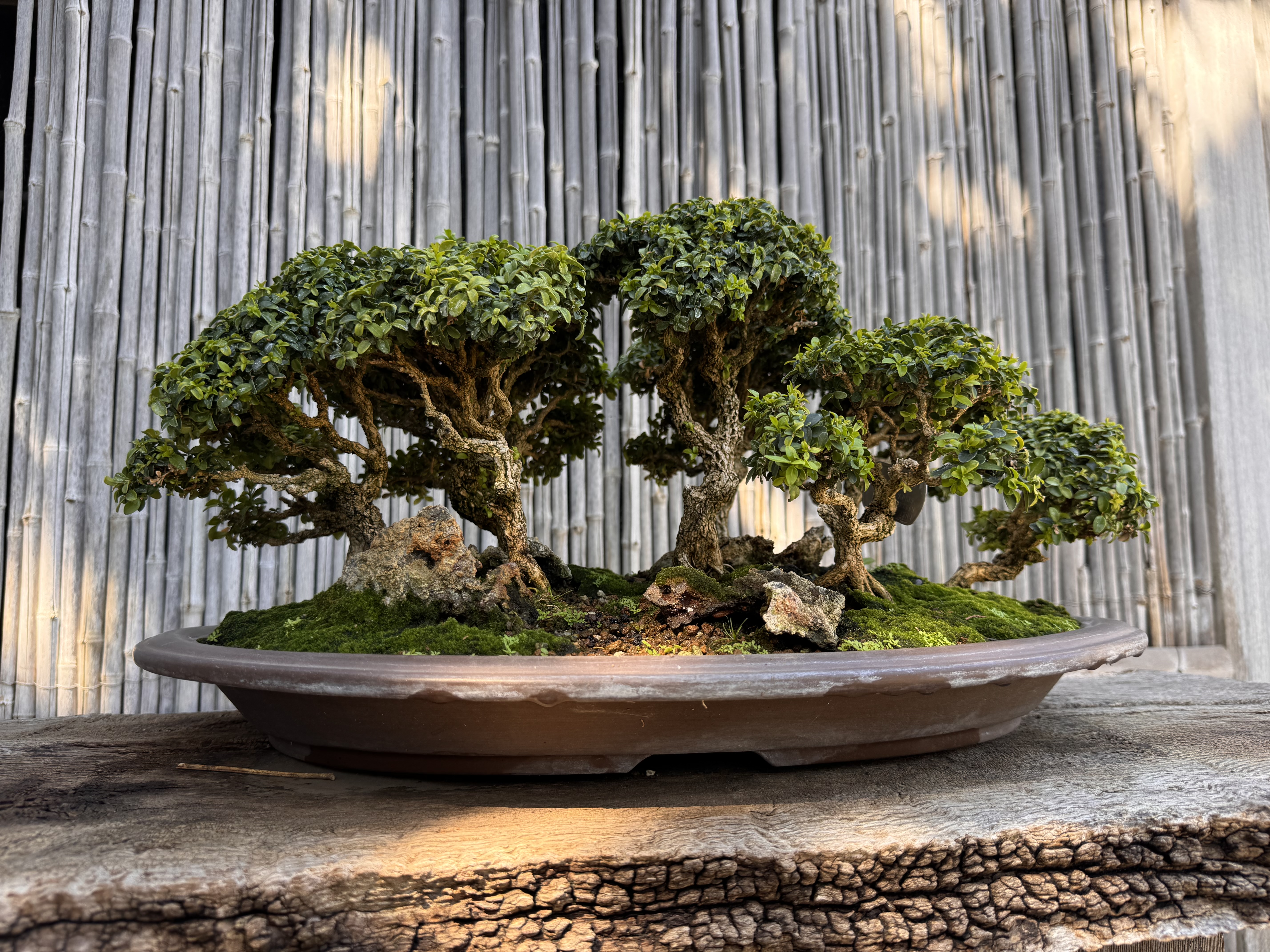
From there I made my way to the bonsai garden proper, which is organized into two sections. I spent a long, happy stretch of time in the Classical Japanese-style courtyard — beautifully composed trees, each one placed with real intention, the kind of display that rewards slow looking rather than a quick walk-through.
Daniel’s Nursery — and a 1,400-year-old surprise
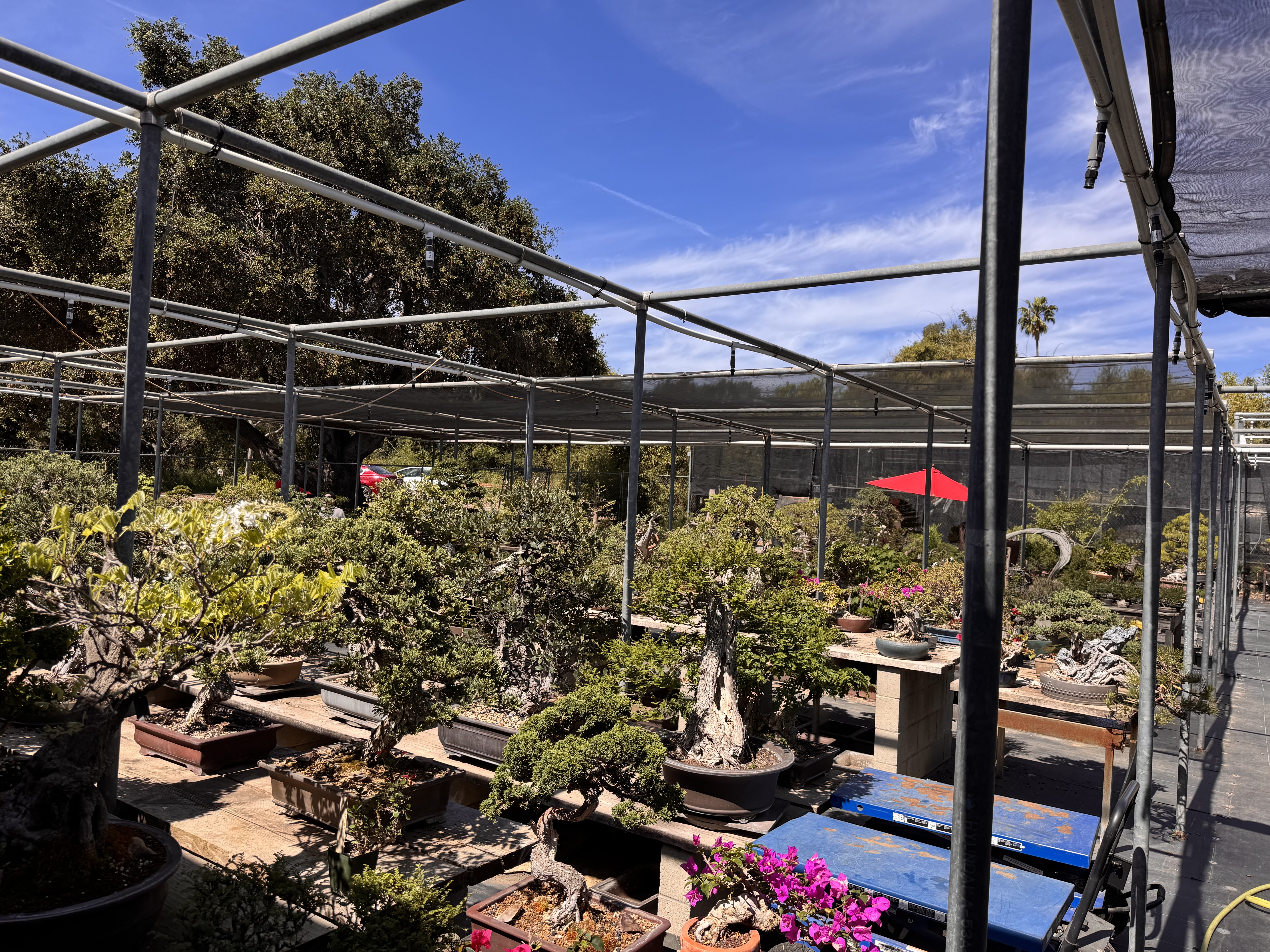
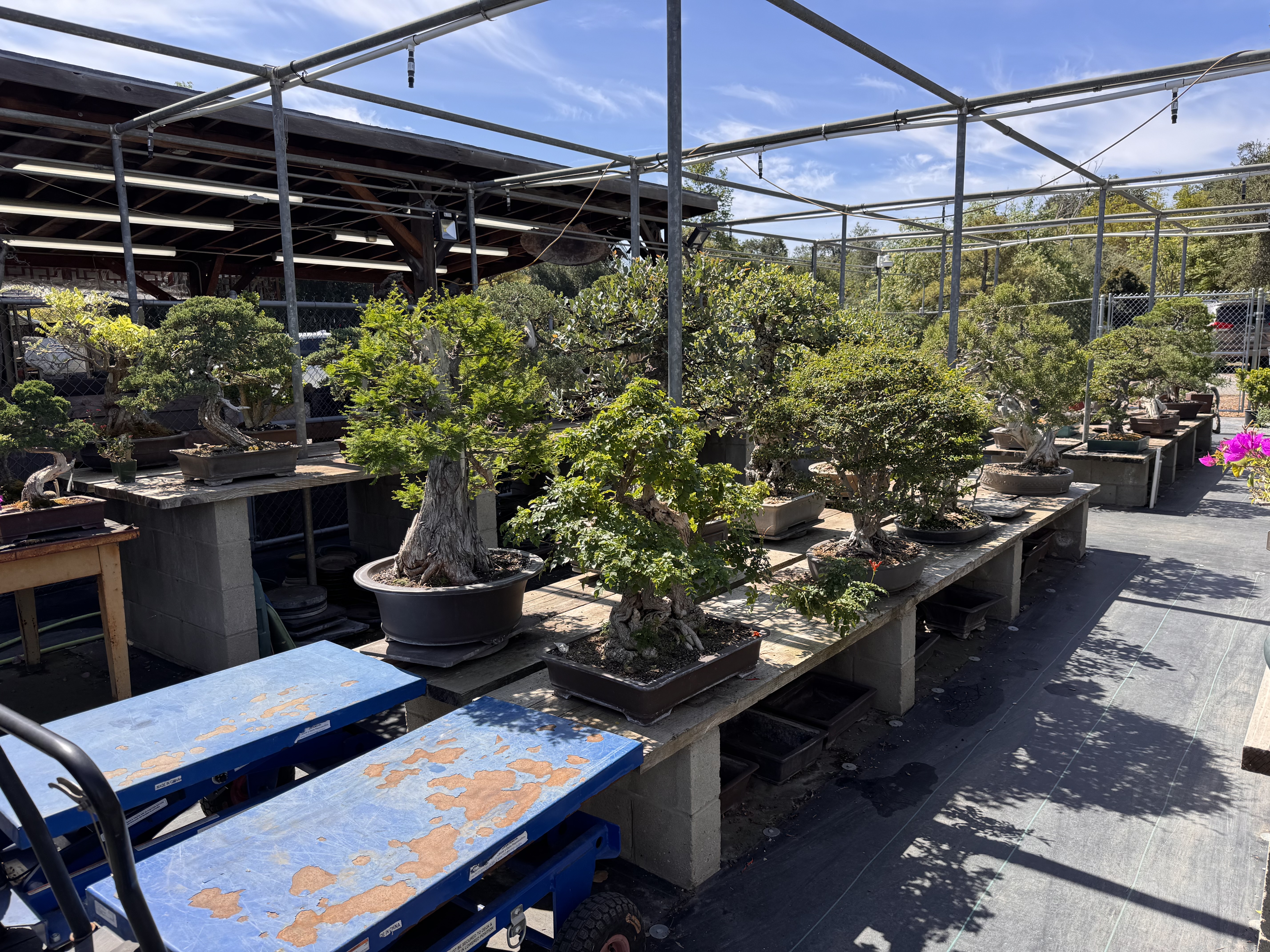
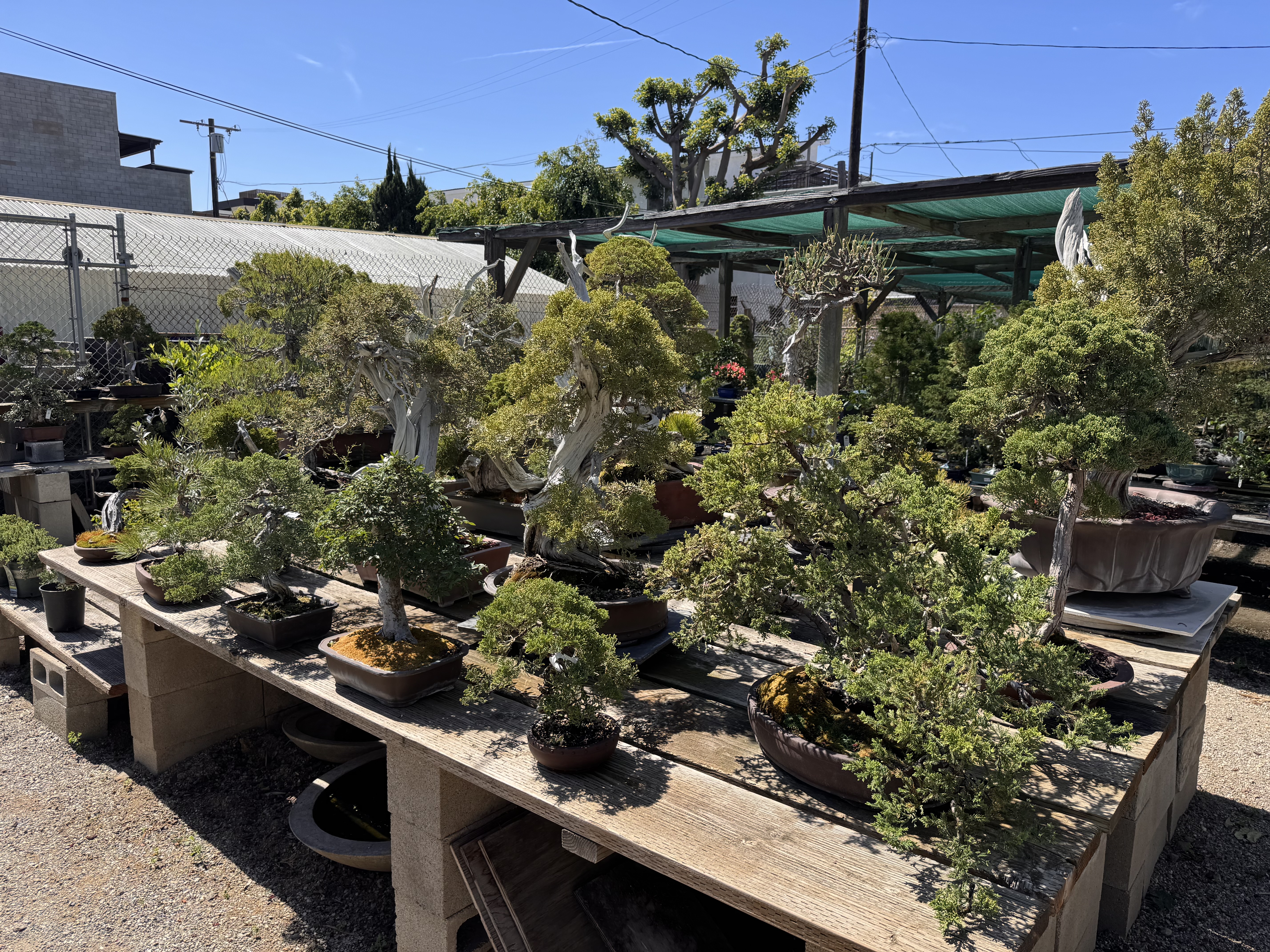
Then came the part of the morning I’d been most looking forward to: Daniel’s nursery, behind the scenes. I want to say again how genuinely kind it was of him to take a Saturday morning to host a random bonsai enthusiast visiting from Israel — the kind of generosity that keeps showing up in this community, trip after trip.
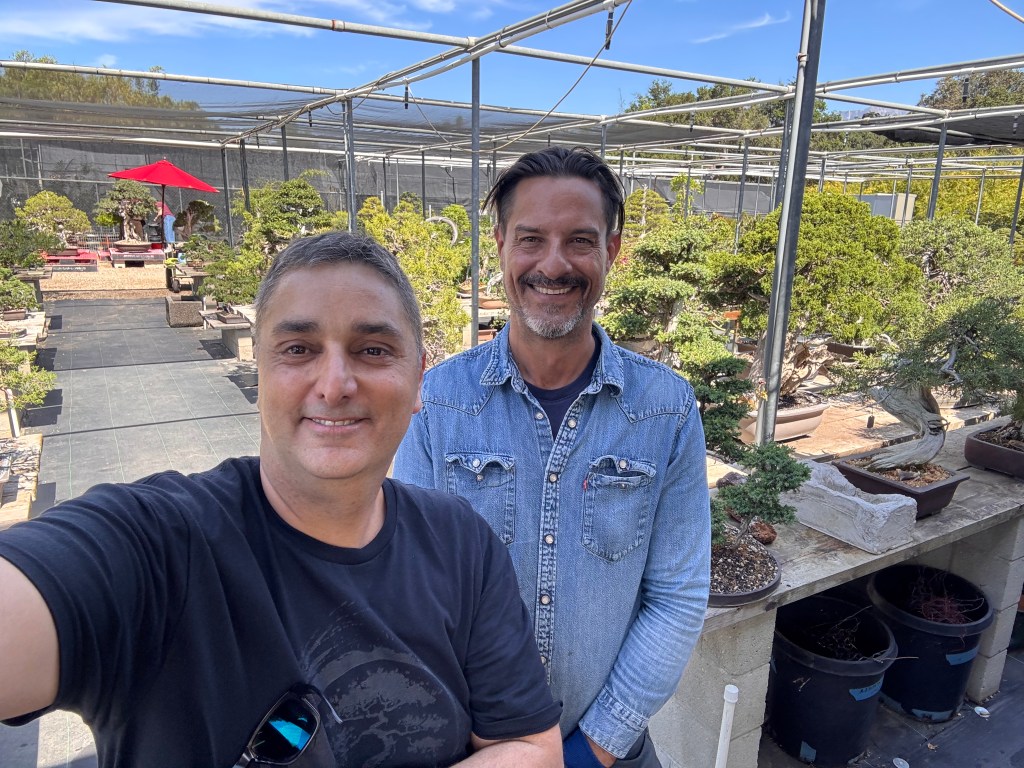
What surprised me most, honestly, was Daniel himself. I’d expected someone considerably older — every master I’ve met on this journey so far has decades of grey hair to show for their expertise — but Daniel is about my age. I couldn’t help but ask how he’d reached this level, this position, so young. His answer was refreshingly simple: he started bonsai when he was twelve.
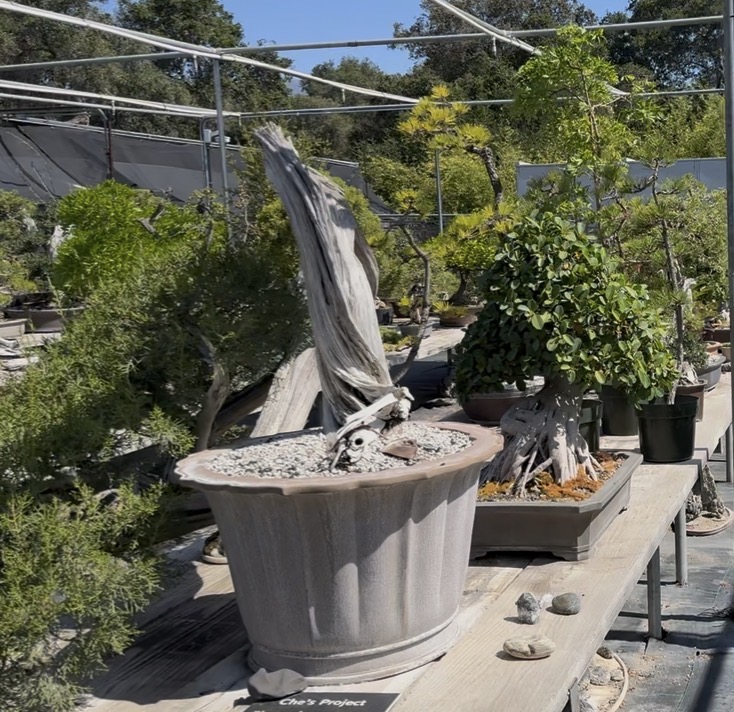
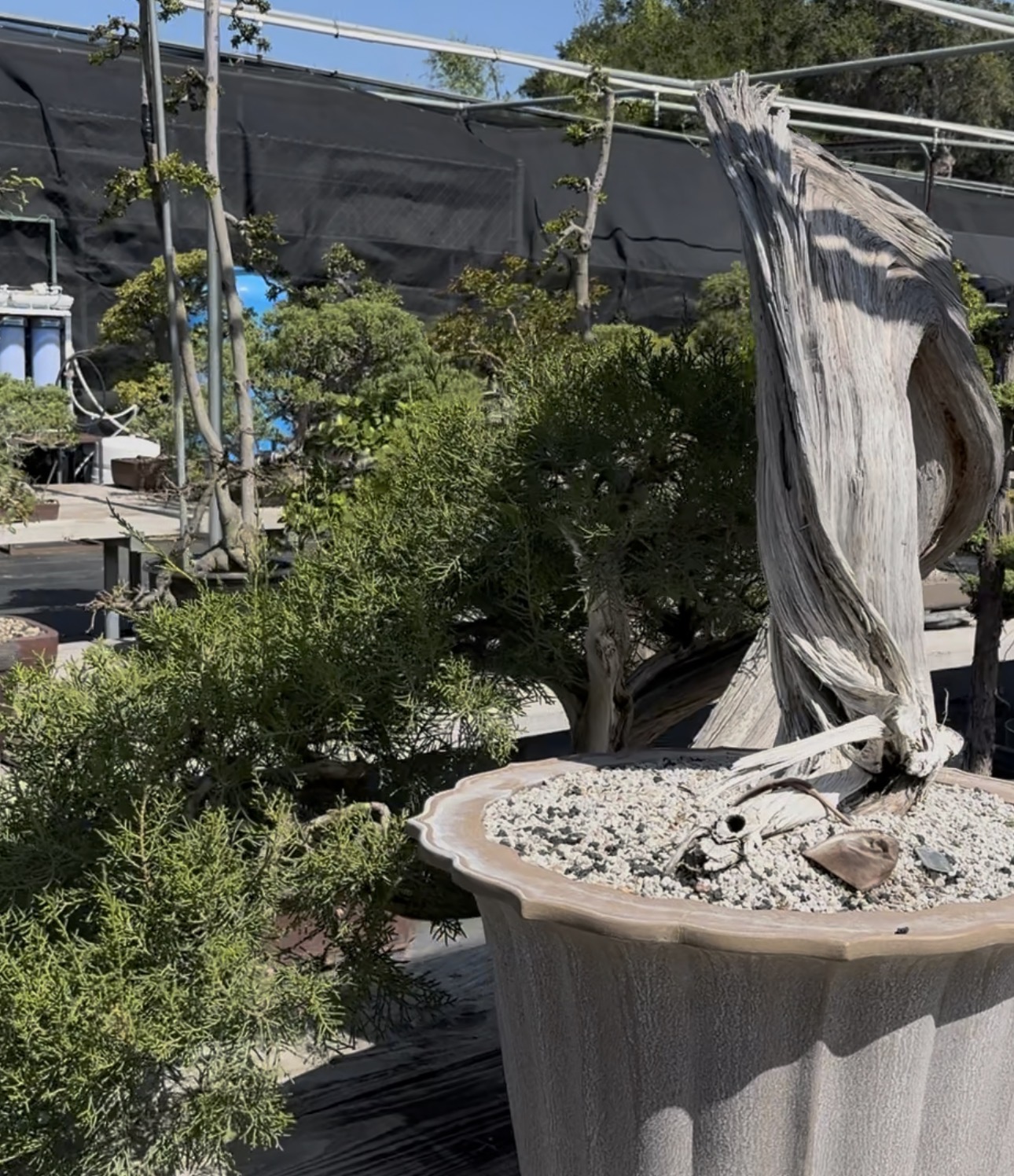
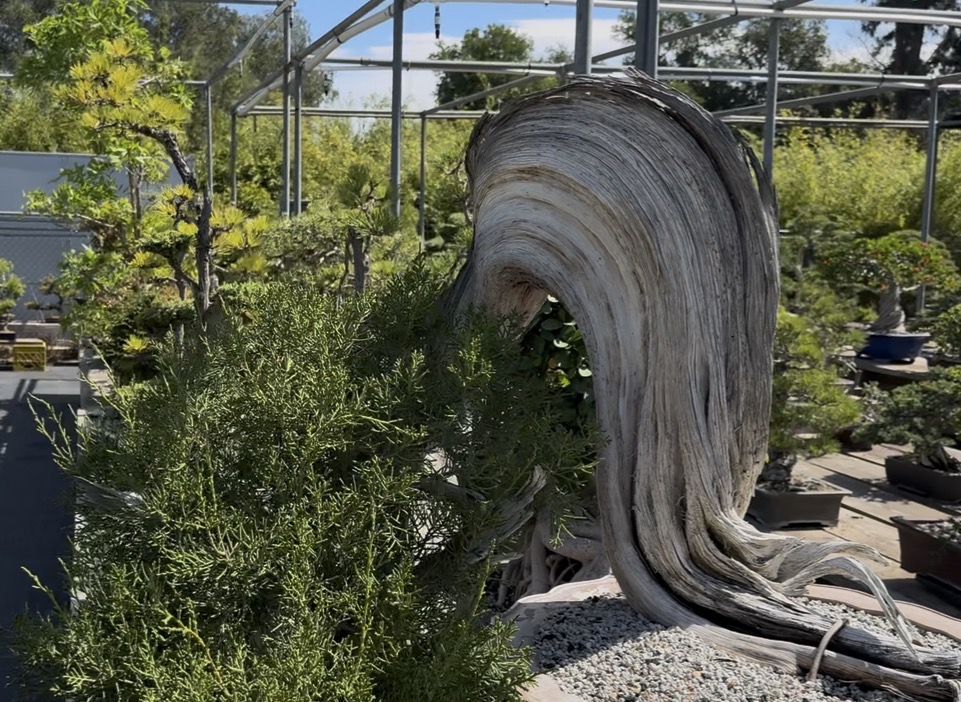
He walked me through the nursery, tree by tree, and then showed me something that genuinely stopped me in my tracks — a juniper estimated at 1,400 years old. Fourteen centuries, alive, in a pot, in front of me. It’s one thing to read a number like that. It’s another thing entirely to stand next to the tree.
Heading back
I left the Huntington that morning quietly full — the kind of full that comes from beauty, not food. It’s remarkable how much a single tree, or a single conversation with someone who’s spent forty years with trees, can put the rest of your week into perspective. I headed back to the hotel to shower, change, and get my head back into meeting mode for the week ahead in Santa Monica.
But don’t worry — this wasn’t the end of the US bonsai run. Next weekend had more in store. More on that soon.


Leave a comment