
Two weeks. Two whole weeks without boarding a plane.
I know. I checked the mirror, I checked my passport, I even checked that my suitcase was still where I left it. Everything was fine. But two weeks is, by my standards, an unusually long stretch of standing still – and with so many of you waiting patiently for the next post, I could hardly show up empty-handed. A travel-and-bonsai blog without travel is just a man photographing his own backyard.
So I reminded myself of something obvious: not travelling abroad is not the same as not travelling. And as it happens, we have a bonsai scene right here in Israel that is growing more interesting by the season – more collectors, more serious material, more people asking better questions. It deserves its own chapter in this blog, and today it gets one.
Today’s post is about Saar.
The man Facebook kept insisting I should know

From more or less the day I fell into this hobby, Facebook decided that Saar and I belonged together. People you may know. Again. And again. I had no idea who he was, and the algorithm offered no explanation – just quiet, persistent nagging, like a matchmaker who refuses to elaborate.
Then, at the Botanical Garden in Jerusalem, I met him in person, and the click happened. Ah. That Saar. We connected – this time in the older, better sense of the word.
The short trip
Last week, with a rare gap between trips, I drove out to visit him in Ness Ziona.
After a year of measuring journeys in flight hours, there is something almost comic about a pilgrimage that takes twenty-five minutes. The other side of the Tel Aviv suburbs — no terminal, no boarding pass, no jet lag. Just a car, a coffee, and a garden waiting at the other end.
It turned out to be one of the best bonsai visits I’ve had all year.

The collection


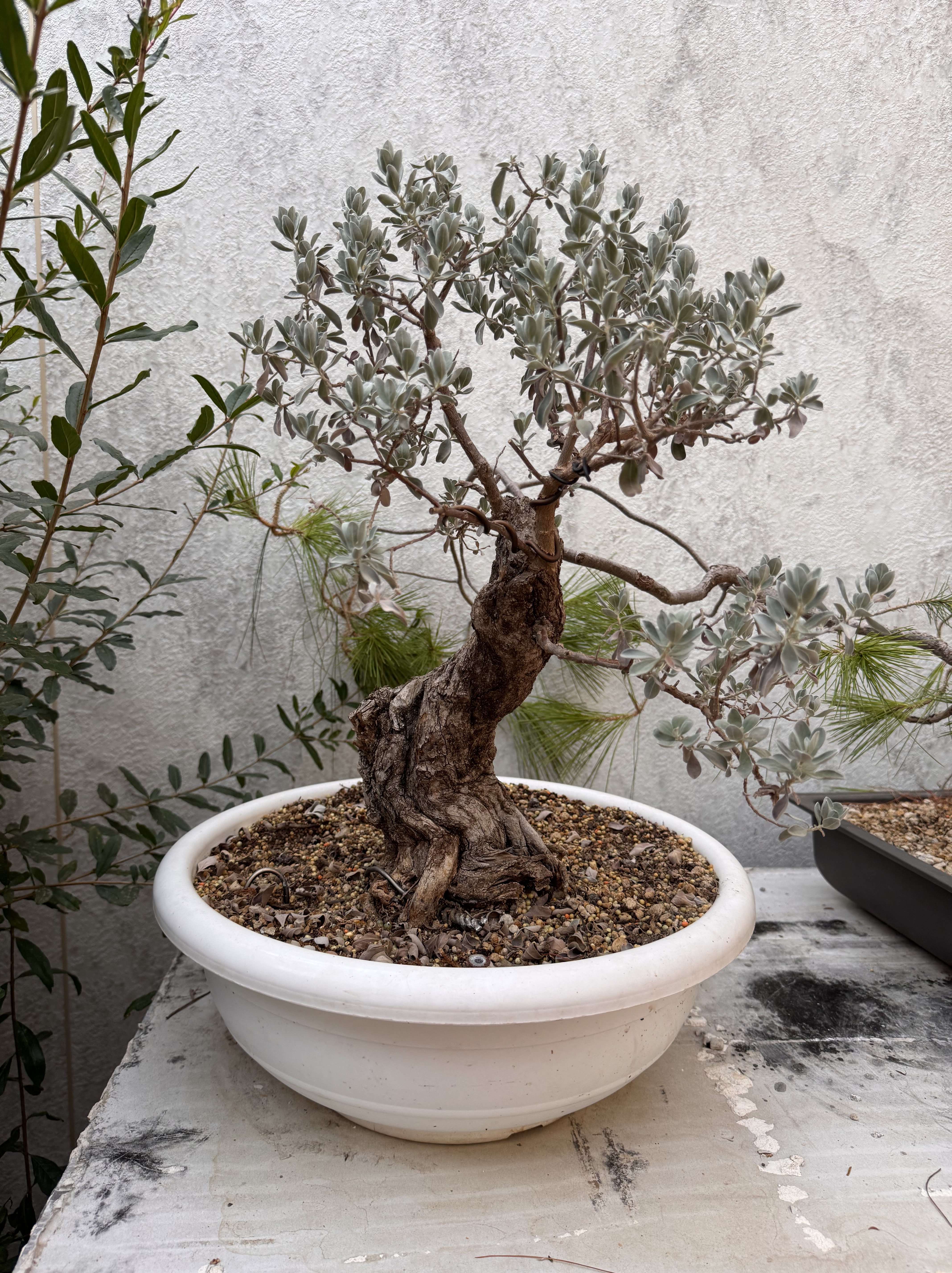
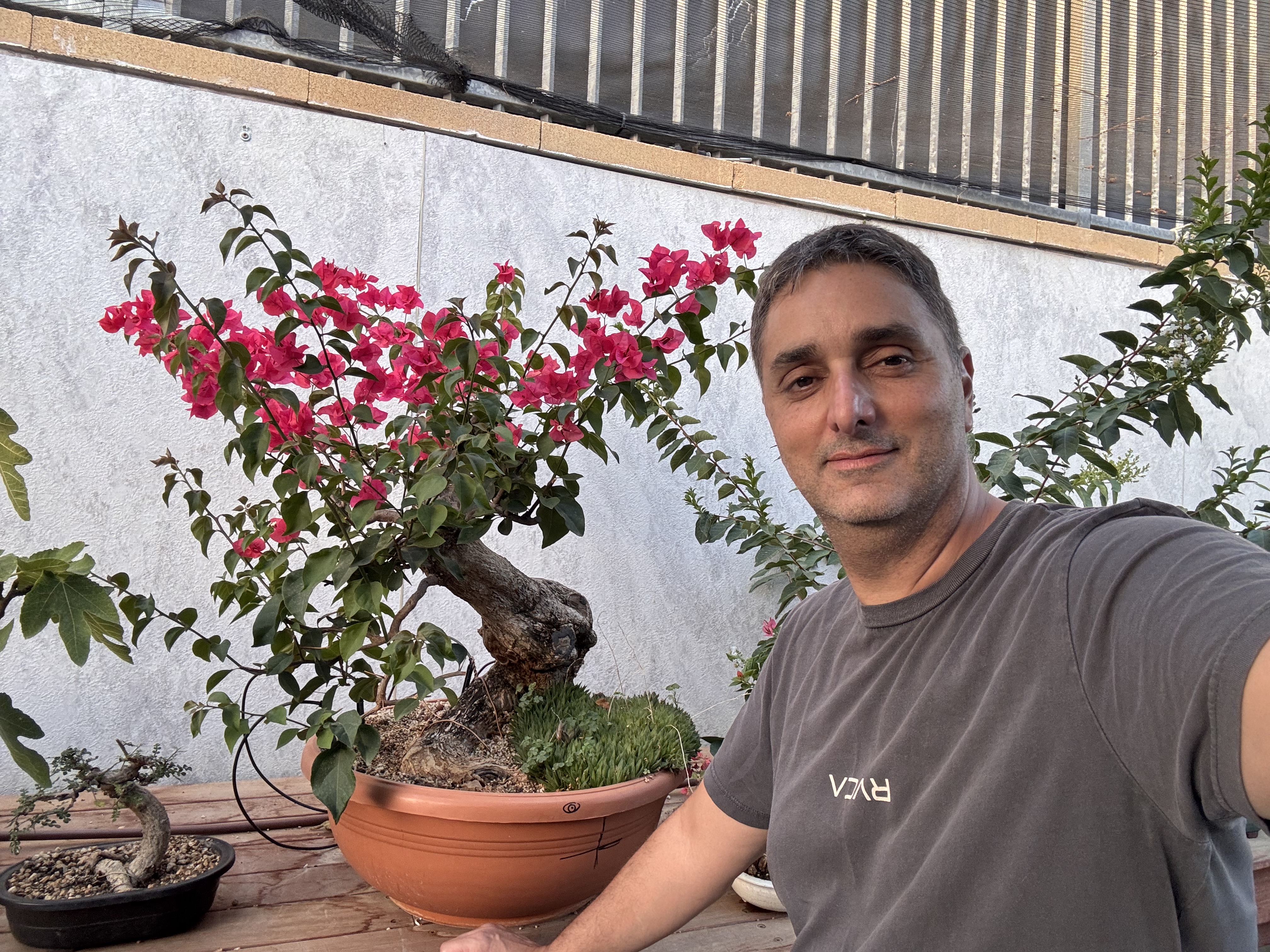

Saar’s collection is built, to a remarkable degree, on yamadori he collected himself. That single fact changes everything about how a garden feels. These are not trees that arrived in a shipping crate with a price tag and a history written by someone else – they are trees he found, studied, dug, nursed, and slowly convinced into pots. Every one of them comes with a story he was actually present for.
It also introduced me to species I simply did not know were in play here. I walked in with a mental list of what Israeli material looks like, and walked out having to rewrite most of it. Some of these trees stopped me completely.
I’m posting a few photos below. They don’t do it justice, but they rarely do.I’m posting a few photos below. They don’t do it justice, but they rarely do.
The “Dr.” part
I mentioned that Saar is a doctor. He holds an M.D and practices medicine – and that turns out to be the most interesting thing about the way he does bonsai.
Most of us learn this hobby as a set of inherited rules. Repot in this month. Defoliate at this stage. Do it this way because that is how it is done. Saar approaches it as a set of open questions. He runs actual experiments on his trees – controlled, tracked, compared, with enough replication that the results mean something. He talks about his material with more botanical depth than almost anyone I’ve met in this country, and none of it is folklore. It’s all built on science.
Which is exactly why this post is called Dr. Yamadori.
New trees, new friends
Beyond the trees themselves, the collection is genuinely beautiful – coherent, personal, and clearly the product of someone who is in no hurry.


And I came away, as I so often do, more pleased with the person than with any single tree. This is one of the real gifts of this hobby: it keeps introducing me to remarkable people. New trees, new friends. It never stops being a pleasure.
Saar, thank you for opening the garden.

And now – in a few days I’m heading back to the Northeast US, with a long list of special and unique visits ahead: gardens, collections, and some renowned masters. Plenty to come. Stay tuned.

Leave a Reply