Two weeks ago I was still standing in Kimura’s garden, still smelling the incense at Hōshun-in, still carrying home a Gyouzan pot wrapped in more hope than bubble wrap. Japan does that — it doesn’t really let you leave. And then life does what life does: a leadership workshop pulled me to London, jet lag barely settled, suitcase barely unpacked.
I’ve been to London more times than I can count. Usually for Business meetings but also the occasional wander through the touristic scene between flights. But I had never once thought to ask whether this city — so full of gardens, so in love with its own green corners — had a bonsai story of its own. Turns out it does, tucked into Kew Gardens.
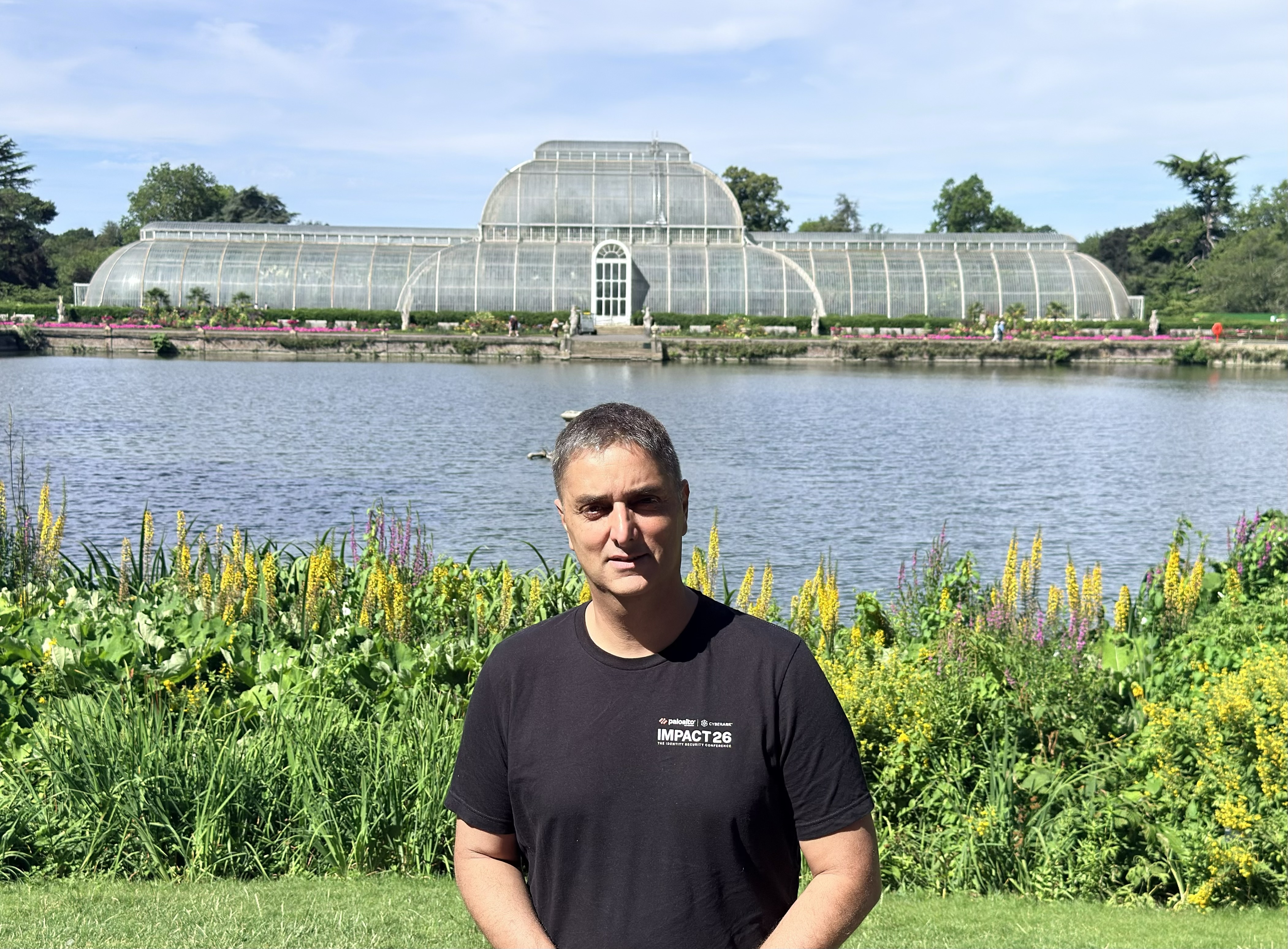
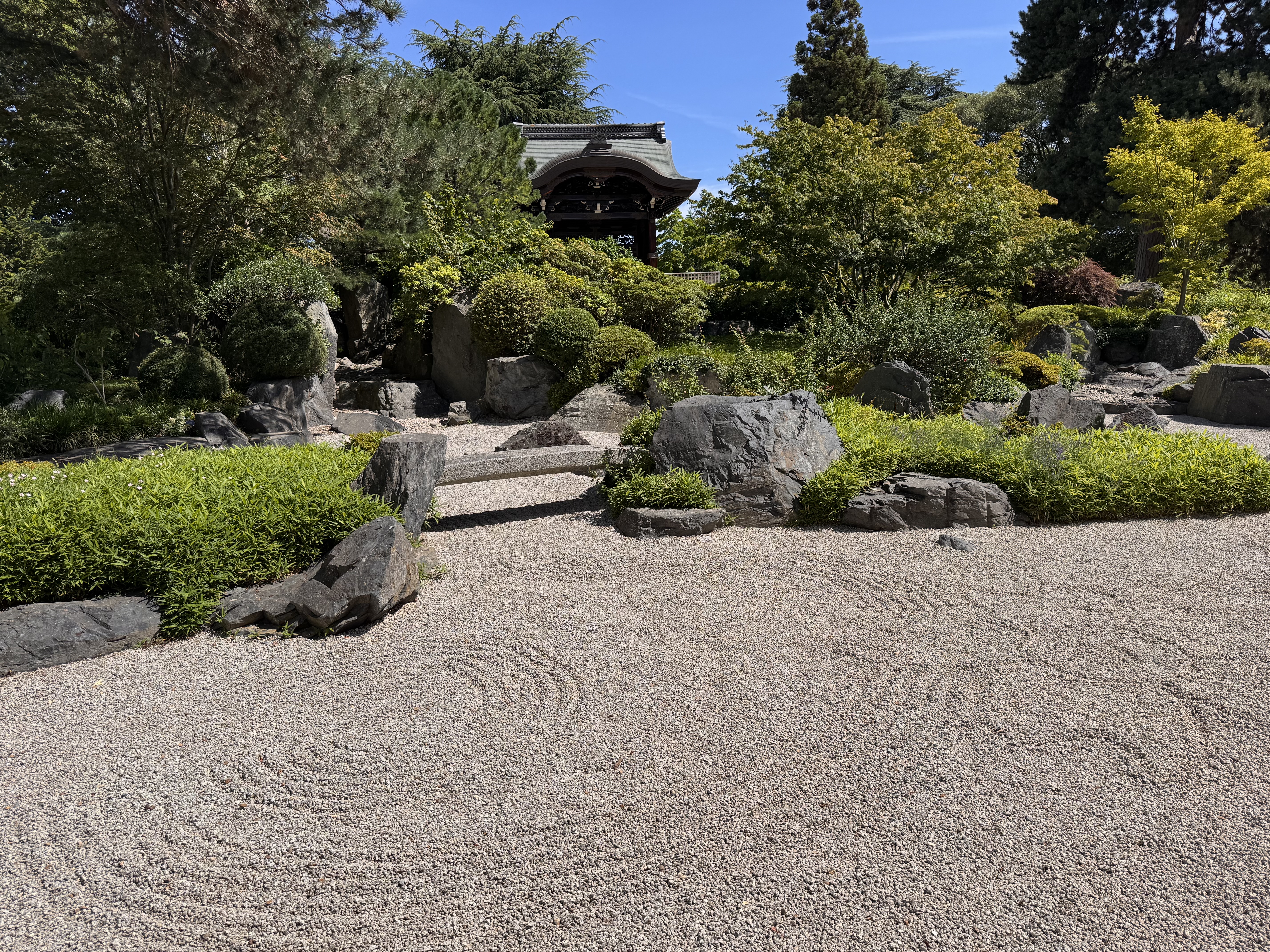
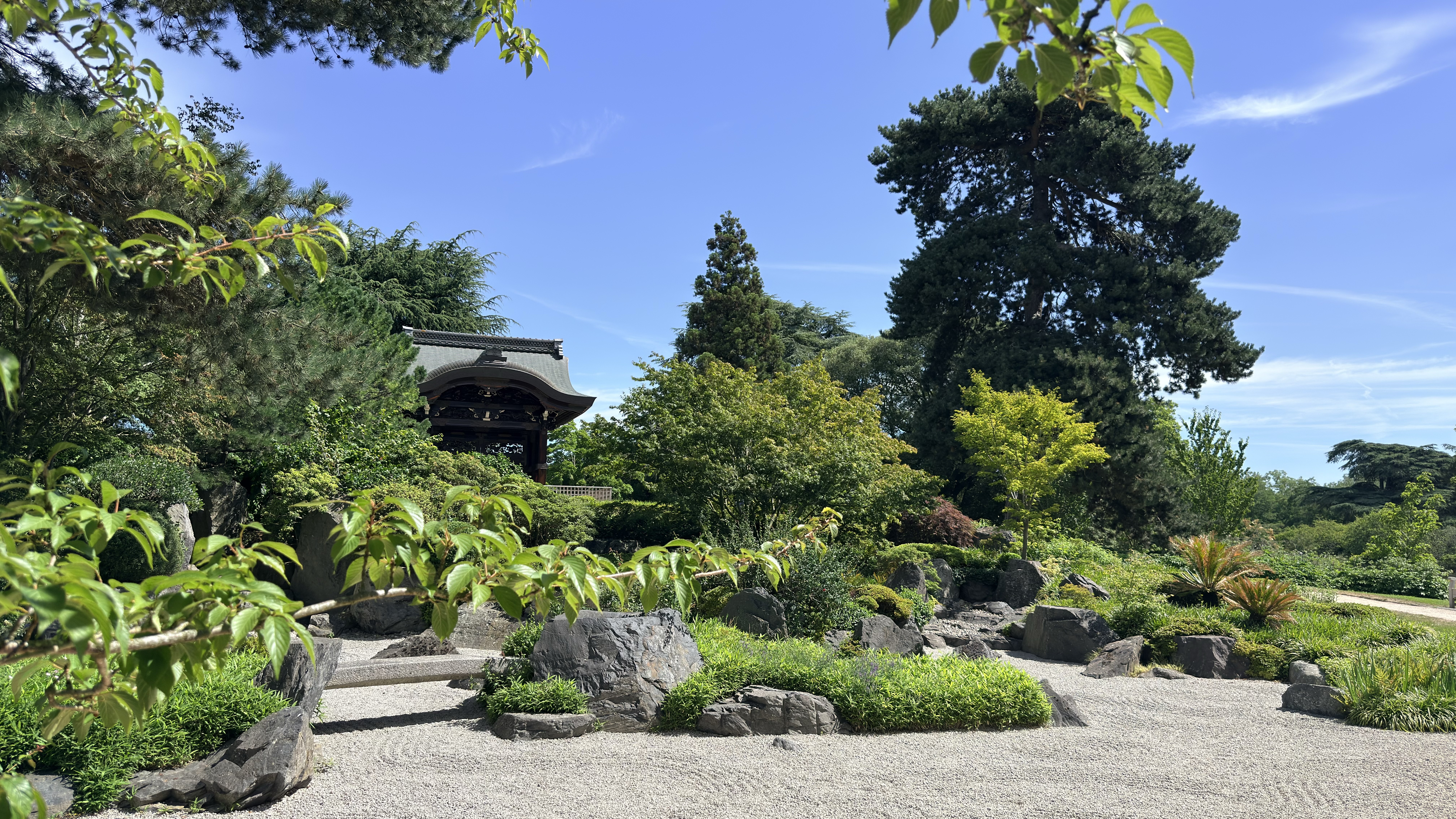
A word on Kew, for anyone who hasn’t been. The Royal Botanic Gardens date back to 1759, which means they were already old by the time most of my bonsai are just seedlings in someone else’s imagination. It’s a UNESCO World Heritage Site, spread across some 132 hectares in the middle of a city that could easily have swallowed the land for something more profitable. I found myself genuinely admiring that restraint — that a place this valuable, this central, was left alone to just grow trees for the sake of growing trees. The Great Pagoda has been standing since 1762, and Kew even has its own slice of Japan inside it: a Japanese Gateway and garden built around a four-fifths scale replica of a Kyoto temple gate, brought over from the 1910 Japan-British Exhibition. So the Japan thread runs deeper here than I expected.
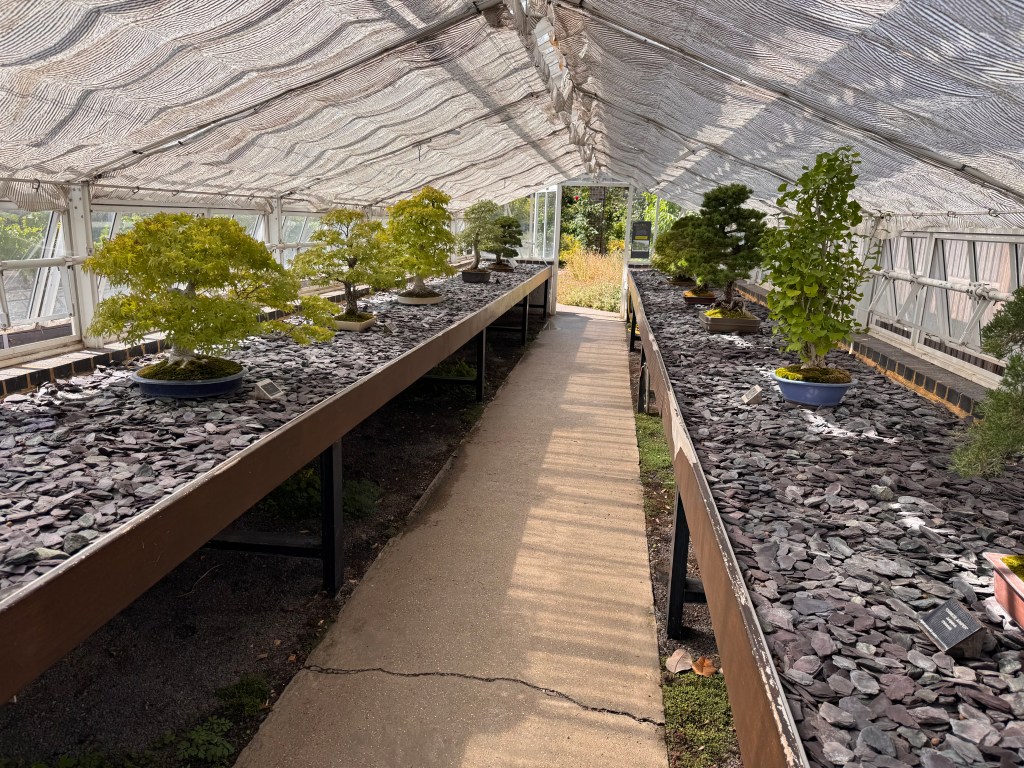
The bonsai house itself is a modest building near the Davies Alpine House, and modest is the right word for the collection too — somewhere around 60 to 80 trees, cared for by Kew’s long-time bonsai specialist. Many of the original trees came from a single generous donation decades ago, and the oldest among them have been sitting in their pots for close to two centuries. Small in number, but not without weight.
I carved out an early morning before the workshop started. Uber over, quick entry, straight for the bonsai walk — though “straight” is generous, since I couldn’t resist slowing down through the wider gardens on the way.
The collection, when I reached it, was smaller than I’d built up in my head — maybe twenty trees on display that morning. And here’s the strange thing about coming home from a pilgrimage like Japan: your eye changes. I found myself doing the thing my teacher Shai would do — pausing at a trunk and quietly noting the roots that hadn’t been worked enough, three branches sprouting from the exact same point on a trunk, which is about as close to a cardinal sin as bonsai has. A few weeks ago I wouldn’t have seen any of it. Now I couldn’t not see it. And yet — imperfections and all — I’d have taken any single one of those trees home in a heartbeat. That’s the joke of this hobby: you get more critical and more covetous at the same time.
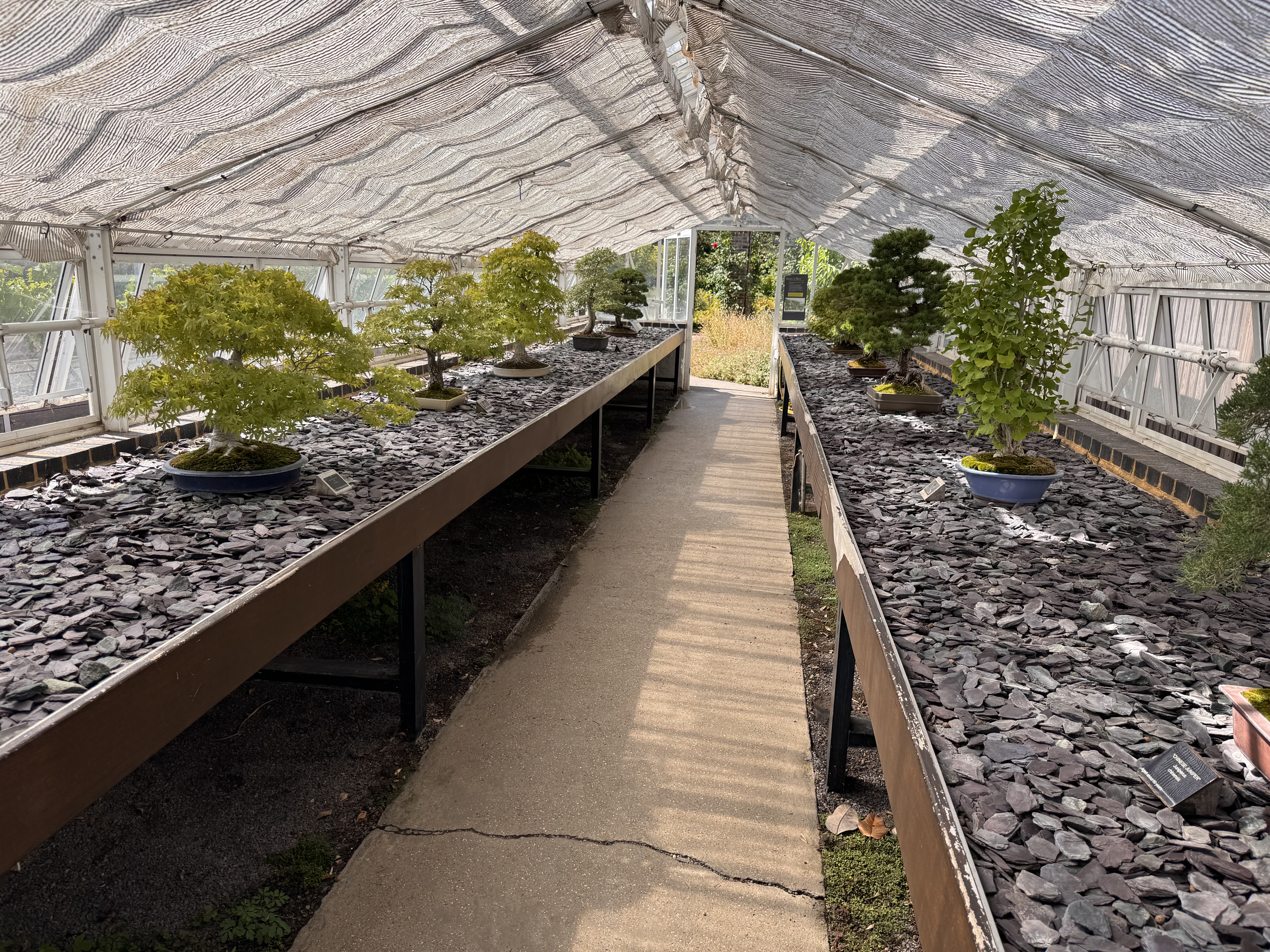
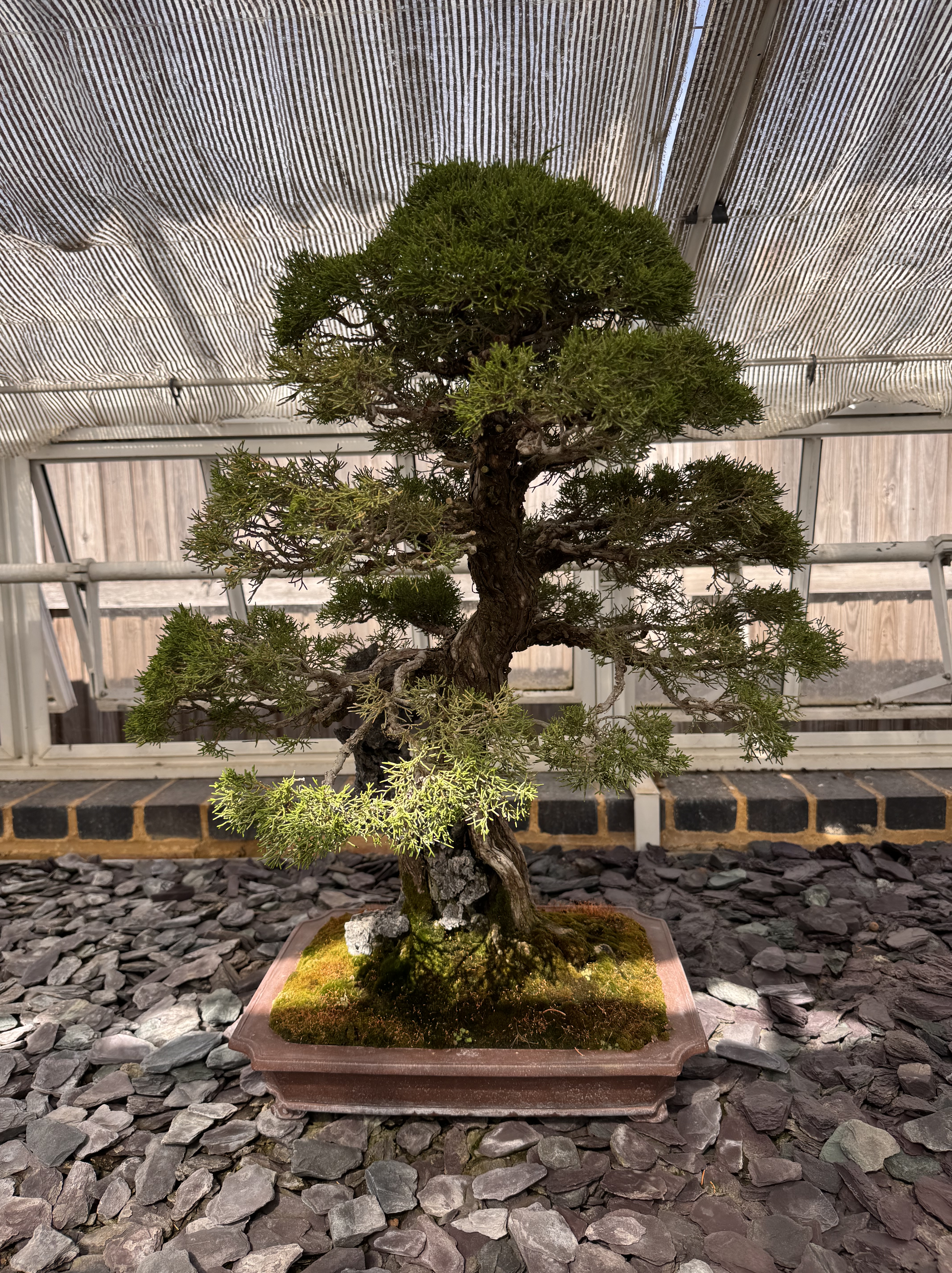
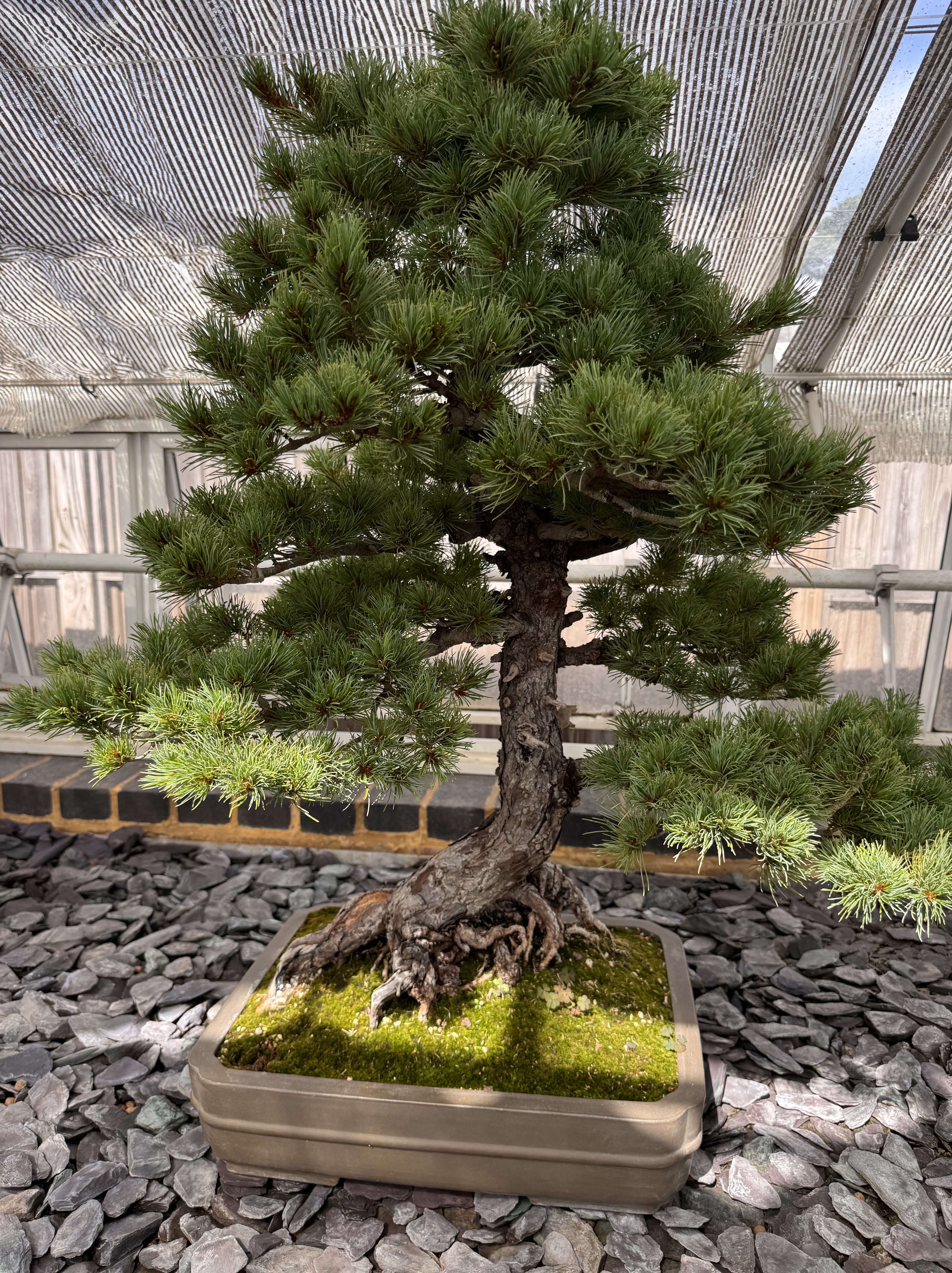
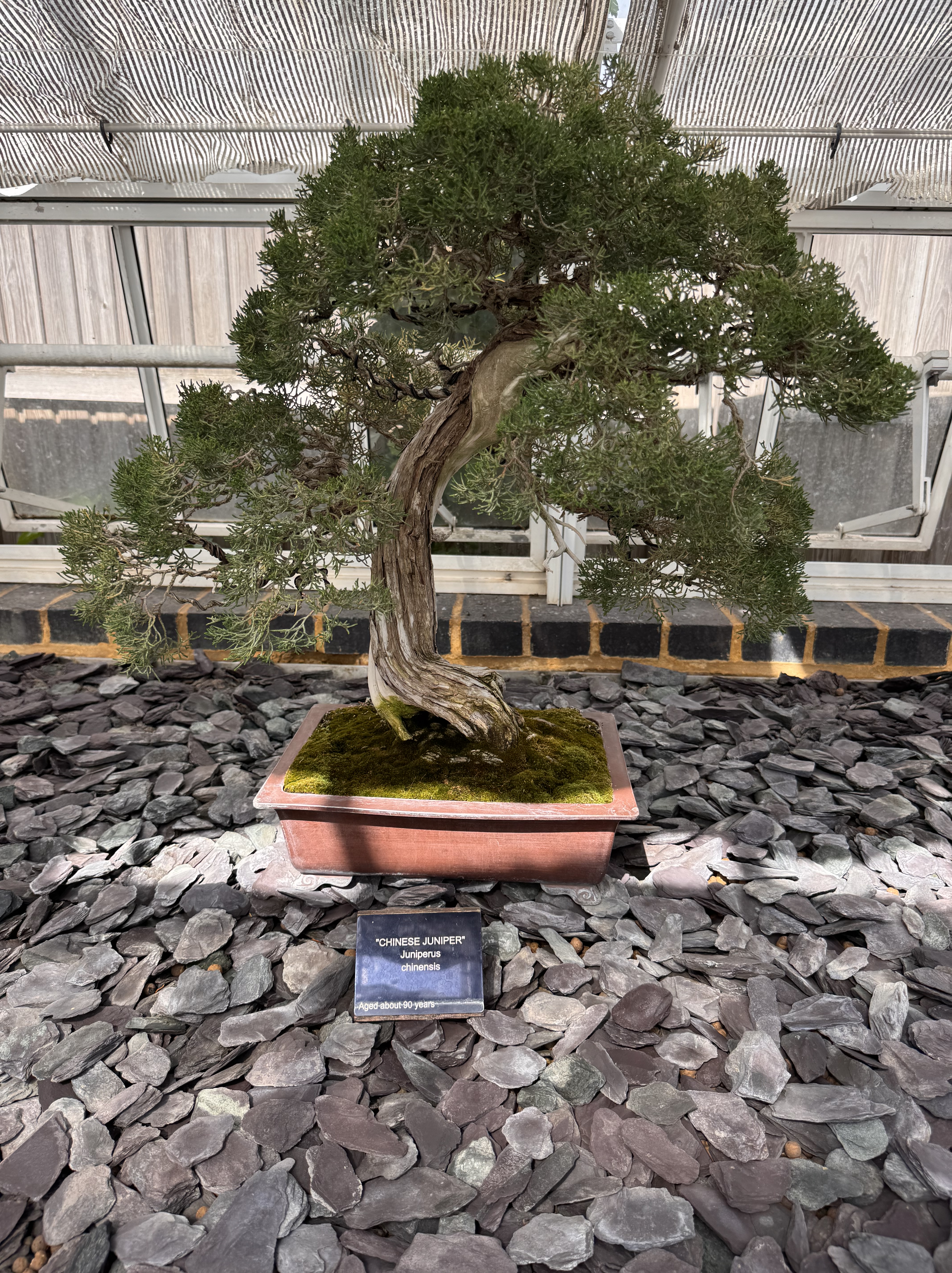
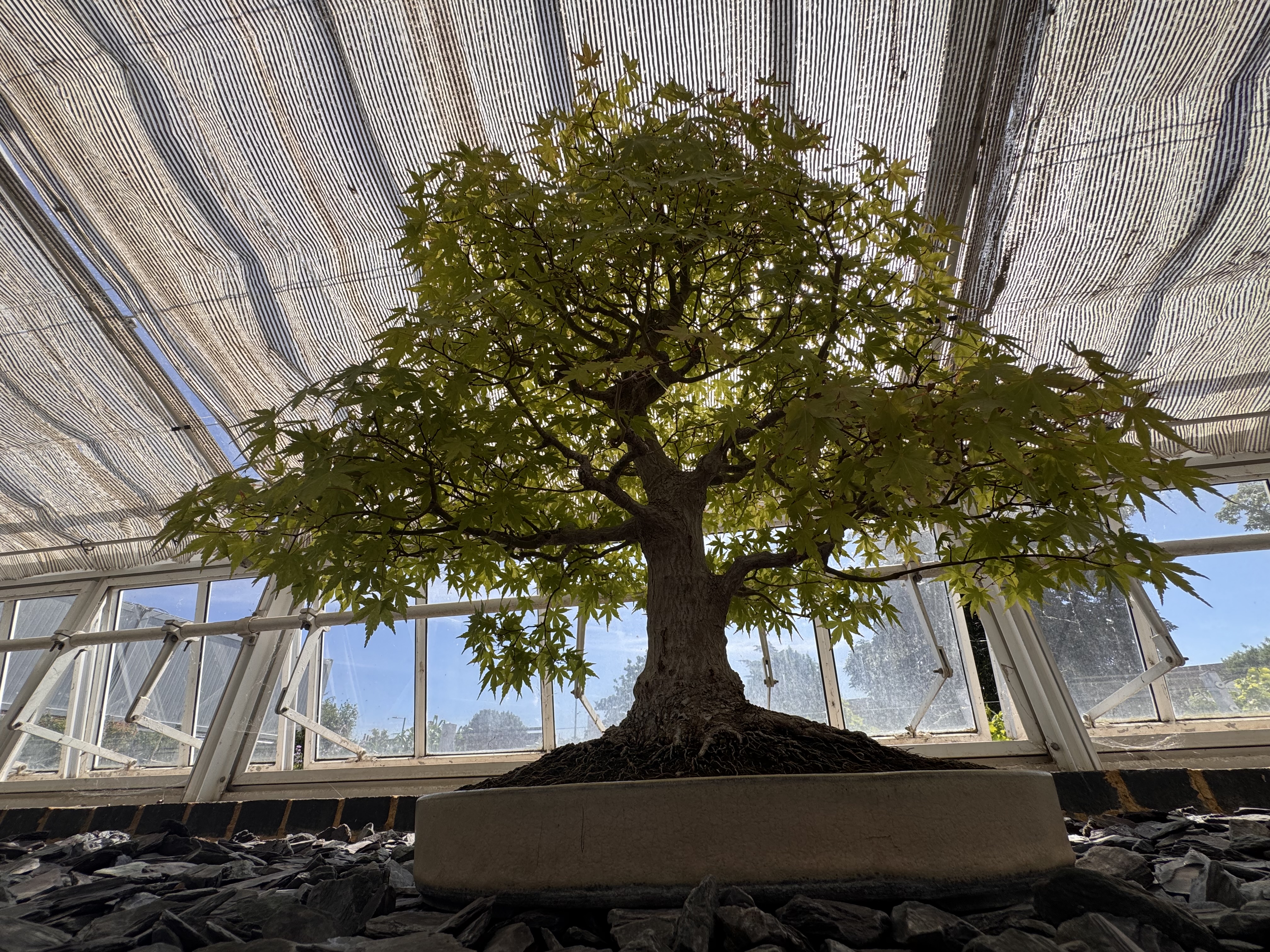
Jamie joined me. We’ve worked together for about fifteen years, and this was his first real exposure to my new obsession. He asked all the right questions — the kind that tell you someone is actually looking, not just being polite. Jamie has a photographer’s eye already, so it wasn’t a huge leap for him to start reading a tree the way you’d read a composition: line, balance, negative space. I have a quiet feeling he could get seriously good at this if he ever let the hobby in the door.
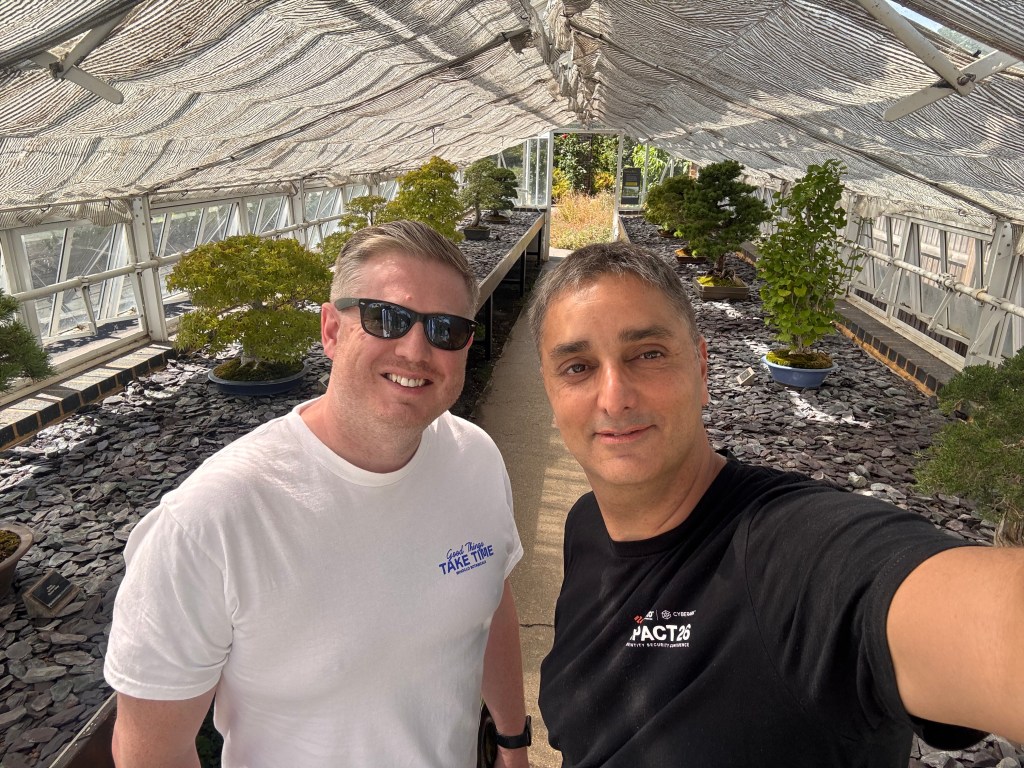
We spent about half an hour there, and I found myself doing my favorite thing — explaining what worked, what didn’t, and why. Jamie kept coming back to the pots, which I loved. It’s an easy thing to overlook if you don’t know to look for it, but the pot is doing real work: a masculine pot — heavier, more angular, deeper — grounds a powerful, aggressive tree; a feminine pot — softer curves, lighter, shallower — lifts something delicate and refined. Get it wrong and even a beautifully styled tree can look like it’s wearing someone else’s shoes.
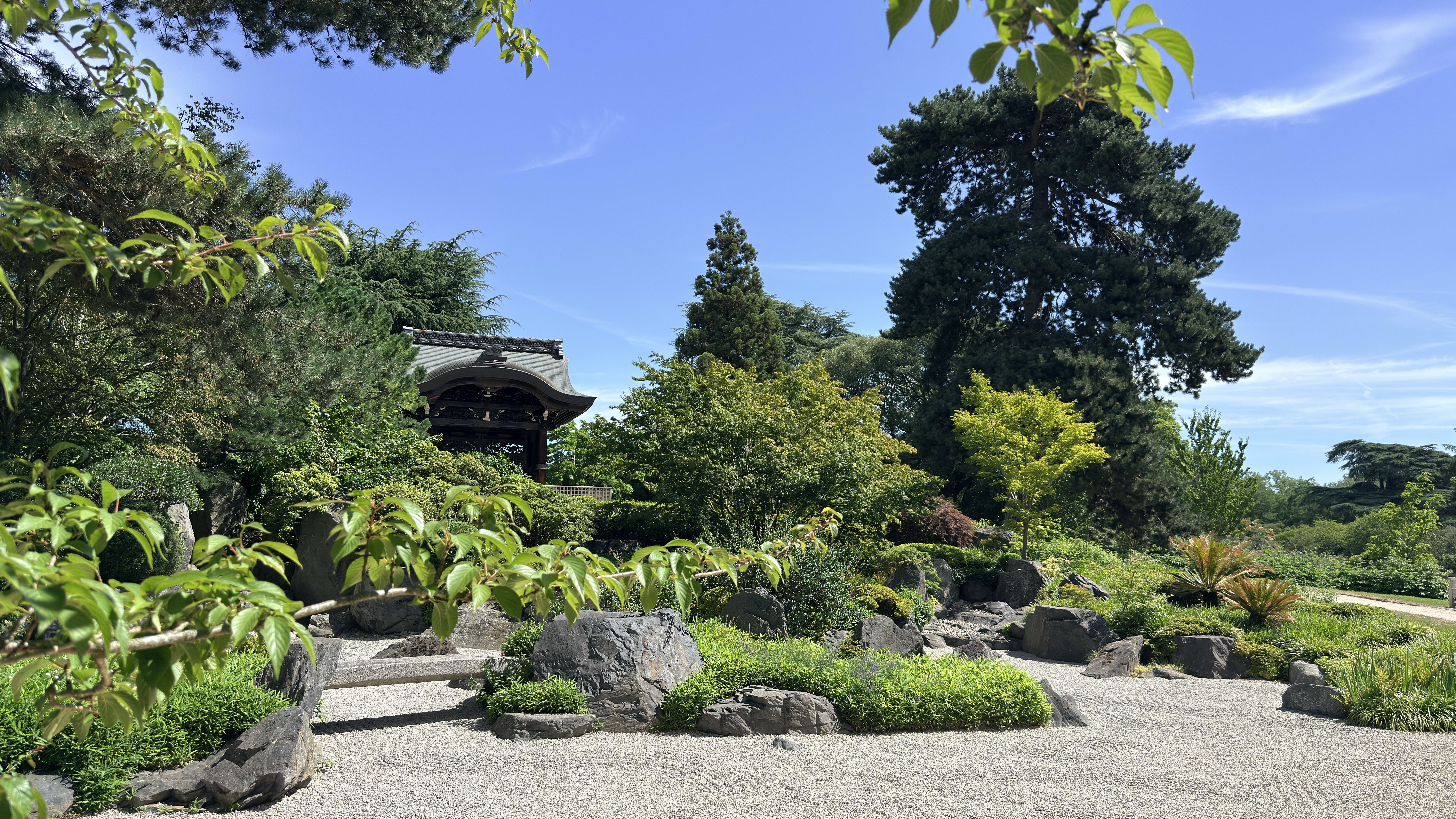
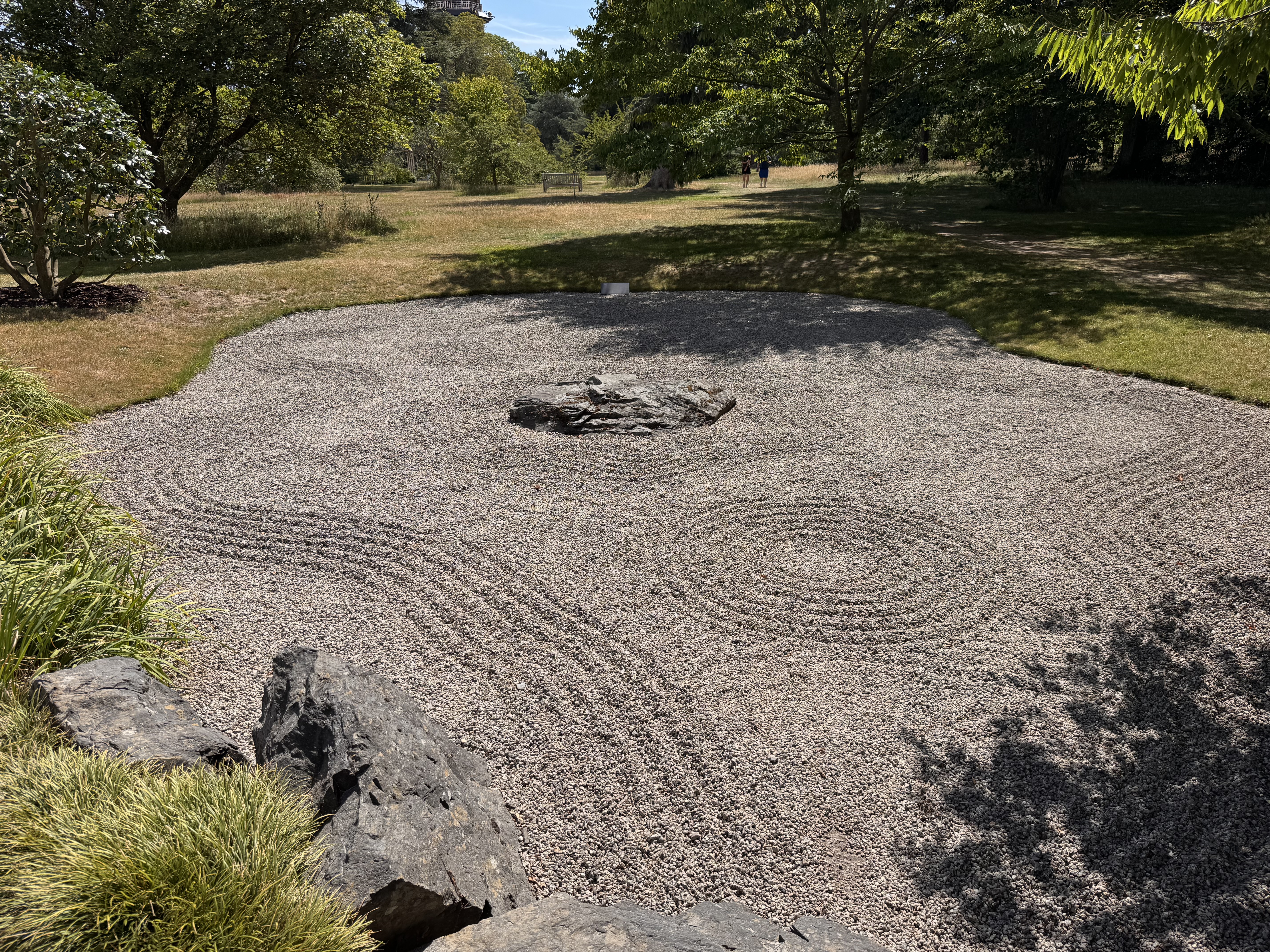
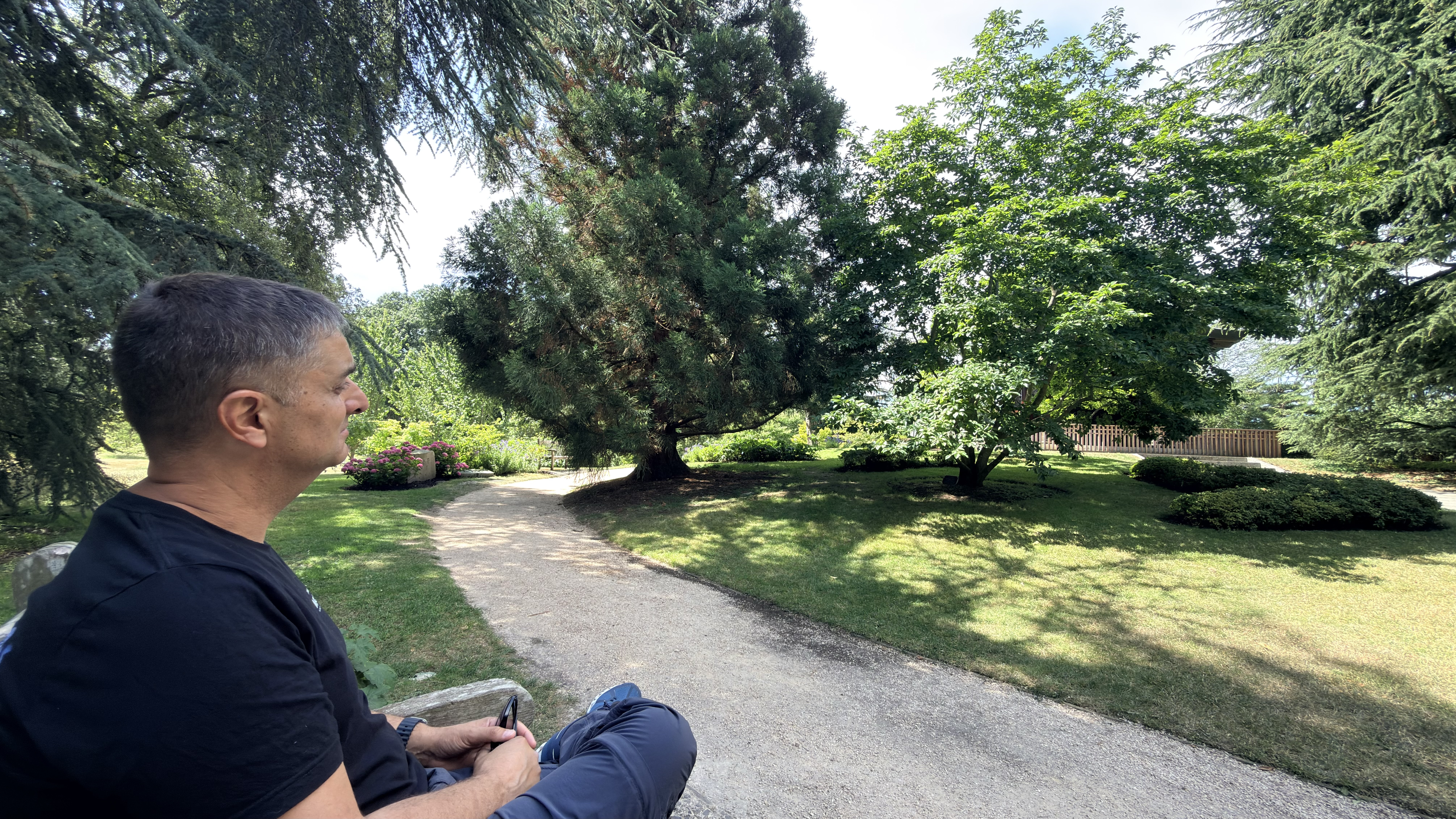
On the way out we wandered through Kew’s own Japanese garden — the pagoda, and a rock garden built in the zen tradition. It isn’t Kyoto. It doesn’t try to be. But there was something honest about it, a very English attempt at stillness, and I stood there for a minute longer than I meant to.
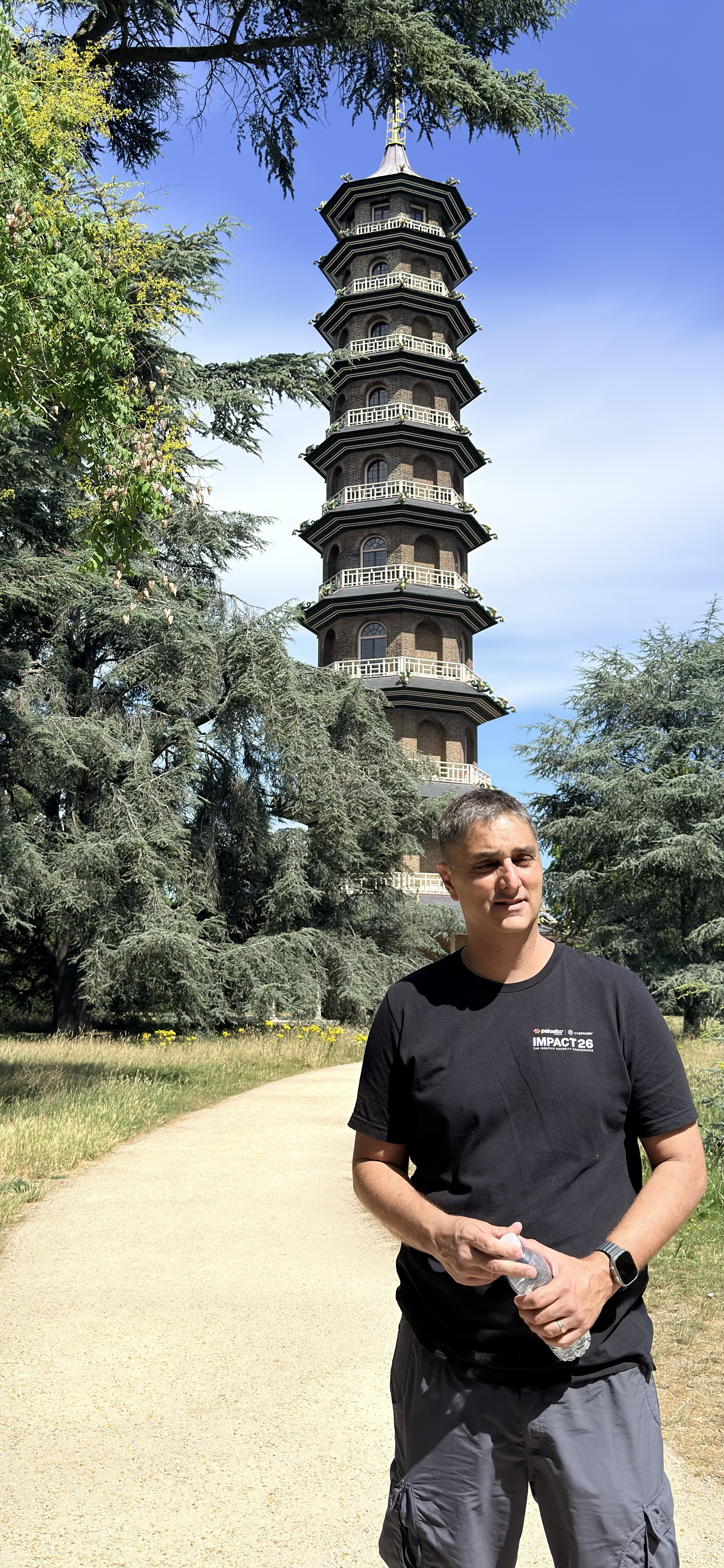
Then back to the Uber, back to slides and stakeholders, back to being the version of me that wears a badge instead of carrying shears. But I keep noticing this pattern in my own life now — how often the universe hands me an unplanned hour, in a city I thought I already knew, and points me toward a tree. I’m not going to stop taking it up on the offer.